





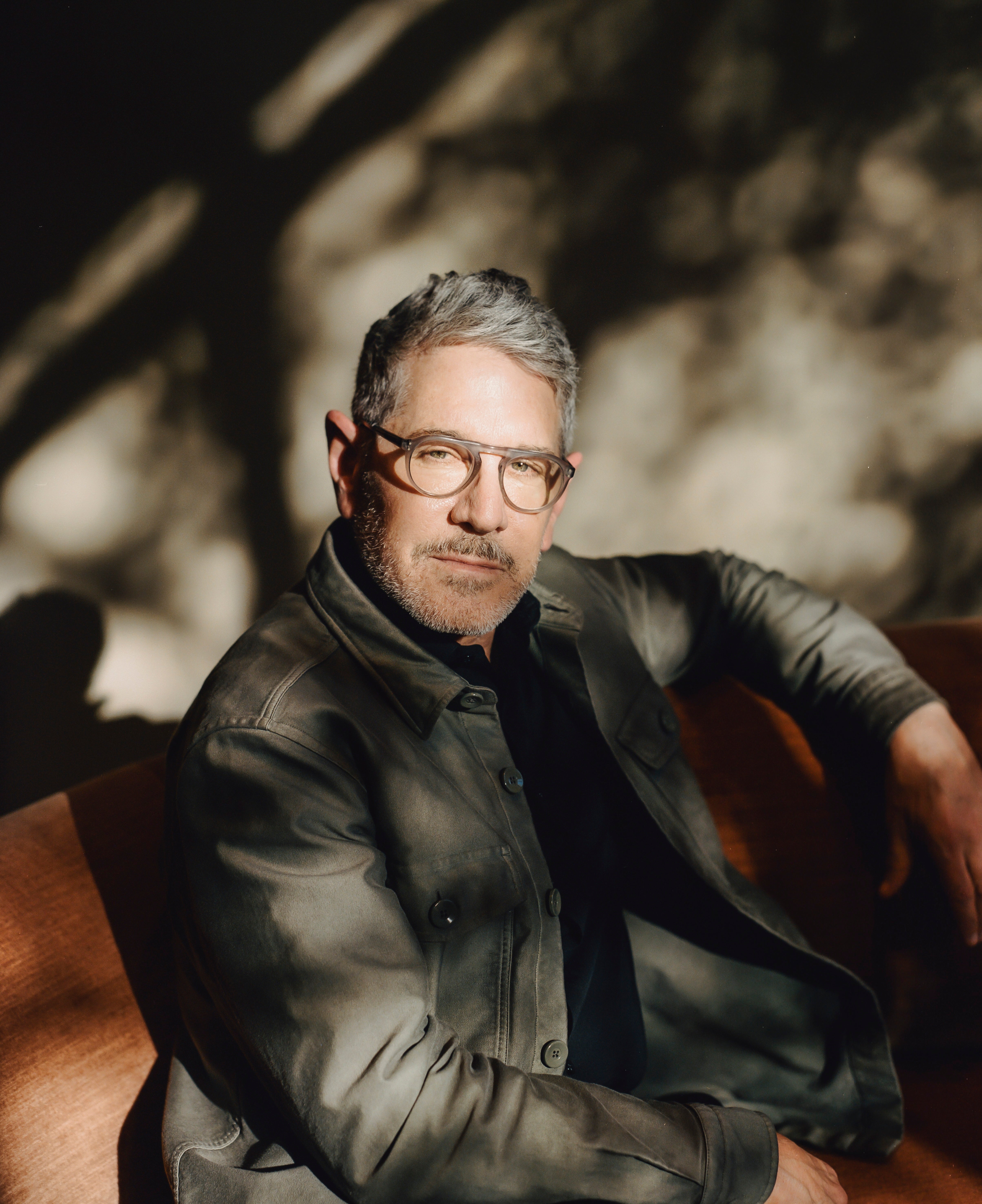

Steven Volpe was a fashion student in San Francisco when he got the opportunity to work with a local interior designer over summer break. “I really was taken with the craft of interior design, which was something I had never thought of, and was blown away by what I saw,” he tells host Dennis Scully on the latest episode of The Business of Home Podcast. “I very quickly decided that I was good at it, or at least I thought I was good. The one thing that is why I’m sitting where I’m sitting is the arrogance of youth.”
After fashion school, Volpe moved to Paris for four years, working under an architect and designer and getting a hands-on education that he eventually took back to California with him when he started his own firm. Now, he manages a large team, takes on projects around the world, and is a fixture on the AD100.
Over his decades as a designer, he has noticed that the role of the home has changed; in turn, designers’ work has adjusted. “At the onset of my career, houses were built for entertaining—and a very specific kind of more formal entertainment—where today, I think houses have to function in a multitude of ways,” he says. “A house was more about decoration, and there was a hierarchy to the rooms, whether it was the living room or the primary bedroom, but kitchens and other rooms did not have the importance that they do now. It’s a much bigger business with bigger budgets and more people involved, so there’s a lot more to track, and I’ve learned over the course of my career how to deal with that.”
Elsewhere in the episode, Volpe discusses why he stays actively involved with every project, what he looks for in new employees, and the growing role owner’s reps play on the jobsite.
Crucial insight: Volpe’s original thought was to keep his firm on the smaller side. He now runs a team of 20, and is hiring. “I think the ebb and flow of growth was something that I had to contend with,” he says. “Some years I had more projects; other years I might have had a few less, and it was, ‘How do I structure my office and build teams and still be nimble enough to survive and not grow too quickly?’ That was always something that was very daunting to me, and a little frightening. Early on, I really wanted to keep the business small—and still try to keep it on the smaller side—just for my own comfort. … It had to [grow] just because of the number of projects that I was doing. It was not plausible to stay as small as I once was.”
Key quote: “[Starting your own firm] is not for everyone, because there’s an extreme amount of responsibility and weight, and some people who are extremely talented actually don’t do as well with that weight, and it’s better for them to work under someone. And then there are those that feel like they also are willing to deal with the business side of running a business, and that stress. I’m not always sure, but usually there’s a certain amount of luck.”
This episode is sponsored by Ernesta and Kohler. Listen to the show below. If you like what you hear, subscribe on Apple Podcasts or Spotify.
The Thursday Show
Host Dennis Scully and BOH executive editor Fred Nicolaus discuss the biggest news in the design world, including change at the top at MillerKnoll, how the AI boom is shaking up San Francisco’s housing market, and a surprising new luxury amenity. Later, designer Leanne Ford joins the show to talk about her new book, Feel Free Home.
This episode is sponsored by Loloi and Newport Brass. Listen to the show below. If you like what you hear, subscribe on Apple Podcasts or Spotify.




 Withdraw Consent / Manage Privacy Preferences