



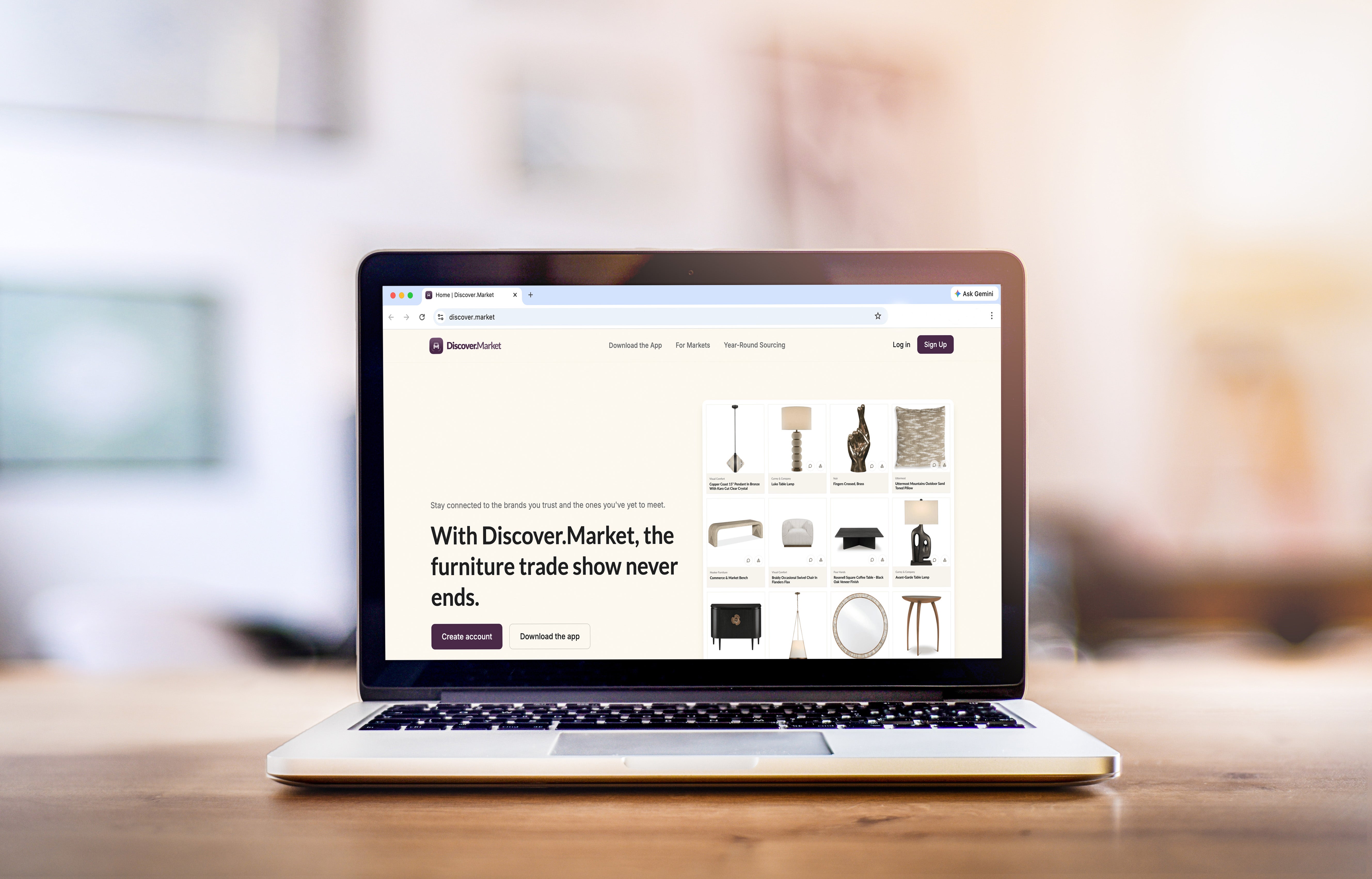

Since its debut in 2020, SideDoor has been through some changes. The site launched as a digital platform with a clever hook, allowing designers to curate shoppable mood boards they could feature on their own sites. But the company was more commonly used as a digital multiline, a place where designers could shop across many brands with a single trade account. Now SideDoor is making another big change, winding down its former operations and relaunching as Discover.Market, an app for navigating trade shows.
The challenge SideDoor faced: After the pandemic boom, designers mostly used it for inspiration rather than to shop. However, despite the fact that the site’s cash registers weren’t ringing, its 15,000 users remained engaged. “Even though commerce fell off, the users were still on our platform, using us to put collections together,” says SideDoor founder Lynsey Humphrey. “Even though we weren’t getting the same checkouts, we had the same traffic. We thought, ‘There’s something interesting here.’”
From that insight came a new company, albeit one with a radically different approach. Rather than tackle online commerce, Discover.Market looks to solve a familiar pain point for trade show attendees: You come, take hundreds of photos of product you’re excited about, get home, then struggle to make sense of the digital mess cluttering up your phone.
“What does that picture do for you in 90 days, when you have to scroll back through to your October pictures to see the 400 you took? How do you find the product on those vendors’ websites?” says Gage Edward, president of partnerships at Discover.Market. “That was kind of the aha moment. We have data from the vendors because we built [SideDoor]; we’re seeing this massive problem we’ve all experienced as market attendees; we have the user base—why don’t we just connect the dots?”
The company hopes to solve the problem by nipping it in the bud. Instead of snapping pics as they browse a participating showroom, designers use the (free) Discover.Market app and scan product tags. The information is automatically saved and categorized—along with contact info for a rep.
Similar technology has been implemented by individual brands within their own showrooms, but Humphrey and Edward’ bet is that by applying it across a wide swath of vendors, designers will embrace using their app throughout a market. “You can go showroom to showroom, scan all the products you love quickly, and leave with your entire library in front of you, of all of your discoveries, and start to pitch those to clients,” says Humphrey.
The duo soft-launched the app at High Point last fall, then road-tested it again at Las Vegas Market earlier this year. They’ll officially unveil it at Spring High Point Market, partnering with 200 brands, including Four Hands, Visual Comfort, Century, Loloi, Caracole and Kravet.
Though the platform is aimed at solving a common issue plaguing designers, the brands—which pay a tiered fee to be included—are Discover.Market’s paying customers. The primary benefit is obvious: Their product doesn’t get lost in the depths of a designer’s phone. However, Edward says that the app offers vendors a new data point to help with efficient product development. “[Brands can now see that] the vignette at the front got 500 scans. [They can] develop more of that fabric view by the next market, not a year later.”
Not on the road map: Getting involved with transactions. Humphrey found that while vendors were intrigued by SideDoor, they often preferred to own the purchasing process themselves. As a result, Discover.Market will focus on inspiration and connection alone. “Some [vendors] wouldn’t be on SideDoor because we were commerce,” says Edward. “Well, let's switch the economic model. As a vendor, why don’t you pay to have your library in front of our audience and then connect the dots that way?”
“Instead of redoing SideDoor, we created something new that utilized all the best components of the platform, which were all the discovery features,” says Humphrey. “We’re just using them in a new way.”