











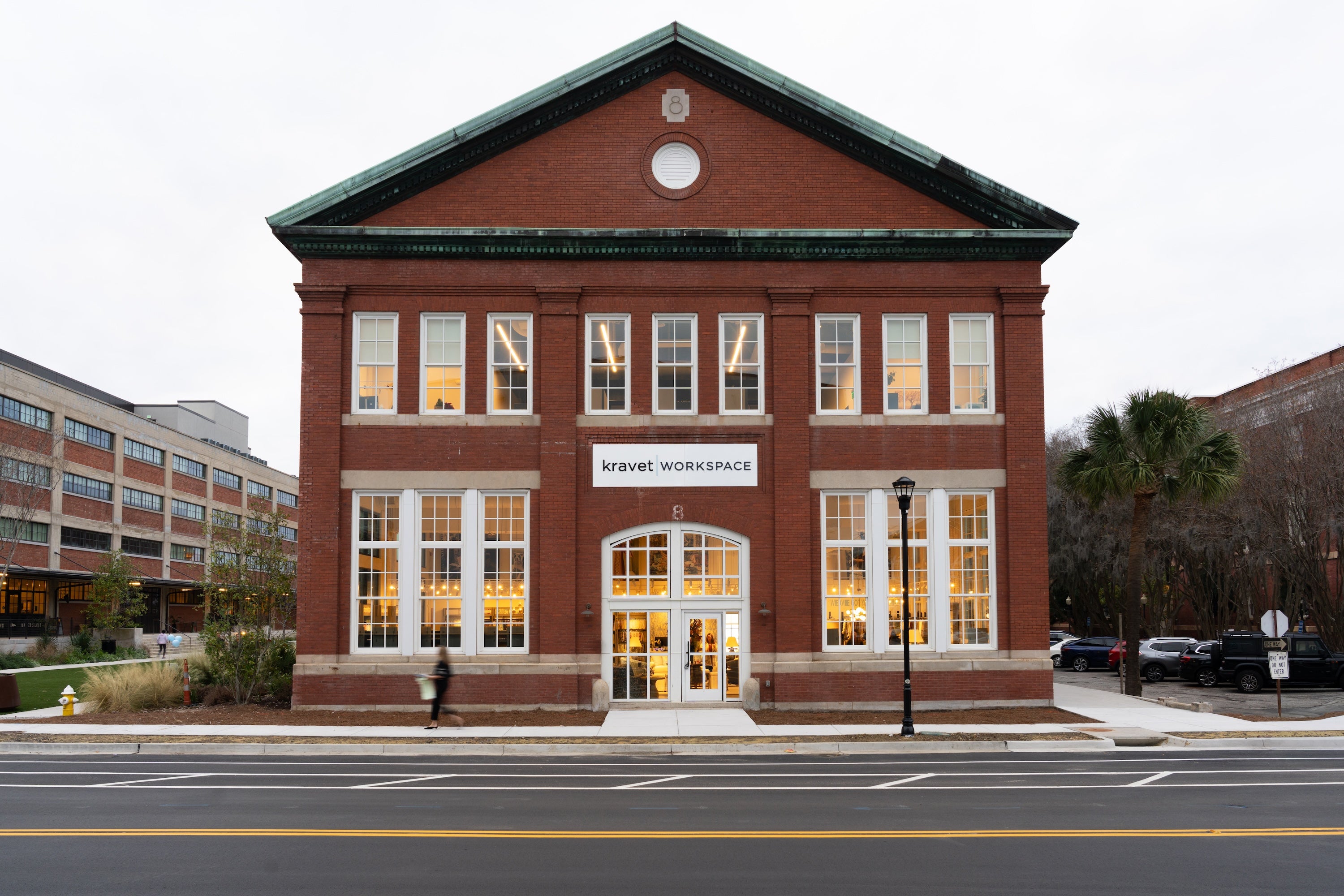

In recent months, a number of trade brands have flown South for the winter to debut brick-and-mortar showrooms at South Carolina’s new Charleston Design District. Located along the Cooper River on the site of the city’s former navy yard, the district is a key component of a massive redevelopment effort led by Jamestown. Of the 85 acres in play, the company plans to carve out 150,000 square feet for trade showrooms, with the goal of creating a regional hub for designers in the Southeast. Jamestown has a proven track record when it comes to such projects. The design-focused developer is the force behind Brooklyn’s Industry City, the Boston Design Center, and as of last spring, the Design Center of the Americas in Southeast Florida. When it came to Charleston, Jamestown president Michael Phillips says the navy yard was a particular draw due to its existing tenants—brands like Urban Electric, Robert Long Lighting and Fritz Porter, which helped to establish a solid pipeline of luxury interiors enthusiasts long before the design district came to be. With the addition of brands like Kravet, Stark, Holland & Sherry, and Schumacher, Phillips hopes to maximize the appeal. “There are a lot of great contributors to the design ecosystem that we’re joining together by creating the district,” he says.
The design district’s newest brands value being among industry peers; that the region is a fast-growing market only helped sweeten the deal. “Charleston has always had a rich design heritage, but we’ve seen a groundswell of creative energy and growth recently that made it a natural fit for Stark,” says CEO Chad Stark. “It’s less about reaching a new audience and more about becoming part of an existing one.”
The motivation was similar for Phillips, who says that selecting Charleston taps into an overlooked community of design professionals without nearby access to trade brands in a centralized location. “I don’t think people really love to travel to Atlanta as a resource, or to go to New York,” he says. “They’d like to have the resources here, and there’s a lot of design-forward development [in the region]. Whether it’s Kiawah River, the Highlands and Cashiers markets, the South of Broad houses, the Charleston Peninsula houses, lots of farms and country houses, and places like Brays Island and Hilton Head—it’s just a very robust market for renovation, building and home decor.”
More and more, says Phillips, locating those untapped designer customers means looking beyond major metropolitan areas and thinking regionally. “Cities are growing in the South and in the Midwest, so more people and more density creates more demand, and that’s getting distributed,” he explains. “It’s no longer a hub mentality—it’s more hub and spoke. Design districts are a solution to creating an outpost or a spoke to a much bigger fortress design center in cities that can support that critical mass.”
As for the future of the design center model, Phillips believes another part of the equation is increasing accessibility to a wider range of visitors. Beyond design professionals, the Charleston Design District will court regular consumers, creating a “high-street retail meets design-focused district,” he says. Offering stores specializing in kitchenware, bridal and floral alongside amenities like live/work spaces, a rooftop restaurant and a coffee shop helps broaden the funnel for the shopping center’s clientele.
“Charleston is such a unique ecosystem that’s both highly local and globally known,” says Phillips. “It’s a great regional destination, but also the Spoleto Festival and a lot of different international visitors, coupled with the culture of its architectural history, make it a place where design lives and thrives.”








 Withdraw Consent / Manage Privacy Preferences