


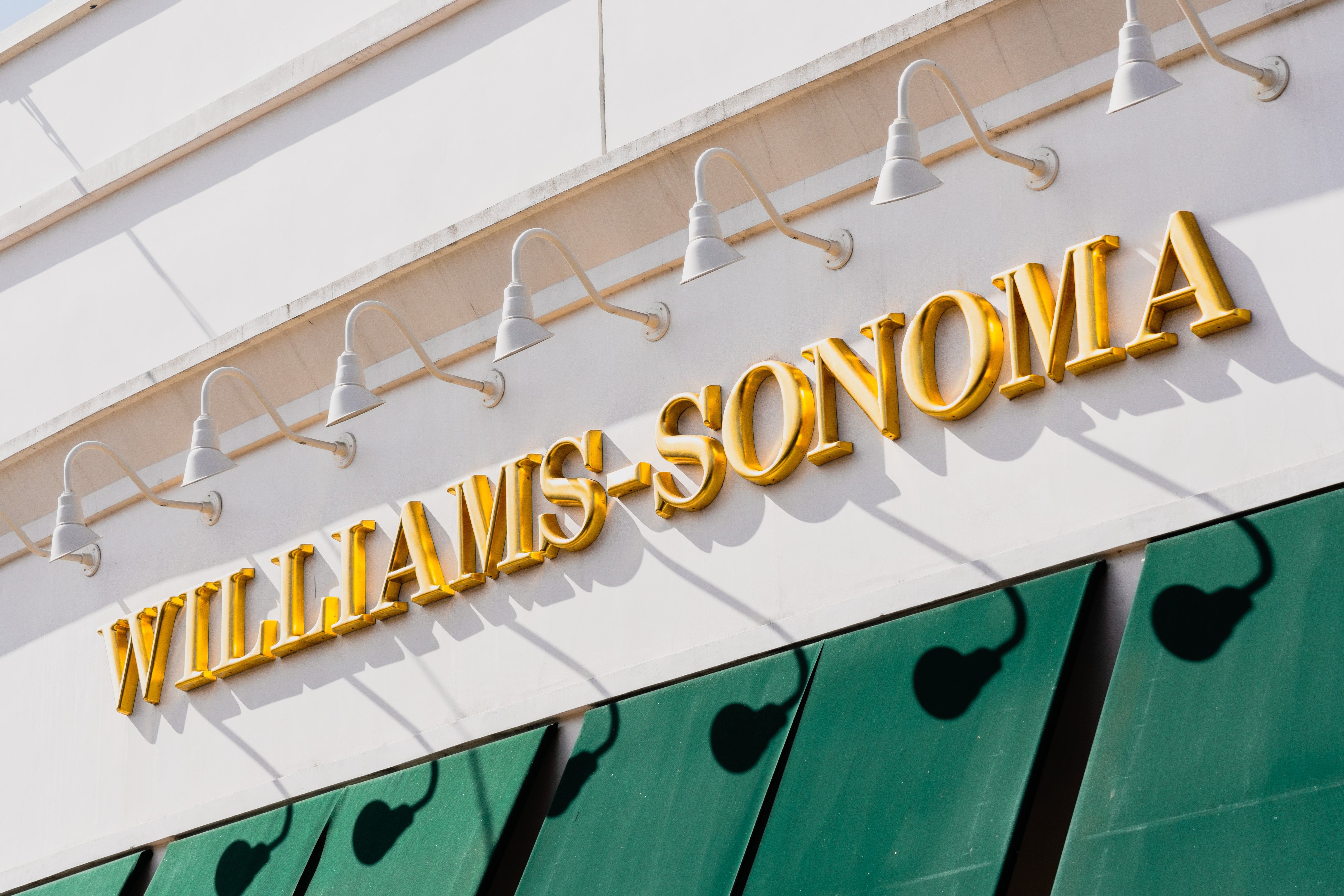

Williams-Sonoma announced this week that it has joined OpenAI’s newly launched Ad Pilot Program—a partnership that will see the retailer become one of the first companies to test out advertising in ChatGPT. As The Verge reports, the company joins a growing list of brands taking part in the pilot program, including Target, Adobe, Audible, HelloFresh and Ford.
“AI is rapidly enhancing product discovery and becoming an integral part of how consumers make informed purchasing decisions,” said Williams-Sonoma CEO Laura Alber in a release. “By collaborating with OpenAI in this early test, we have the opportunity to help develop a new advertising approach—one designed to engage consumers thoughtfully, contextually, and in a manner that aligns with how users expect to interact with information on their platform.”
The pilot program, which OpenAI officially rolled out earlier this week, will only affect adult users on ChaptGPT’s free and Go subscription tiers. (Subscribers to the higher-cost plans will not see ads.) Users can opt out of ads, but in exchange, they’ll have access to fewer daily messages with the chatbot.
The news comes amid growing commercial ties between AI giants and retailers, including in the home world. Though display advertising is new for OpenAI, the company has already unveiled several partnerships allowing brands—including Walmart, Etsy and Shopify—to participate in a click-to-buy program, in which users can shop directly through links in ChatGPT. Last year, Ashley Furniture announced a similar deal with AI search engine Perplexity.
Brands of all sizes have been racing to understand how they can show up in AI queries, leading to the rise of “AEO” (answer engine optimization), the close cousin of SEO. All of these currents are downstream of a simple thesis: In the future, consumers will start shopping with AI, not a search engine or marketplace.
In its own business, Williams-Sonoma has moved to adopt AI more aggressively in recent years. In 2023, Alber sounded a somewhat cautionary note, speaking at Salesforce’s Dreamforce conference: “When you think about brands that are going to win with AI, they have to really add value to the customers. They have to serve them better than they did before. The last thing you want them to do is to hurt the customer experience.” But in 2025, the company signed a deal with Salesforce to deploy its AI agents toward a goal of “autonomously resolv[ing] more than 60 percent of chat inquiries.”
The cocktail of ads and artificial intelligence is not without controversy. Many critics fear that their introduction will incentivize chatbots to steer users toward advertisers. This week a former OpenAI researcher penned an op-ed in the New York Times, saying she had “deep reservations” about the company’s ad strategy. During the Super Bowl, OpenAI competitor Anthropic ran a series of commercials lampooning the idea that AI chatbots would come with ads (the company has claimed its AI assistant, Claude, will remain ad-free).
According to OpenAI, ads that appear in ChatGPT will be clearly labeled and will not influence the chatbot’s response. Conversations between users and the AI assistant will not be shared with participating brands—though those brands will have access to performance metrics like views and clicks.