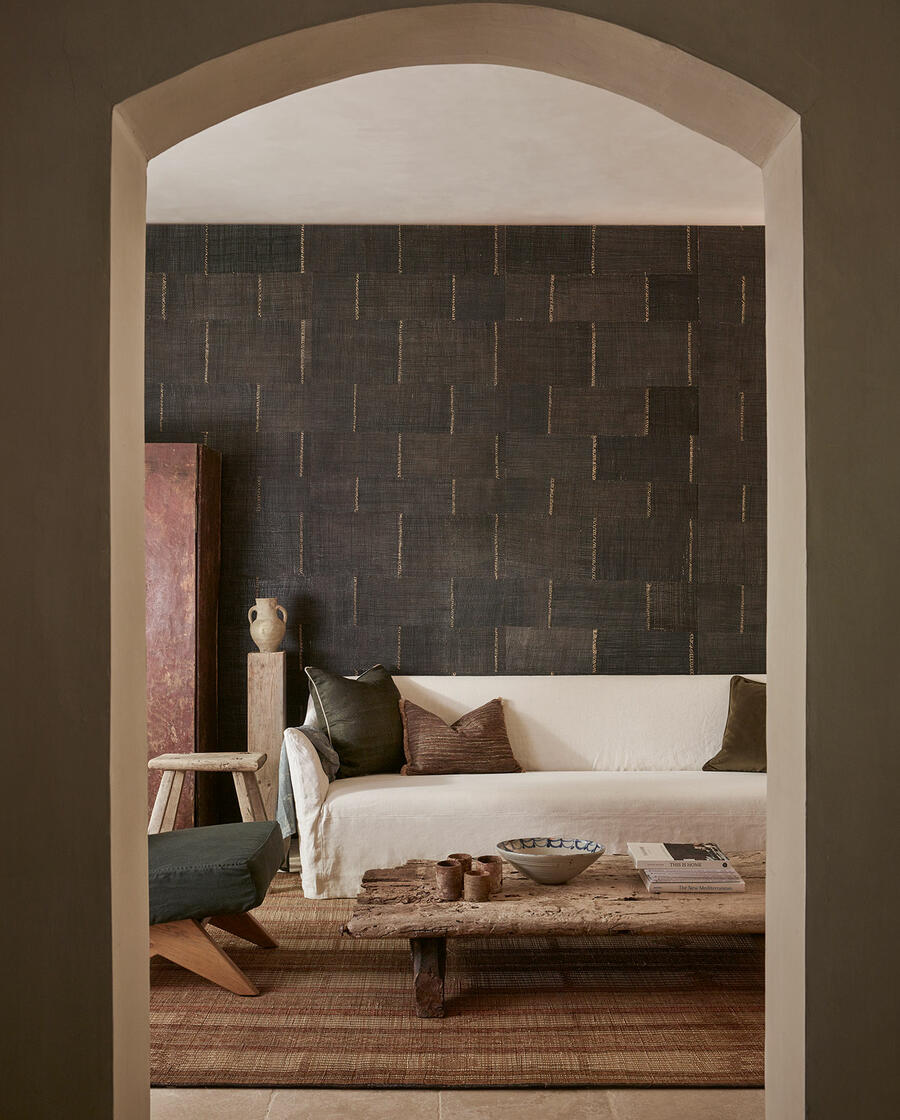
















This week in design, wealthy homeowners are spending up to $1 million on luxury fish tanks, with one purveyor claiming that “art budgets have now become aquarium budgets.” Stay in the know with our weekly roundup of headlines, launches, showhouses, recommended reading and more.
Business News
The Senate passed a major housing bill last week to increase the supply of new housing and prevent institutional investors from scooping up single-family homes, The New York Times reports. The bill would allow prefabricated homes to be built faster and cheaper, along with updating mortgage lending standards and expanding access to financing for new construction. It will also place limits on investors, capping their holdings at 350 single-family homes, and requiring them to sell rental properties after seven years. The legislation garnered wide bipartisan support in the Senate—passing by a vote of 89 to 10—but it still must pass in the House, where it may face greater challenges. Despite indicating his support for the package, President Donald Trump has said he will refuse to sign the bill until Congress moves forward on approving new voting restrictions.
A lawsuit seeking the reinstatement of the de minimis exemption—a policy that allowed imports of less than $800 to enter the country duty-free until it was removed by President Trump last summer via executive order—is moving forward, Supply Chain Dive reports. The U.S. Court of International Trade lifted a stay on the case last week after proceedings had been paused to allow the Supreme Court to rule on the legality of Trump’s sweeping tariffs. Now that the court has largely struck them down, the plaintiffs are arguing that the International Emergency Economic Powers Act (the same legal justification that the Supreme Court deemed ineligible for the administration’s other trade policies) did not give the executive branch the power to reverse the exemption. (The president signed another executive order last month continuing the de minimus suspension.) The defendants are required to file their response by March 26.
Quince completed a $500 million Series E funding round last week, bringing its total valuation to $10.1 billion, Retail Dive reports. The brand has been on a steady rise since its founding in 2019, expanding its manufacturer-to-consumer model from bedding and apparel to categories like jewelry, beauty, home goods—and now, even wine and caviar. The company completed its last funding round just seven months ago, raising over $290 million, and it claims triple-digit growth annually, bringing in $1 billion in revenue last year.
Kathy Ireland—the supermodel who later built a sprawling home furnishings brand—is suing her former business managers, Variety reports. In a lawsuit filed this month, Ireland and husband Greg Olsen have accused Jason Winters and Erik Sterling of theft, negligence and constructive fraud, claiming that the pair are liable for damages “in the tens of millions of dollars, if not exceeding $100 million,” according to the publication. Despite the success of Ireland’s branding endeavors, which Forbes once valued at $420 million, the lawsuit states that the former model and her husband recently discovered that “there is no wealth securing their retirement and their children’s futures, as they were led to believe.” Winters and Sterling have not publicly commented on the suit, but posted a cryptic message on social media last October, writing: “Hold your reaction until you learn the truth.”
Home decor, furniture and bedding brand Unison will be closing on May 31, according to a statement posted on the company’s website. Married co-founders and owners Alicia Rosauer and Robert Segal cited the rising cost of manufacturing and importing products from Europe and Asia over the past year for its closure. “With uncertainty still ahead, we felt it was not healthy to continue operating under these circumstances,” their statement read. “Further, we did not want to compromise the level of quality in our products, nor could we justify our retail prices increasing to where it became unattainable for our customers.” Founded in 2006, the Chicago-based brand garnered a devoted customer base drawn to its range of bedding, pillows, rugs, lighting and furniture rooted in Scandinavian design principles. As the company begins to wind down in the coming months, its website will remain in operation and continue to accept orders through May 5.
In recent years, hundreds of stone-fabrication workers have contracted a deadly occupational disease called silicosis, which is incurred through the inhalation of crystalline silica particles released when quartz is cut. Facing an onslaught of litigation, stone manufacturers and distributors say that improper safety precautions at independent fabrication shops, rather than the product itself, are to blame—and now, they’re hoping Congress will back them up. As The New York Times reports, a new bill sponsored by Republican lawmakers and supported by industry heavyweights like Cambria seeks to give the industry immunity from injury lawsuits, a legal precedent followed by manufacturers of vaccines and firearms. Introduced in September 2025, the bill would place the burden for safety assurance on fabrication shops and workplace regulators. While the legislation remains in committee, it has also seen pushback from Democratic lawmakers and epidemiologists, who say the industry must look toward safer substitutes for engineered stone.
Launches and Collaborations
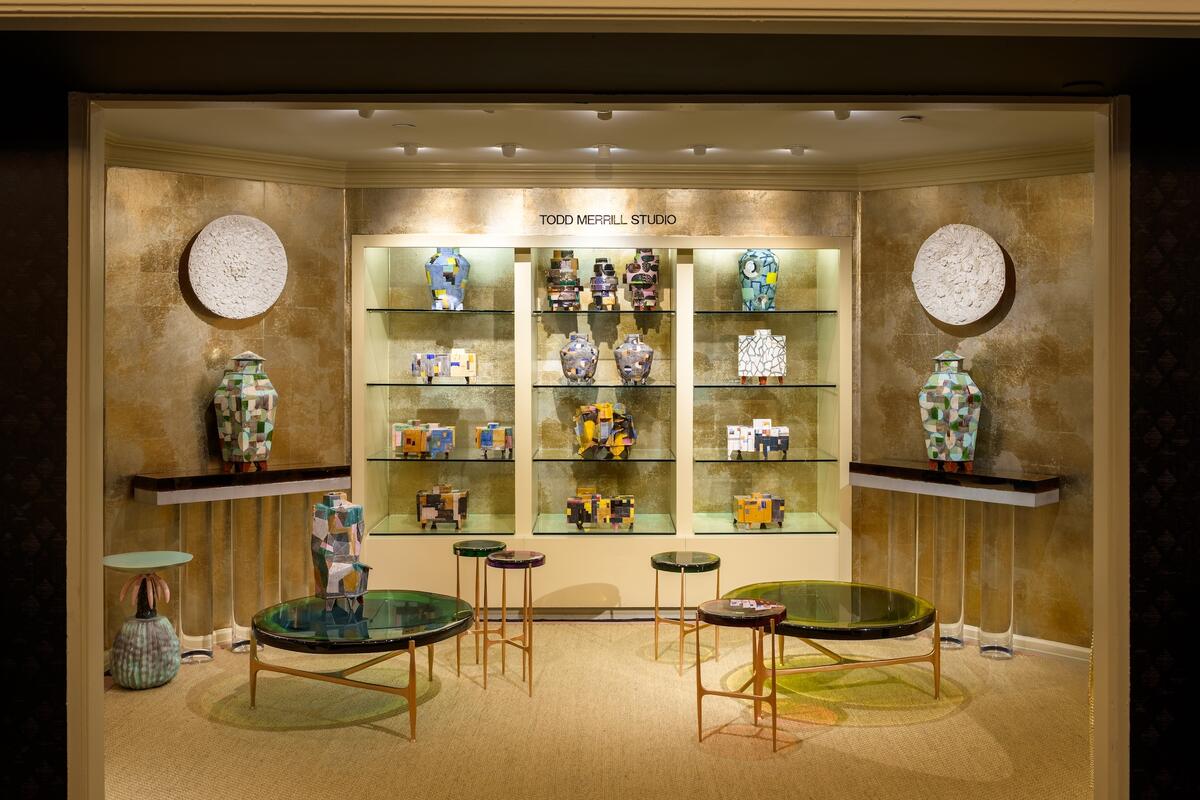
New York–based collectible design gallery Todd Merrill Studio has debuted a new permanent retail space inside Bergdorf Goodman. Located on the department store’s seventh floor, the nearly 600-square-foot space features handmade, contemporary pieces from the gallery’s international roster of artists and designers. Highlights include the work of photographer Rose Hartman, ceramist Christopher Russell’s chinoiserie-inspired vessels, and pieces by sculptor Paige Stewart.
Bespoke wallcoverings brand Fromental teamed up with fashion designer Harris Reed for a collection of homewares inspired by the pair’s past collaborations. The partnership began when Reed tapped Fromental for custom wallcoverings in his own apartment—an experience that led the two to work together on three subsequent runway collections. Now, the brand has brought his runway vision to life on its hand-painted and hand-embroidered wallcoverings, along with rolling out new cushions, bolsters and throws, each inspired by the designer’s couture collections.
BenchMade Modern partnered with Pollack to bring the boutique textile house’s fabrics directly to consumers for the first time. The DTC brand will stock three Pollack patterns—the plaid woven Glasgow, cotton-like velvet Brussels and textural weave Milestone—in multiple colorways.
Sotheby’s Institute of Art NY announced a new Master in Luxury Business degree program. The yearlong, in-person course will focus on providing students with an education in the strategies, operations and innovations shaping luxury sectors today, ranging from fashion and beauty to hospitality and technology, with the first cohort scheduled to begin this fall.
Framebridge has launched an art deco–inspired collection. The new assortment features seven frame styles and two tabletop options—all of which are lacquered, gold-leafed and gilded in Italy—along with six patterned mats featuring geometric illustrations.
Showhouses
Atlanta Homes & Lifestyles’ Southeastern Designer Showhouse returns this spring for its 11th edition. A cohort of more than 20 designers from across the region—including Anna Booth, Suzanne Kasler and Isabel Ladd—have been selected to reimagine an 8,000-square-foot residence in Atlanta’s Chastain Park neighborhood. The space will be open to the public from April 16 through May 10, with proceeds benefitting local food pantry Solidarity Sandy Springs. For more information, click here.
Recommended Reading
As traditional print media continues to struggle, niche indie magazines are enjoying newfound success—and now, the design and interiors category seems to be riding the wave. For The New York Times, Alice Cavanagh writes about a fresh wave of shelter magazines—titles like Scenery, Ton, Neptune Papers and Cultured at Home—in which the “patina of an individual’s life and habits is celebrated over newness and trends.”
Speaking of shelter magazines, the category has never shied away from offering design details and inspiration—but the costs of creating those visions are another story. For Dwell, Kelly Faircloth explores how changing attitudes around luxury and aspirational living influence the tendency to disclose information around the prices of homes and their furnishings.
In Memoriam
Victoria MacKenzie-Childs, who co-founded her eponymous home goods brand alongside husband Richard MacKenzie-Childs in 1983, has passed away. As The New York Times reports, the ceramic sculptors launched their company to fund their daughter’s way through ballet school. Before long, their trademark checkerboard pattern (known as “Courtly Check”) and whimsical tableware, lighting and furniture designs became must-have home items of the 1990s and early 2000s. The brand operated out of a farmhouse in Aurora, New York, though its success quickly landed it among the most exclusive retail settings, with a dedicated room on Bergdorf Goodman’s home goods floor and a storefront on Madison Avenue. By 2001, however, the brand’s founders lost the company to bankruptcy, after which it changed hands four times before current owner EagleTree Capital, a private equity firm, took control. The founding couple, meanwhile, moved on to debut a new brand, Victoria & Richard Emprise, while settling aboard the docked 1903 Ellis Island ferry they called home. “They opened the average person’s eyes to the fact that they could do something different and creative,” avid collector Gail Riggs told the NYT.