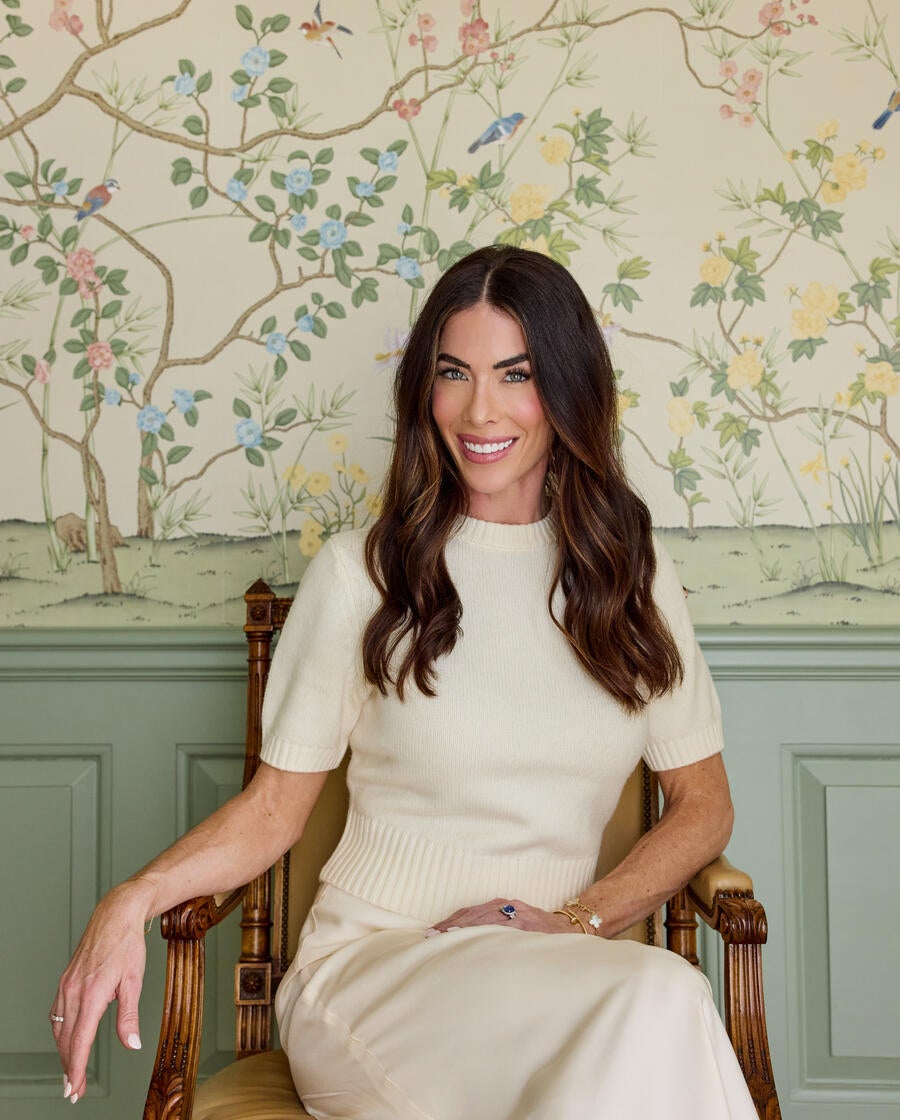




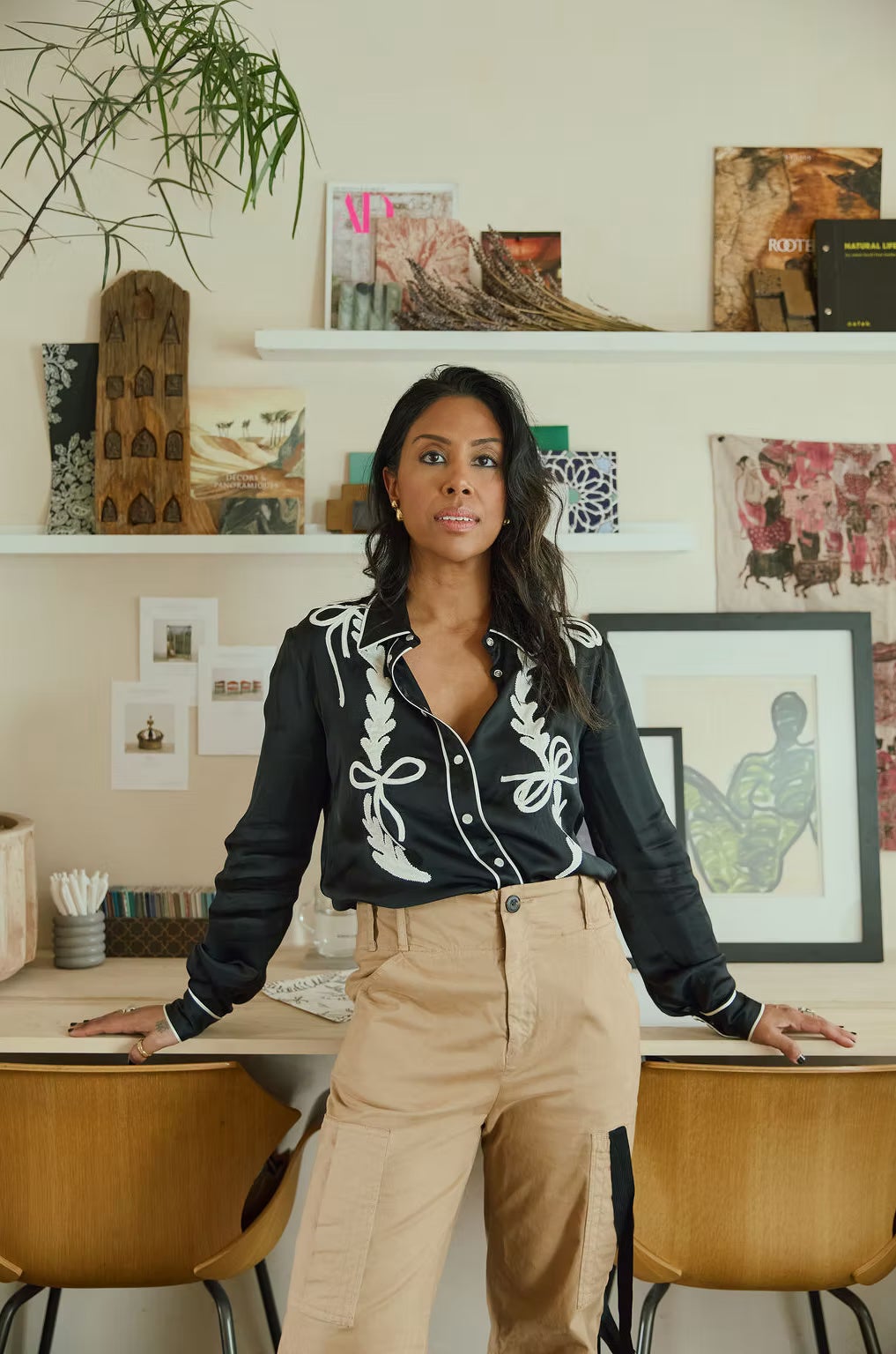

By the time the pandemic hit, Hema Persad had found great success in two totally different fields. The first was commercial litigation, which she began practicing in 2008—just in time for the soul-crushing work of representing big banks as they muddled through the mortgage crisis. Five years in, she decided to start over as a celebrity stylist in Los Angeles—a job that was glamorous at first (the Kardashians and Kate Hudson were among her clientele) but offered little financial return in a cutthroat industry. For a while, Persad hovered, unsatisfied, between the two paths. Then a third opened up.
“One [styling client] was like, ‘Hey, I got a new apartment. I trust you and I like your house, so can you just decorate mine?’” Persad tells host Kaitlin Petersen on the latest episode of Trade Tales. “I’d never done it for anybody else, and I was like, ‘You know what, I’m just going to do it.’”
Word of Persad’s new interior design offering traveled quickly among her star-studded styling clients. By 2021, she had wrapped up her styling duties completely and gone all in on interiors, launching Sagrada Studio that year. On the show, she shares how many of the mechanics of her stylist career translated to running a design business, from working with high-end clients and channeling their taste into a new vision, to photographing the finished result and leveraging those images into future projects.
Elsewhere in the episode, the designer shares how managing a team shifted her perspective on business growth, why she’s been a fast adopter of AI tools, and what to expect from celebrity clients.
Crucial insight: Last year, Persad made a major push to secure a greater number of new-build and large-scale hospitality projects. Adding bigger, flashier spaces to her portfolio seemed like a win—the pause on cash flow and marketing photos that resulted from longer lead times, however, slowed down her business. Now, she’s prioritizing a more diverse workload. “I think you have to have the right mix of projects you can show quickly—and projects that you can collect money on quickly—versus those big, behemoth projects that are lucrative and excellent for the portfolio, but things move slower,” she says.
Key quote: “You’ve really got to think about how you feel into [a client’s] world, and it has to be seamless. You don’t want to be the hiccup. You have to be conscious of what else they’re experiencing, and make sure that what you’re offering matches that.”
This episode was sponsored by Dallas Market Center and Kohler. Listen to the show below. If you like what you hear, subscribe on Apple Podcasts or Spotify.