




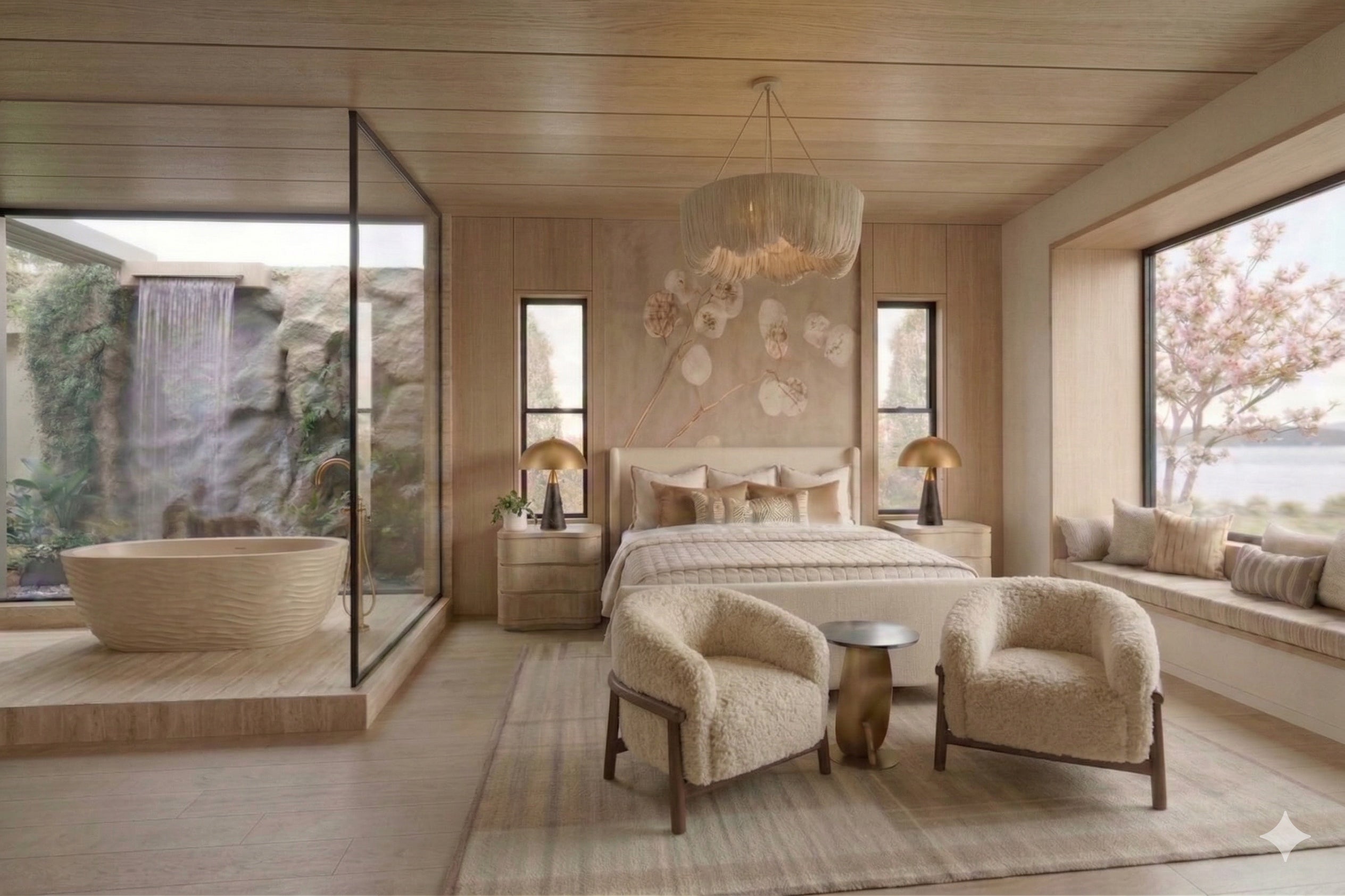

Imagine waking each morning and being just a few steps from an oasis of feel-good amenities. There’s a cold plunge, a sauna, a meditation pod, red-light therapy, in-floor body scanning—all accessible before you’ve even left your apartment.
The space is not a spa, hotel or fitness center—it’s KA Residences, designer Nina Magon’s new vision for wellness-centric residential living. The 30-unit concept debuts this month in Houston, with each apartment featuring its own 400-square-foot wellness space, called the Merkaba room, as well as a “sky backyard,” a balcony complete with a 10-by-20-foot pool. That’s in addition to the development’s shared amenities: a full-size lap pool, a padel court, a yoga studio and a sound-bath facility.
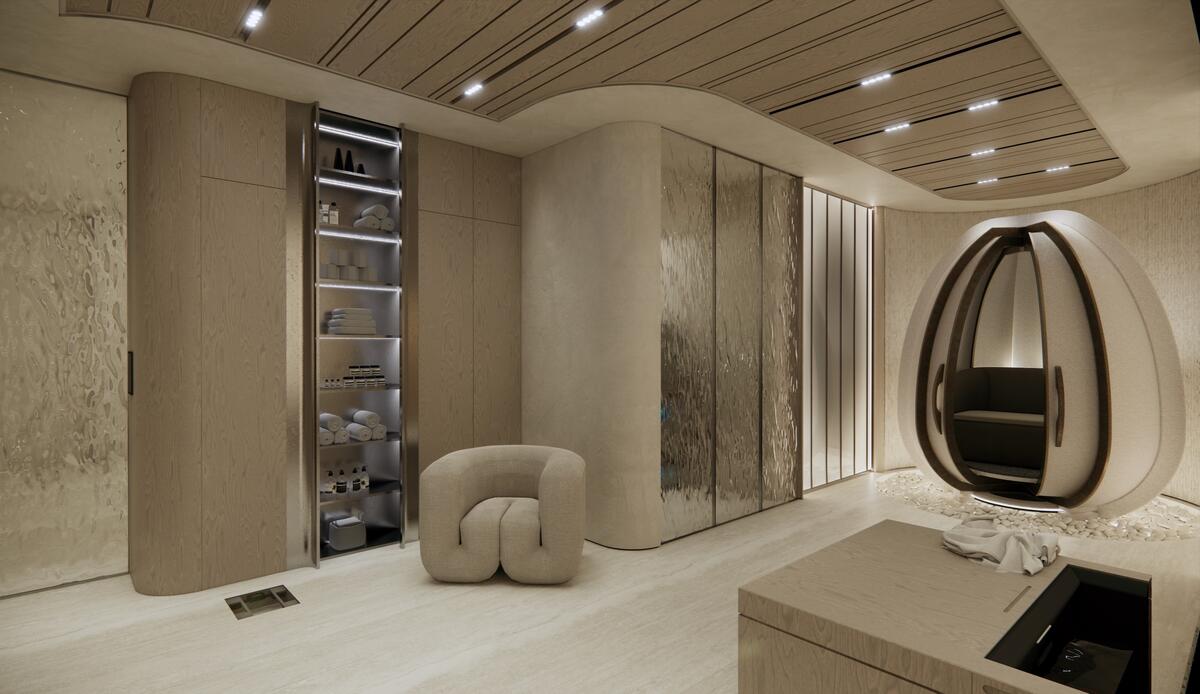
The condos are just one example of the investment designers are making in the wellness sphere—and its growing economic potential. Once the domain of health nuts and spa fanatics, the category has gone mainstream in recent years, representing an estimated $6.8 billion business in 2024, which is projected to reach $9.8 trillion by 2029. As consumer demand increases, it’s no surprise that designers are incorporating health-centered amenities into their projects, implementing emerging technology, biophilic design and spalike spaces to shape the future of wellness at home.
Five years ago, Toronto-based designer Ali McQuaid Mitchell had never designed a spa—which made it all the more surprising when a group of founders approached her with a request to develop a space for a new kind of sauna and ice-bath experience. The brief was unusual: Design a wellness space that looks nothing like a typical spa.
McQuaid Mitchell delivered. Guided by a mood board that referenced everything from nature and musical concerts to the movie Dune, she designed an otherworldly environment with cedarwood paneling on the walls and ceilings, floors made from a mosaic of river rocks, and warm atmospheric lighting that gives the impression of candlelight. The project was Othership, which debuted in New York’s Flatiron District last year to great fanfare, and has already spawned a host of additional locations currently under development in other major metropolitan areas.
The experience was transformative for McQuaid Mitchell’s firm, Futurestudio. Today, roughly 80 percent of the company’s work is in the wellness space, including spas, bathhouses, fitness studios, social wellness experiences and at-home amenities. McQuaid Mitchell says the assignment gave her a glimpse into where the industry was heading.
“It really clicked for me that there was this whole spa and wellness industry that was about to be disrupted by all of these entrepreneurs,” she says.
Most industry insiders pinpoint the start of the collective fascination with wellness to the pandemic, when the sudden global health crisis prompted an interest in preventative measures and led to an overall deeper focus on well-being. In the years since, the movement has become a dominant force in pop culture, minting a host of social media stars. For a certain slice of the population, wellness clubs like Othership have replaced bars and restaurants as a site for people of all generations to commune. The trend has also transformed the U.S. real estate landscape: Data firm CoStar recently found that salons, spas and fitness studios outpaced retail tenants’ total leasing space for the first time last year.
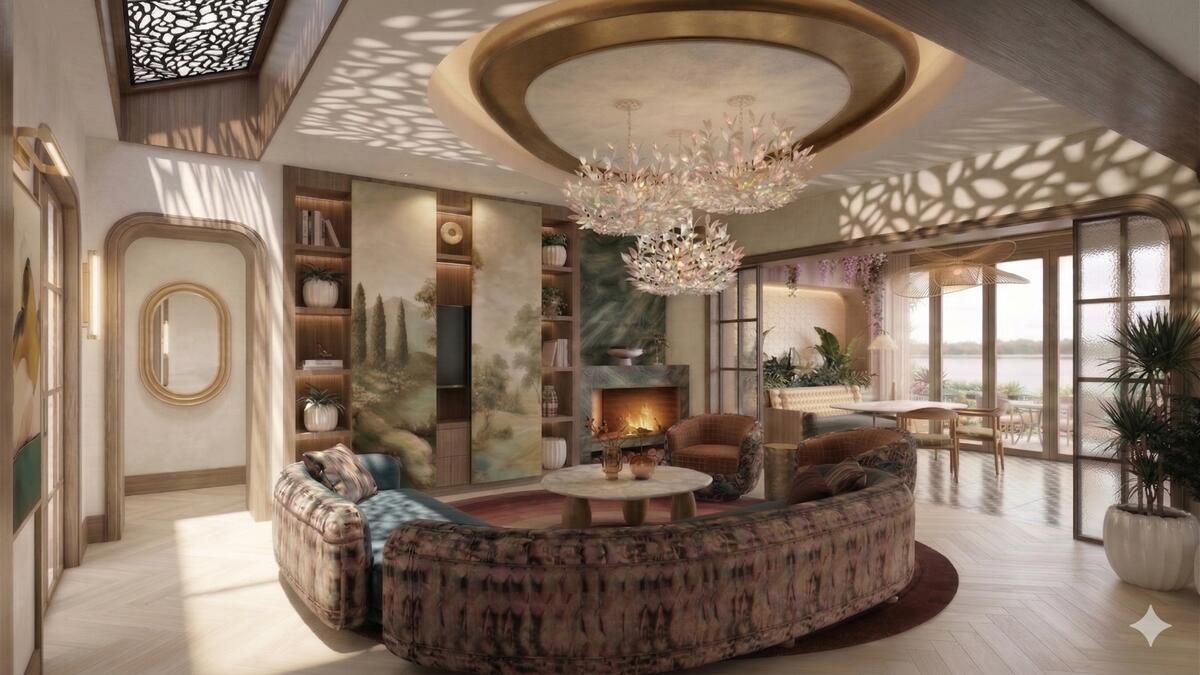
The design industry is catching on as well, with a growing number of resources available to designers who are interested in implementing wellness features in their projects. Later this month, the inaugural Well Design Summit will take place in Miami’s Coconut Grove neighborhood, gathering interior designers, architects and real estate professionals for a series of presentations on health-focused design. The city has become an epicenter of sorts for the wellness movement, with officials embracing efforts to become the next Blue Zone: communities in which residents live considerably longer and healthier lives on average as a result of collective lifestyle choices.
With appearances from top firms like Morris Adjmi Architects, IM/KM Architecture and Planning, and Ringo Design Studio, the summit aims to prepare the industry for a new era in which wellness is the top priority for high-end homeowners. Summit organizer and industry veteran Courtney Lukitsch plans to bring the event to other key markets for subsequent iterations, targeting areas like New York or the Hamptons, where wellness is increasingly driving home purchasing decisions. “Wellness is the ultimate luxury,” she says. “You’ve got this very affluent population looking to kind of live forever, so that means major behavior modification.”
Other groups have also been aiming to prepare designers for this reality, including Science in Design. The organization is the brainchild of Mike Peterson, a former shelter magazine publisher who quit his job in 2015 to devote his career to exploring the design industry’s potential as an alternative health resource. “I started talking on the subject around the country, and finally, in the last four or five years, it has really kicked in,” he says.
At High Point Market in 2023, Peterson launched the Science in Design certification—a program developed alongside academics in the field to give designers an education on topics like biophilia and neuroaesthetics, along with the science and data to back up their findings. The spike in interest has been stunning: In 2018, Peterson remembers giving a Science in Design presentation at the Dallas Market Center to a room of about 15 people. Today, an average of 175 registrants attend the organization’s monthly webinars.
“There needs to be a fundamental seismic shift, a paradigm shift in our industry. Science now confirms that [design professionals] improve health. So why aren’t we marketing ourselves as a health-based industry, as well as an industry that creates beauty?” says Peterson. “The goal is to get as many designers, retailers and manufacturers all singing from the same songbook—and it’s happening.”
This month, Peterson will be delivering one of the keynote presentations at High Point Market, where he is debuting a new virtual wellness showhouse created by several Science in Design–certified designers. Marie Cloud, founder of the Charlotte-based design firm Indigo Pruitt, had always woven aspects of emotionally driven design into her projects, asking clients during the intake process about how they wanted a space to make them feel (a conversation guided by an actual feelings chart) and applying sensory details like touch, taste, sound and smell to her presentations. After attending the first symposium on neuroaesthetics at High Point in 2023, she realized there was hard evidence that practices like her own affected occupant well-being; she sought out the Science in Design certification soon after.
“It’s funny because we used to say things like, ‘We’re just selecting paint colors here,’ or ‘We’re not changing anyone’s life,’ when now science is saying, ‘Well, we actually are,’” says Cloud. “That was a big aha moment, because it turns up the validity and value of what we do. The type of investment that our clients are making is not just in the physical structure, but in their overall well-being—and that’s impactful.”
Cloud’s space in the virtual showhouse is a family wellness zone complete with a yoga studio, a fitness area, a sauna, a smart shower with aromatherapy, a conversation pit and a beverage station with an infused-tea bar, as well as an artistic corner where the occupant—in Cloud’s vision, a Black teenage girl—can recharge and protect her mental health. In creating a profile of a Black family, she hoped to reflect broader possibilities for improving health at home.
“I know what we’re up against medically and what the stats look like—that’s why I’m so passionate about the wellness space,” says Cloud. “As a Black woman, I know that hypertension and heart disease are some really scary things that I’m at risk of, so it is extra important for me to be very intentional about what I’m exposed to within my home. … I want Black families to be able to experience wellness and a place of refuge in their homes in a way that we haven’t been able to before.”
Cloud and other designers point out that it’s not only increased awareness of health in the post-pandemic era that’s driving the shift toward wellness-driven spaces, but also an uptick in available studies and statistics—all amplified by a new generation of podcasters and influencers who are making that information accessible. Longtime proponents of healthy materials, the designers at New York–based Clodagh Design had grown used to educating clients on the wellness-related concepts they included in their proposals. Now, as the general public develops a better understanding of how homes can affect their health, the team has found terms that once felt industry-specific cropping up in their proposal requests.
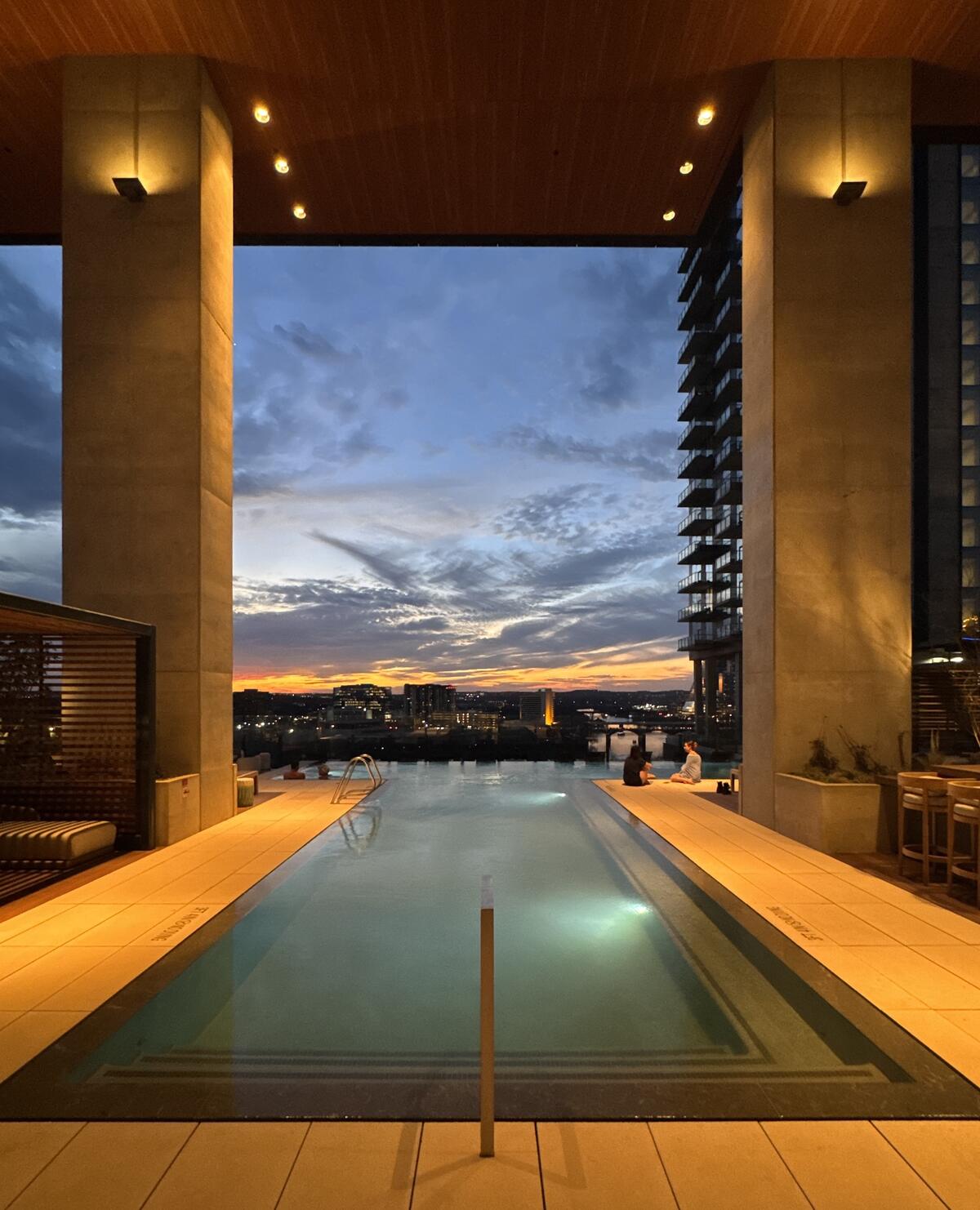
“Aside from some scientists, I don’t think anyone outside of design was using the word ‘biophilia’ 10 or 15 years ago. Now we receive RFPs from clients, and they’re requesting biophilia,” says Nancie Min, the firm’s design director. “Whereas 10 years ago it was a very specialized language, the notion of wellness and all of the componentries are now everyday language.”
In response to that growing demand, available furnishings and decor offerings beneficial to occupant health and well-being have also bloomed in recent years. Some are nearly invisible in the built environment, like low-VOC paint, air- and water-filtration systems, or lighting setups that mirror circadian rhythms. They make an impact on the well-being of not only the occupant, but also the environment—another idea that gained momentum following the pandemic.
“When everything was shutting down, the waters in Venice, Italy, started clearing up. There were dolphins swimming around, animals were coming back, nature was becoming more balanced,” says Clodagh director of design development Jose Achi, who also aims to source products like sustainable fabrics and wildlife-friendly outdoor lighting for a lighter environmental impact. “We mention a lot about our own health and our own wellness, but the pandemic also had this awakening [of the awareness] of the health and wellness of the planet, which in turn helps our own wellness.”
Others are more explicitly focused on individual health through technological additions. Each unit in Magon’s KA Residences, for example, includes an iPad embedded in the wall, which can be used to call a 24/7 medical concierge. A similar concept is being developed by Italian design and bespoke architecture firm Visionnaire in collaboration with the Longevity Suite, a biohacking and antiaging city clinic network; they have partnered to develop a series of residences in major cities across the globe that provide residents access to an in-house clinic and digital health monitoring platform.
Then there are the brands that are empowering homeowners themselves to monitor their health. This year marked the debut of Kohler Health—the kitchen-and-bath giant’s new division centered on smart health tracking. The initiative’s flagship product, the Dekoda, attaches to the toilet and analyzes data like hydration and gut health, which users can monitor over time through an app on their phones. It’s a format that other home companies have used for furniture items as well—mattress brand Eight Sleep’s smart bed, for example, tracks metrics like heartbeat, breath rate and REM sleep, in addition to regulating room temperature and humidity. In the morning, it compiles the data it has collected into a nightly sleep score.
Facing a newly informed generation of clients and a vast emerging landscape of offerings, designers may have to shoulder the onus of translating health-oriented demands and possibilities into the reality of home wellness in the coming years—and the opportunities for envisioning that new world are endless.
“There’s almost no preconceived notion of what these spaces need to look like—because who’s designed an IV lounge before? That’s only something you’ve seen on the market in the past couple of years,” says McQuaid Mitchell. “As a designer, that is the most amazing place to be, because then you can really imagine and push yourself to come up with the best way to let people experience these new technologies.”