





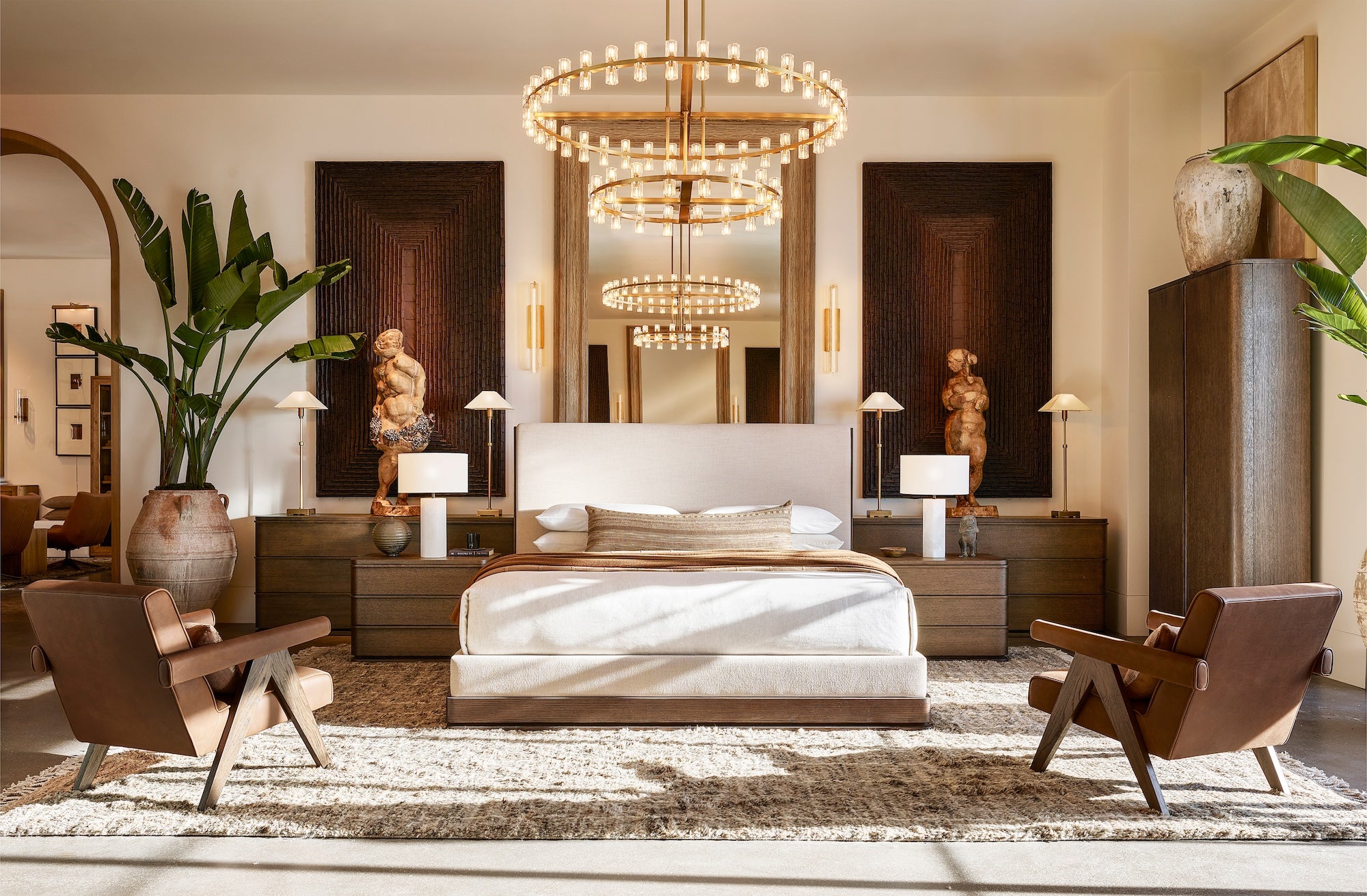

RH has never been shy about telling its story. But when reporting its fourth quarter and year-end results on Tuesday, CEO Gary Friedman took it to the next level with a 21-minute video accompanied by dramatic piano music that detailed the forthcoming launch of the new Estates brand and a whole host of initiatives. Unfortunately for Friedman, investors seemed to be paying more attention to the numbers than sweeping shots of its latest galleries.
This was not a strong quarter for the company formerly known as Restoration Hardware. Revenues were up 3.7 percent at $842.6 million, but that number represented a 3.6 percent miss from forecasts. Adjusted earnings per share were $1.53, well below analysts’ expectations of roughly $2.21. RH also seemed to be pessimistic about the immediate future, projecting a revenue drop of 2 to 4 percent in the first fiscal quarter of 2026. Its full-year outlook for 2026—4 to 8 percent revenue growth—was better, but still below consensus estimates.
As the news registered with investors, RH’s share price took a serious hit in the first hours after the market closed, tumbling roughly 17 percent. At press time, it’s currently trading around $109, a five-year low for the company’s stock and down more than 40 percent since the beginning of the year.
On the call, Friedman sought to empathize with investors, pointing to tariffs, the frozen housing market and the war in Iran as once-in-a-generation headwinds. “I don't blame anybody for saying, ‘Hey, it looks like an uncertain time to invest,’ whether it's in our stock or any stock in our category,” he said. RH, he pointed out, was at an unenviable crossroads, having spent big on European expansion and new product during a weak period for the home industry, returning again and again to a variation on: “You're looking at peak investment cycle and trough economic cycle.”
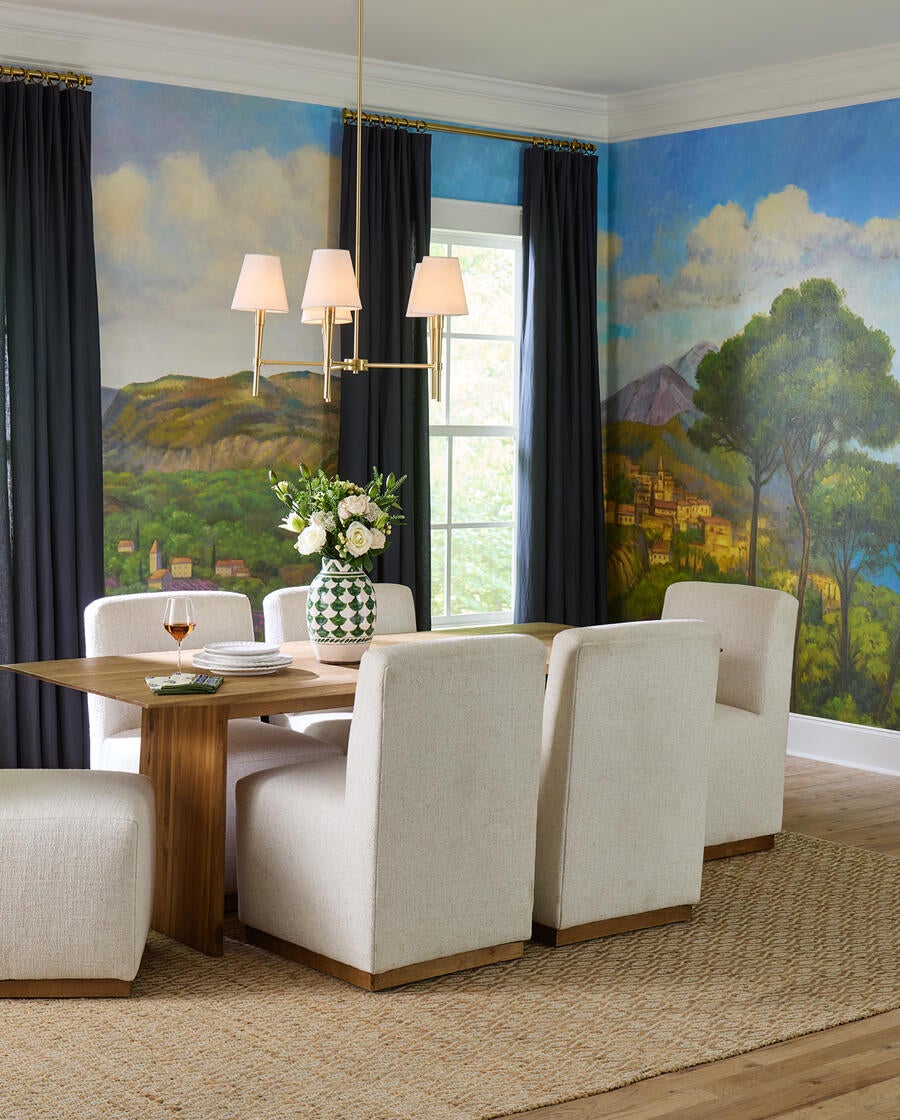
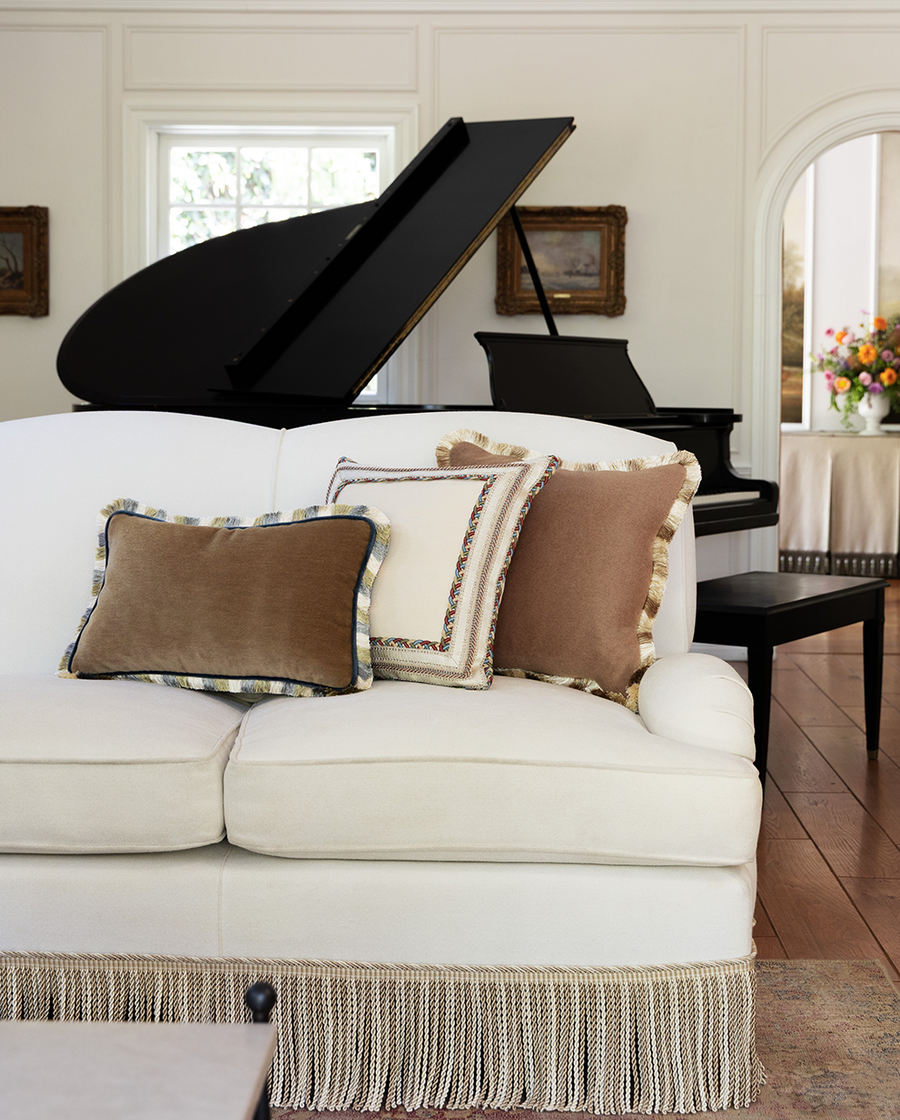
Still, there was no shortage of enthusiasm for the long-term vision. In the cinematic opening video, Friedman pitched RH Estates, its new traditional-oriented program, which he expects will be the company’s single biggest brand, pointing out that 60 percent of high-end homes in America feature classical or traditional architecture.
Estates will also make use of the five to-the-trade companies RH has acquired in recent years: Dmitriy and Joseph Jeup, which were announced in 2022; and the more recent purchases of Formations, Dennis & Leen and Michael Taylor. Together, they’ll power two additional offerings, RH Bespoke Furniture and RH Couture Upholstery—programs that Friedman specifically pitched to the design trade, noting that the company would be able to accommodate COM orders.
Estates will launch this April in Milan at RH’s new Gallery on Corso Venezia, whose debut coincides with Salone del Mobile. In the U.S., standalone Estates outposts are set to open in Greenwich, Connecticut, and San Francisco later this year, followed by West Hollywood in 2027; Estates departments will also appear in as many as 30 of the company’s existing stores. One of RH’s famed Sourcebooks will also arrive later this spring to detail the line’s expansive offerings.
Also on the horizon are new galleries both in Europe and the U.S., an increase in the restaurant count from 26 to 40 by the end of 2027, plus new-format retail complexes that group together individual buildings into a kind of RH compound. This last development was pitched explicitly as a way to cut back on build-out costs: “We believe we can build design compounds significantly faster and more capital efficient than our prior design galleries,” said Friedman.
But perhaps the boldest vision for RH’s future was a debt-free balance sheet. The company is currently carrying more than $2 billion in loans, which it pays millions every year to maintain. If investors didn’t respond to Friedman’s promise of couture upholstery, they surely took notice of this: “[We] expect to be debt-free by 2029,” he said. “While one might look at the current market discord and argue that RH has been in the wrong place at the wrong time, I would argue we've used this period to position our brand to be in the perfect place at the perfect time.”
____________
Warren Shoulberg is the former editor in chief for several leading B2B publications. He has been a guest lecturer at the Columbia University Graduate School of Business; received honors from the International Furnishings and Design Association and the Fashion Institute of Technology; and been cited by The Wall Street Journal, The New York Times, The Washington Post, CNN and other media as a leading industry expert. His Retail Watch columns offer deep industry insights on major markets and product categories.





 Withdraw Consent / Manage Privacy Preferences