









Emily Arthur and Sharon Dranko met at West Elm, where they worked together on product design and development. The two became fast friends and eventually business partners when, over the pandemic, they realized there was a hole in the market. “We both had renovated our homes in the past, and in the kitchen space [we] felt like there wasn’t really a product lens on how [to] start a kitchen renovation—[something] we were so used to in our furniture backgrounds,” Arthur tells host Dennis Scully on the latest episode of The Business of Home Podcast. “We set out to create more of an environment of looking at the kitchen space as a product.” The result was custom cabinetry startup Isla Porter.
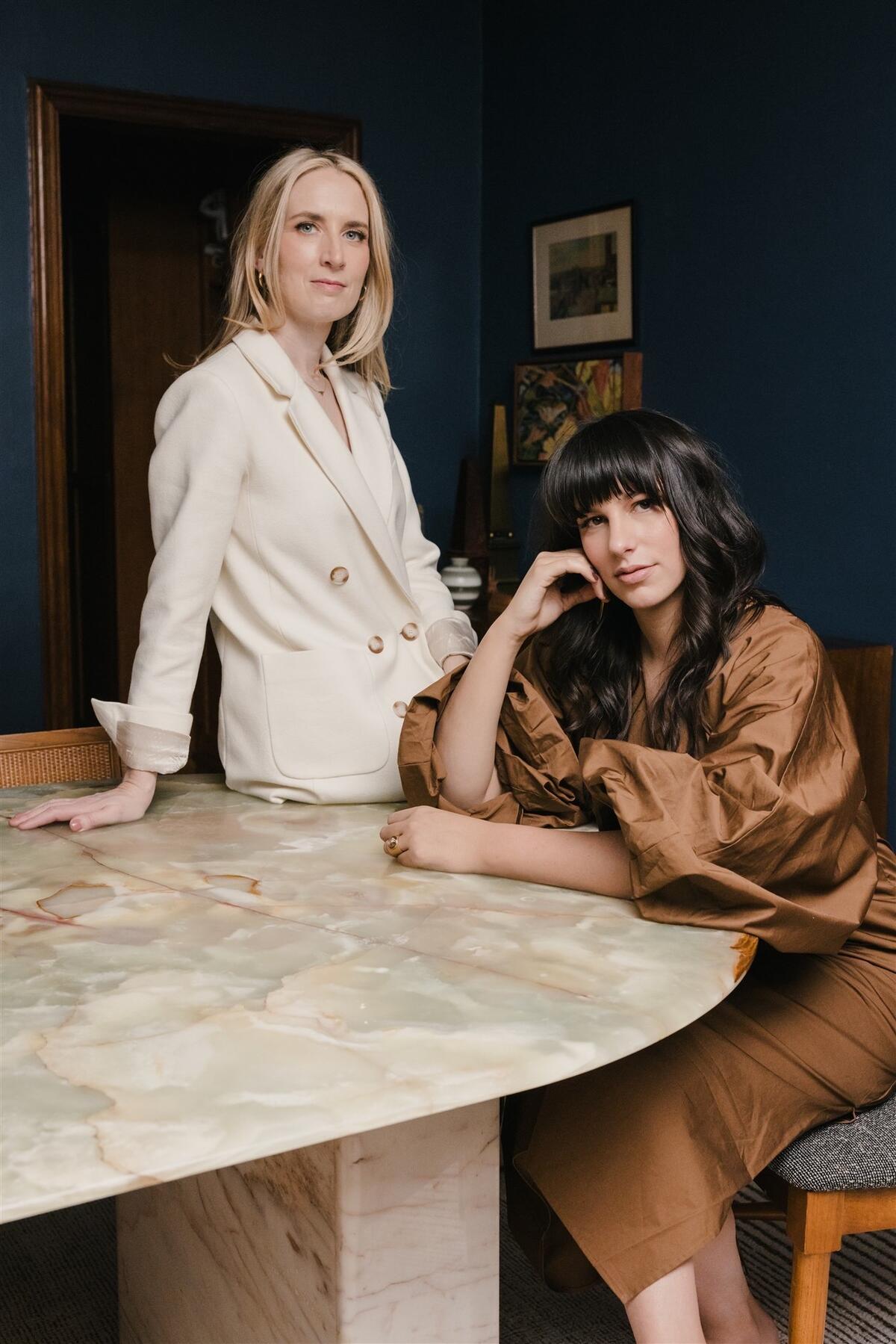
In June of 2023, Arthur and Dranko found a manufacturing partner based in Asia—a company that became their primary investor—and the website for Isla Porter launched exactly a year later. Since then, the accessible product- and design-focused kitchen cabinetry brand has grown exponentially and collaborated with a wide range of designers; the partners say they’ll reach profitability next year.
The duo relies on and supports the trade to help drive their product forward. “There’s a natural synergy between product people and the interior design community, and we’re really excited to be the bridge for that,” says Dranko. “We always wanted to go after the interior design trade, because we can go after homeowners, [but] they’re going to renovate maybe one or two kitchens in their lifetime. They are not experienced, and renovation is an emotionally charged time. We were going after the designers who were on the ground creating those magical, premium, luxury experiences for their own clients, [and as designers they] naturally understood the quality and design value of the product, and really would bring us multiple projects over years.”
The company also has a tastemakers program where they collaborate with designers (last year’s lineup included Monica Stewart of The Misfit House, Anne McDonald and Jenna Chused) to create vignettes using Isla Porter’s offerings. “When we get to work with these interior designers, we get to see our cabinetry kit through their lens,” says Arthur. “So they’re putting together parts from our line that I would never have thought of. Also, they’re layering in all this other beautiful FF&E. So they’ll pick a beautiful chandelier that I wouldn’t have expected with a particular cabinet; or how they’re mixing the tile and the backsplash. Having a full-service partner like that to really help the homeowner make comfortable decisions that they’re happy with is a benefit to us, but it also makes it really fun for us to see the renderings. It’s so exciting to see what all these interior designers are coming up with.”
Elsewhere in the episode, the duo share how they came up with the brand’s unique name, how they are handling tariffs, and the benefits of having a friend as a business partner.
Crucial insight: When Isla Porter launched last year, it leaned heavily into marketing its use of AI. Since then, the founders decided to dial back that language. “We came out too strongly with the AI messaging in the beginning,” says Dranko. “At the end of the day, Emily and I are product people. We’re design folks. We have a strong point of view and aesthetic, and that’s really inherent to us. That’s inherent to the brand, and that’s what we want people to take away: that we are a design brand. We’re innovative in the product that we make.” Technology remains a big part of the picture: They use a lidar system to help customers scan and measure a space, as well as AI programs to write marketing copy, draft emails and help with scheduling. But even as machines aid with the company’s efficiency, the founders want customers to know there are still human minds at the center of the service. “Trends can come and go, but really understanding holistically where you want to go with your brand and directing it artistically is not something you can leave up to the robots or AI. There’s no magic,” says Arthur. “It needs a director. We are primarily just really focused on using AI [as a] tool, not so much using it creatively as the dictator of our designs.”
Key quote: “We just kept seeing so many new furniture brands pop up—new startups every day, especially during the Covid time frame,” says Dranko. “And having renovated our own homes, we’re just like, ‘Why is no one tackling cabinetry?’ It’s so dusty. There’s nothing really inspiring, and cabinetry, ultimately, is a permanently installed product. It’s not just a sofa or credenza that you move and take with you or replace. It’s there permanently, and it drives the value of your home. So we really wanted to give not just ourselves, but the industry, some better options than a white or gray Shaker cabinet. That’s all that’s really out there.”
This episode is sponsored by Loloi. Listen to the show below. If you like what you hear, subscribe on Apple Podcasts or Spotify.
The Thursday Show
Host Dennis Scully and BOH executive editor Fred Nicolaus discuss the biggest news in the design world, including the latest on tariffs, Charles Cohen’s loss of another design center, and whether homes should have names. Later, Maiden Home founder Nidhi Kapur joins the show to talk about the evolution of her brand.
This episode is sponsored by Renewal by Andersen and Eichholtz. Listen to the show below. If you like what you hear, subscribe on Apple Podcasts or Spotify.







 Withdraw Consent / Manage Privacy Preferences