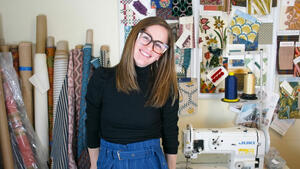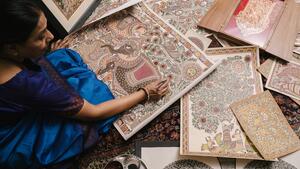








Kate Elwell is on a mission to keep traditional decorative finishes alive. The co-founder of Shropshire, England–based Master the Art: Roger Newton & Daughter School of Decorative Finishes works alongside her father, teaching new generations old-world artisanal painting techniques that range from water gilding to faux wood graining. “So many crafts are dying,” she tells Business of Home. “Luckily, the people who come to our workshops are as passionate as we are about passing these traditions along.”
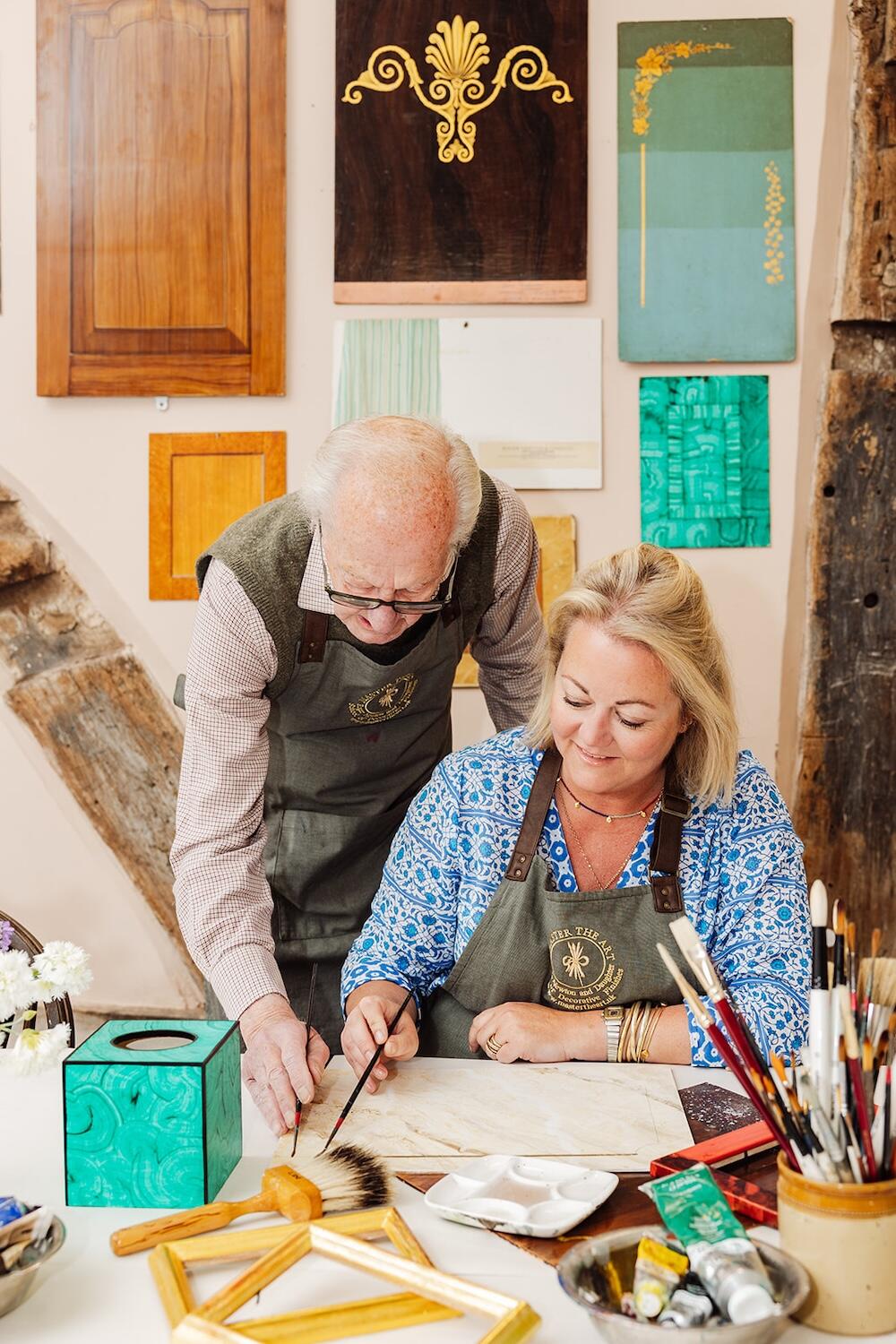
Roger Newton, now 88 years old, is one of the few remaining master gilders in the United Kingdom. He began his training in 1955, at the studio of Colefax and Fowler, where he honed his furniture painting skills restoring pieces for such clients as the National Trust. A few years later, he opened his own workshop on London’s King’s Road, where he quickly built a reputation for high-quality work. In 1982, he moved to Guernsey and opened a school teaching intensive courses on furniture painting and gilding. “People flew from all over the world to attend,” Elwell says.
The youngest of Newton’s five children, Elwell began helping her father in his studio as soon as she was old enough to use a paintbrush. After earning a degree in history at the University of Edinburgh, she embarked on a career in financial public relations, eventually working in the sultan of Oman’s private office in London for more than a decade. “However, in my downtime, I always retreated to my father’s studio to paint furniture,” she says.
When the pandemic hit, Elwell’s family and her parents relocated to rural Shropshire, where she and her father began converting an outbuilding into a proper work studio, and the idea of Master the Art was born. “We started offering intensive three-day courses, [my father] teaching the art of traditional water gilding, where students learn how to prepare gesso and lay and burnish gold leaf, as well as decorative oil gilding,” she says. “I also taught workshops guiding students through the incredible process of replicating marble, lapis lazuli and porphyry by using oil paints on any wooden surface.”
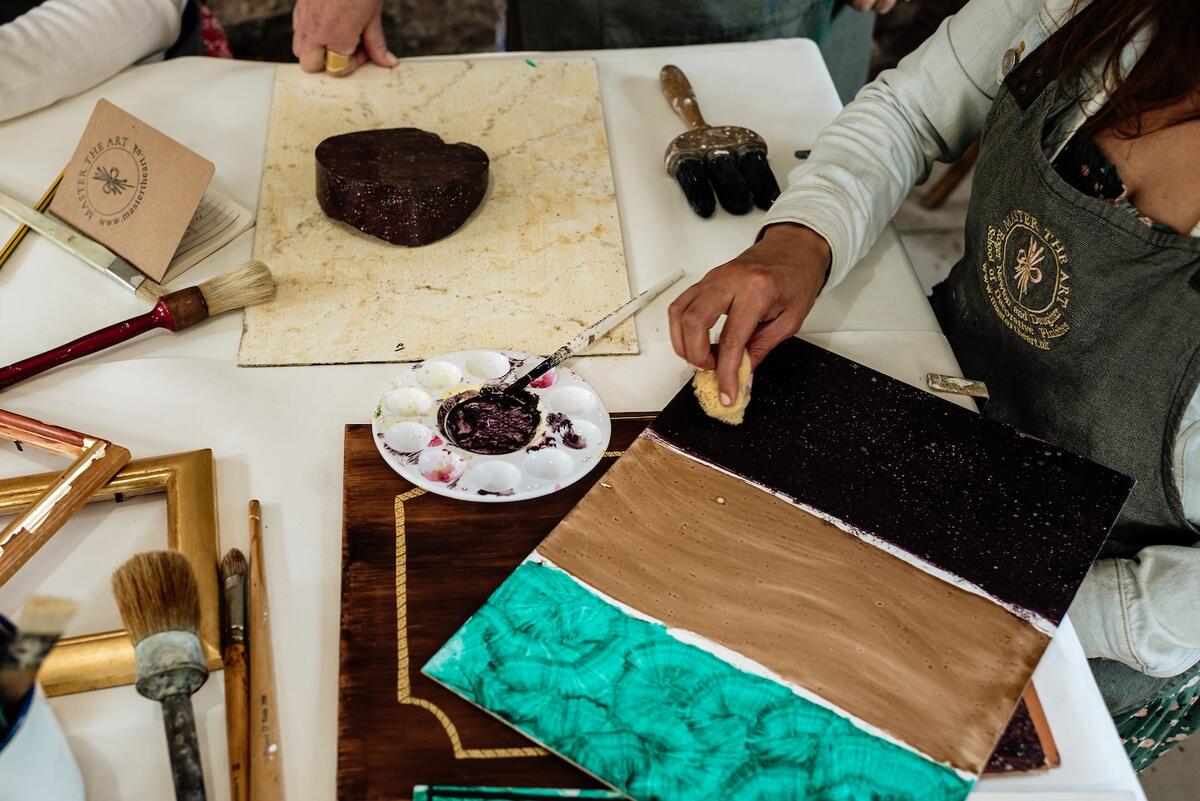
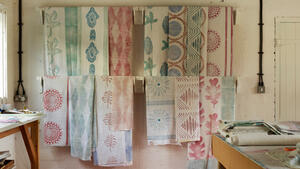
As the demand for classes grew, Master the Art tapped trained artisans throughout the community to lead one-day intensives on an array of dexterous handicrafts. The school has held workshops on chair caning, willow weaving, lampshade making, canal boat art and lino printing. “Charlotte Hepworth teaches courses on how to create waxed paper flowers that are so lifelike you have to touch them to realize they’re not real,” she adds. “We also teach decoupage-under-glass workshops with Alex Stewart Carter. [It’s] a modern technique that is very different from the traditional methods.”
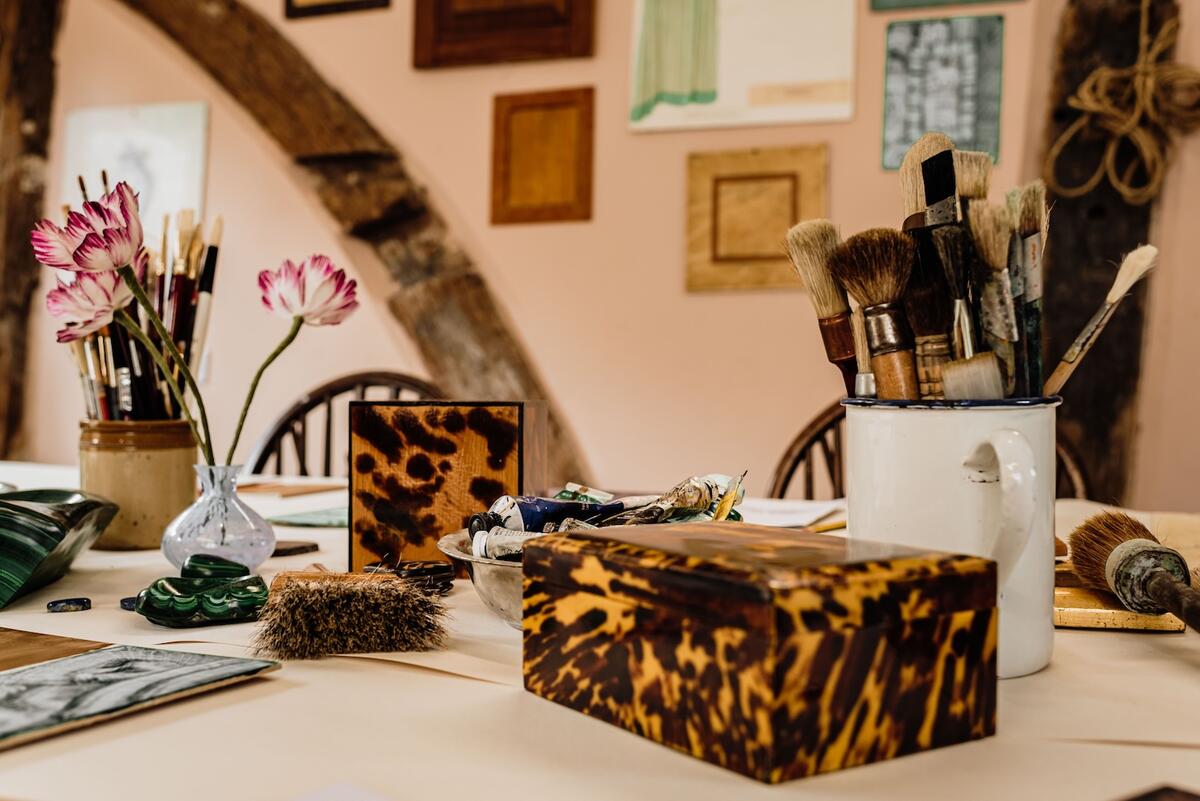
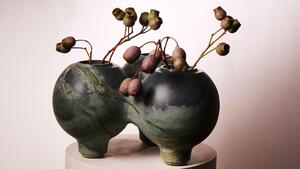
The studio recently rolled out a line of hand-finished homewares, including gilded wall brackets, faux malachite cutting boards, tortoiseshell tissue holders and two-tone scalloped trash bins. “All of the blank designs are made through a fabulous King’s Trust mental health charity,” she says. “Then I painstakingly paint each one by hand to create something you can really treasure.”
Looking ahead, Elwell hopes to offer her father’s workshops as online courses. “He may want to retire at some stage,” she says, “so that would be a wonderful way of making sure his knowledge is still passed on to future generations.”