






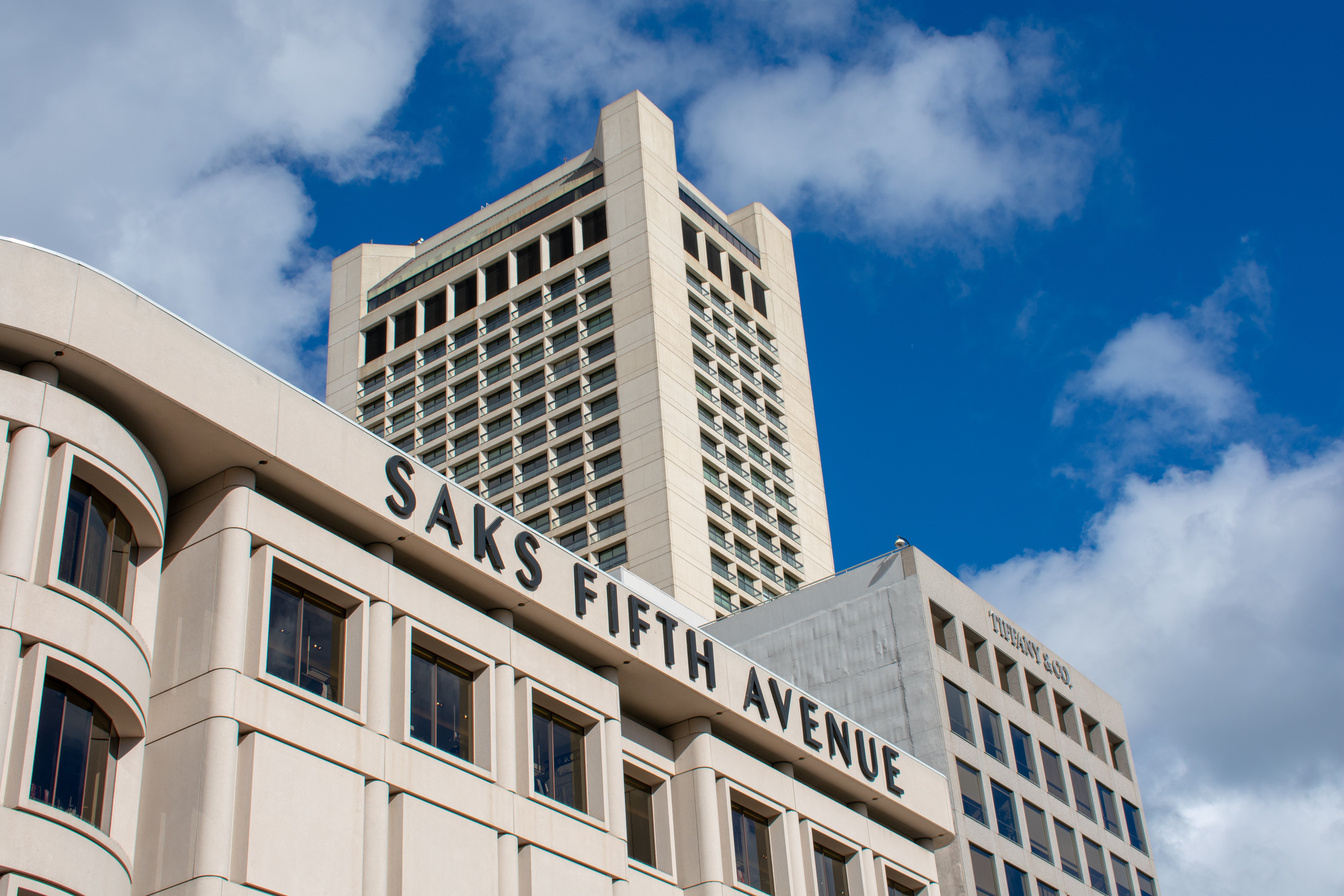

Three weeks ago, Saks Global—the parent company of department store chains Saks Fifth Avenue and Neiman Marcus—filed for Chapter 11 bankruptcy protection. The announcement itself wasn’t a surprise, coming after months of speculation and a growing debt load that leaves the future of its vast retail footprint (which includes around 33 Saks stores, 36 Neiman Marcus outposts and two Bergdorf Goodman locations) in question. But the news has rocked the fashion industry. In the filing, the company lists between 10,000 and 25,000 creditors, with the luxury retail world’s toniest brands among the top 30. Chanel is owed more than $136 million; Kering (which includes Gucci, Saint Laurent and Bottega Veneta) is owed around $60 million; and LVMH (the parent company of Louis Vuitton, Christian Dior and Tiffany & Co.) is owed about $26 million.
The impact on the fashion sector has dominated headlines, overshadowing the quieter story of the home brands dealing with the aftermath. While the home departments at Saks’ physical locations are much smaller than those at competitors like Macy’s, Dillard’s and Belk, a handful of furniture, textile, lighting and decor companies sell their wares through its e-commerce channels—including Arteriors, Jonathan Adler, Bernhardt, Caracole, Global Views, Tom Dixon, Four Hands, Surya, Hooker Furniture and Matouk. Some have taken a hit.
Detroit-based lighting brand Regina Andrew, which previously sold through Saks online, cut ties with the company last March. “They were paying us late, and that became worse and worse, and then they just stopped paying us, so we stopped servicing the account,” says Neil MacKenzie, the brand’s chief marketing officer. “It was a little sporadic, and things began taking a little longer than they had. That’s when the red flags go up. When you don’t receive anything for a period of time, you just can’t operate that way.” Some Regina Andrew listings remain on the website, but MacKenzie says those are stocked items that Saks can sell off until they’re diminished. Since then, he adds, the lighting company has narrowed its e-commerce partners to a select few that they are more “strategically aligned with,” including Lulu and Georgia, Perigold, Wayfair and Lightology.
Another home vendor, who sells through the Neiman Marcus website, and asked to remain anonymous, was put on a payment plan about six months ago, but the debt remains. “They said, ‘Hey we’re good, we’re financially sound. Let’s agree on a payment plan.’ But then this happened, and it was a complete letdown,” the vendor tells Business of Home. “Quite frankly, it was a lie. It’s like, if I owed you a dollar [and then said to you,] ‘Give me another dollar, and then I’ll give you two dollars back.’ It was very shady the way it was done.”
If there is a silver lining to the story, it’s that most home brands weren’t relying on Saks to make ends meet. Historically, department stores sold a wider range of furniture and decor, but over time, the selection has shifted to overwhelmingly favor fashion and beauty. “Categories like apparel will turn four to six times a year,” says veteran retail journalist Warren Shoulberg. “Whereas home stuff might have two or three turns. The stores want more merchandise turns. That’s where they make their money.”
Observers have issued warnings for years about department stores’ demise in all categories. According to data from the U.S. Census Bureau, in 2000, department store sales totaled around $232.5 billion, and in 2024, that number dropped to $39.6 billion. Shoulberg thinks the end is not quite here yet. “The consumer likes to go to a store that has multiple brands, as opposed to just going into an Hermès store or a Dior store where that’s all they sell,” he says. “They like to go into a department store where they can look at 10 different brands of jeans, 40 brands of cosmetics, and even a dozen different toaster ovens. Department stores will continue to have a role, but it will be small.”
Others aren’t so optimistic. “[The department store model is] doomed beyond doomed,” says the Neiman Marcus vendor. “In this world of e-commerce and value-oriented [shopping], it’s just tough. A lot of these brands have their own stores, and the cost of real estate is too high.”
As the bankruptcy progresses, it’s unclear whether any of the home brands affected will be paid back in full. “It’s not ideal for anybody involved,” says MacKenzie.
Additional reporting by Fred Nicolaus








 Withdraw Consent / Manage Privacy Preferences