













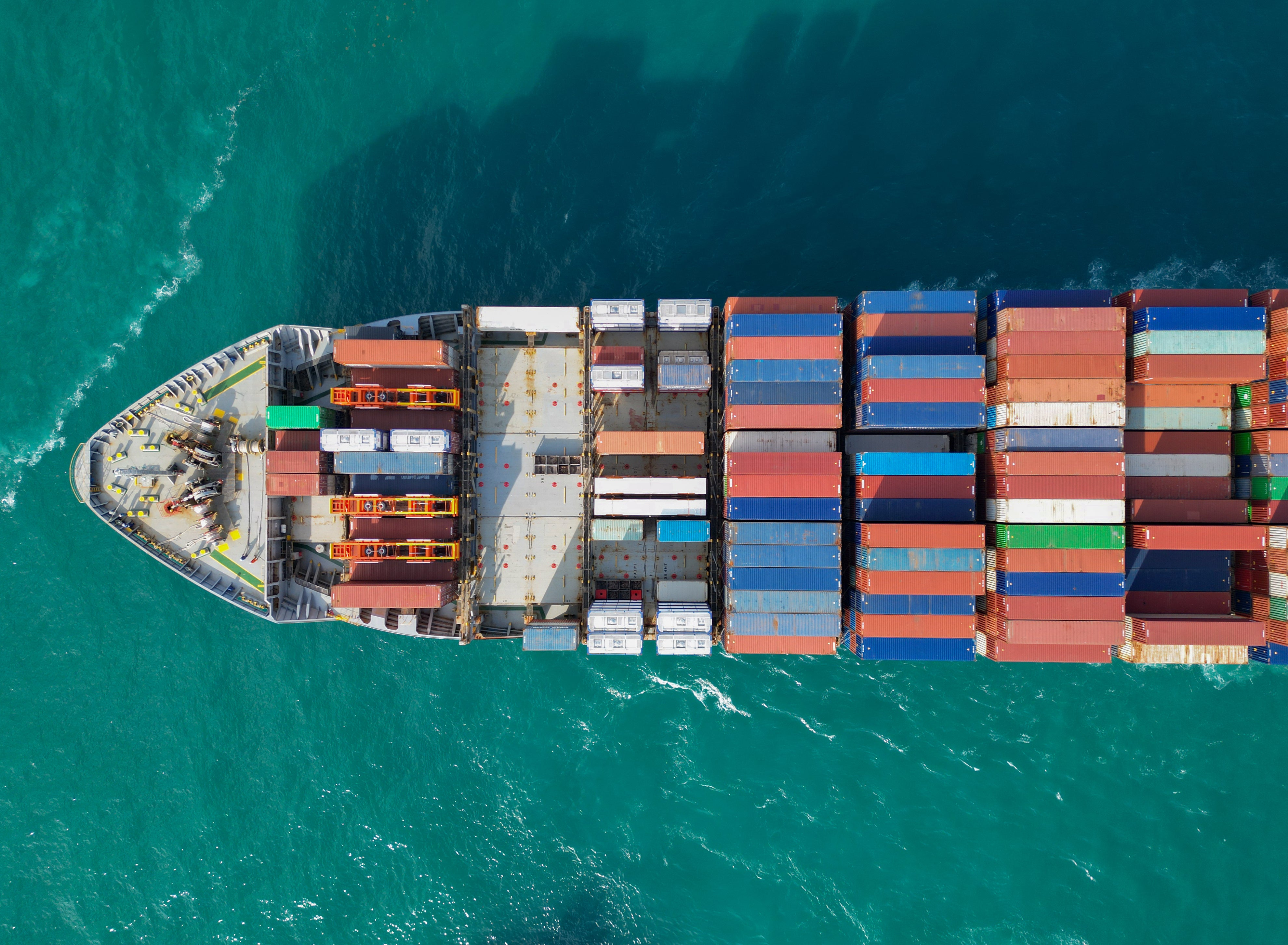

It was a relatively quiet summer on the tariff front—emphasis on relatively. Yes, a trade war with Canada flared up out of nowhere, leading to new duties on both sides. But compared to the chaos of last year, when tariffs on countries around the world zigzagged up and down at a frantic pace, things have been calm. That lull may belie a new level of intensity on another front of the president’s efforts to reshape international trade: customs.
If President Trump’s tariffs are policy at 30,000 feet, Customs and Border Protection oversees what happens at sea level—the day-to-day work of tracking what comes into the country and ensuring that duties are paid. Since the start of the year, the White House has taken several steps to heighten scrutiny at the ports.
Notably, in June, the president signed an executive order titled “Strengthening Customs Enforcement,” setting a more forceful posture for the federal agencies that monitor trade. The new rules mandate a high floor for penalties, tighten restrictions on who can act as an importer of record, and demand a far more extensive accounting of supply chain receipts.
Then in August, the White House released a report titled “The Great Transshipment Scam,” outlining what it sees as a critical failure of the import system: companies avoiding tariffs by rerouting goods through lesser-tariffed countries and claiming a false point of origin. According to the report, the total value of illegally transshipped goods is in the tens of billions every year.
The order and the report are only the latest escalations in an ongoing effort. Nicole Bivens Collinson, an attorney specializing in international trade and government relations at Miami firm Sandler, Travis & Rosenberg, describes Trump’s second term as a “new era”—one in which the entire federal government cracks down on customs issues. “Normally it’s been Customs [dealing with import enforcement],” she tells Business of Home. “Now the Department of Justice is stepping in. We’re seeing the FCC starting to get involved in trade issues. We’re seeing the FTC, which has to do with labeling. We’re even seeing the CPSC getting involved.”
The new approach, in a word, is aggressive. “They’re going after everyone, guns blazing,” she says. “The number of [customs inquiries] that have increased is exponential. We had one client who got over 30 on the same day, on the same supply chain.”
The increased scrutiny is affecting importers of home goods. In a LinkedIn post, TOV Furniture co-founder and CEO Bruce Krinsky outlined a challenge from Customs on 17 import entries from Vietnam his company recently faced. “We provided 1,000+ pages of documentation. Compiling it and responding consumed well over 100 hours of my team’s time,” he wrote. “I’ve personally visited these factories. Wood is cut and machined there; frames are built there; fabric and foam are cut there; sewing, upholstery, assembly and packaging happen there. Some components may come from China. That’s a global supply chain, not [illegal] transshipment.”
Transshipping is a hot topic among furniture importers, especially following Trump’s first term, during which many producers shifted manufacturing away from China (often to Vietnam) to avoid the first round of tariffs. This created a more complex supply chain, in which components and materials were shipped from China to be incorporated into a manufacturing process elsewhere. Genuinely illegal transshipping is probably bantered about as something the other guys do, more than it is actually practiced, especially by scale importers. The risk has always been high—now it’s very high.
Indeed, for most importers, the biggest challenge of the new era at the ports is not paying penalties, but the drain on resources dedicated to keeping up with—and following—the rules. “Costs for compliance have gone through the roof,” says Bivens Collinson. “Before, I think the C-suite looked at the customs people as a nuisance. I think now the C-suite is going: ‘If we don’t have a compliance team, if we don’t have good compliance, it’s really going to cost us.’”
Though the intense oversight is creating new costs and complexities for importers—and likely contributing to home goods inflation—there may be an industry-wide silver lining. The new rules require brands to have a much deeper level of supply chain awareness, down to the raw materials (“from Earth to hearth,” quips Bivens Collinson). These regulations are designed to catch cheaters, but they may have the knock-on effect of setting up brands to make better decisions around ethical production and sustainability.
“The food industry has had a tracking system forever, so it can absolutely be done,” says Collinson, musing that new visibility may set companies up to sell more effectively into regions like the European Union. “Some of those countries have very strict environmental rules, and they may require that you know the species and the genus of the wood that was used. This would set you up to have that [level of] visibility.”










 Withdraw Consent / Manage Privacy Preferences