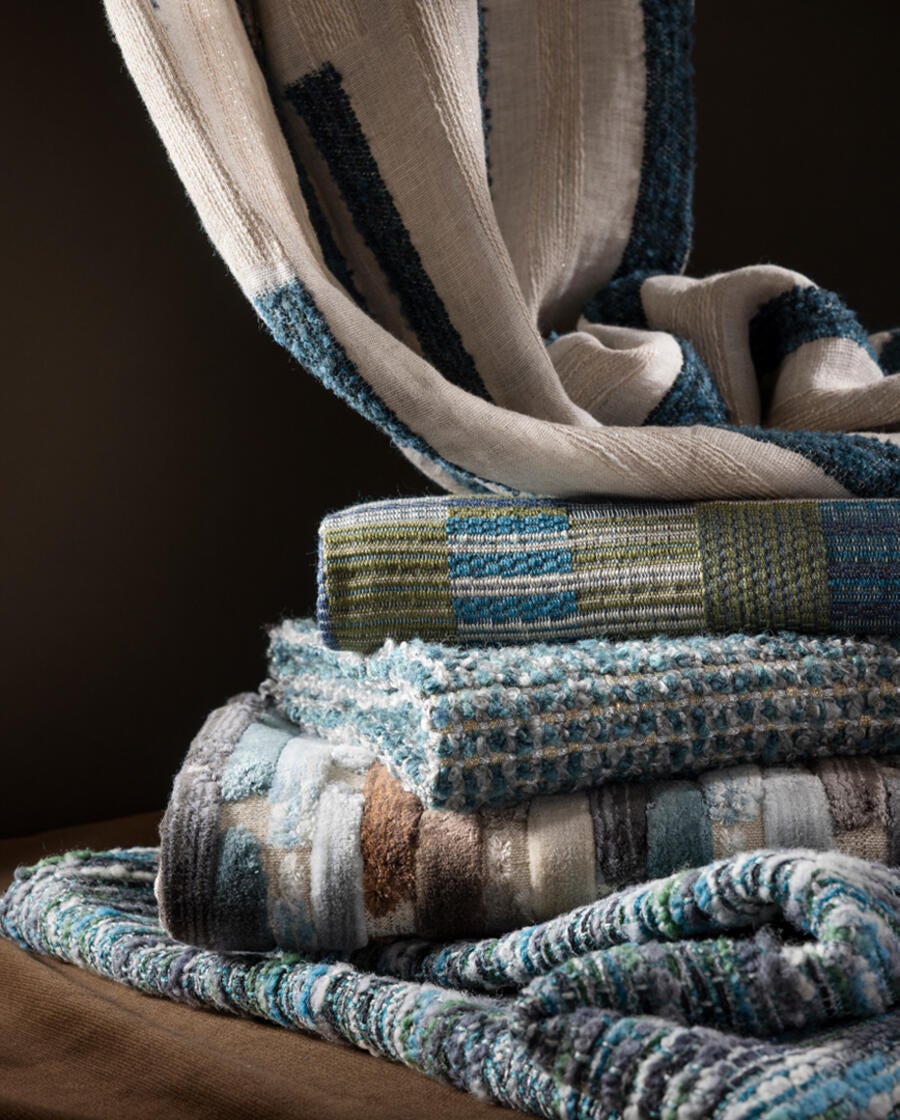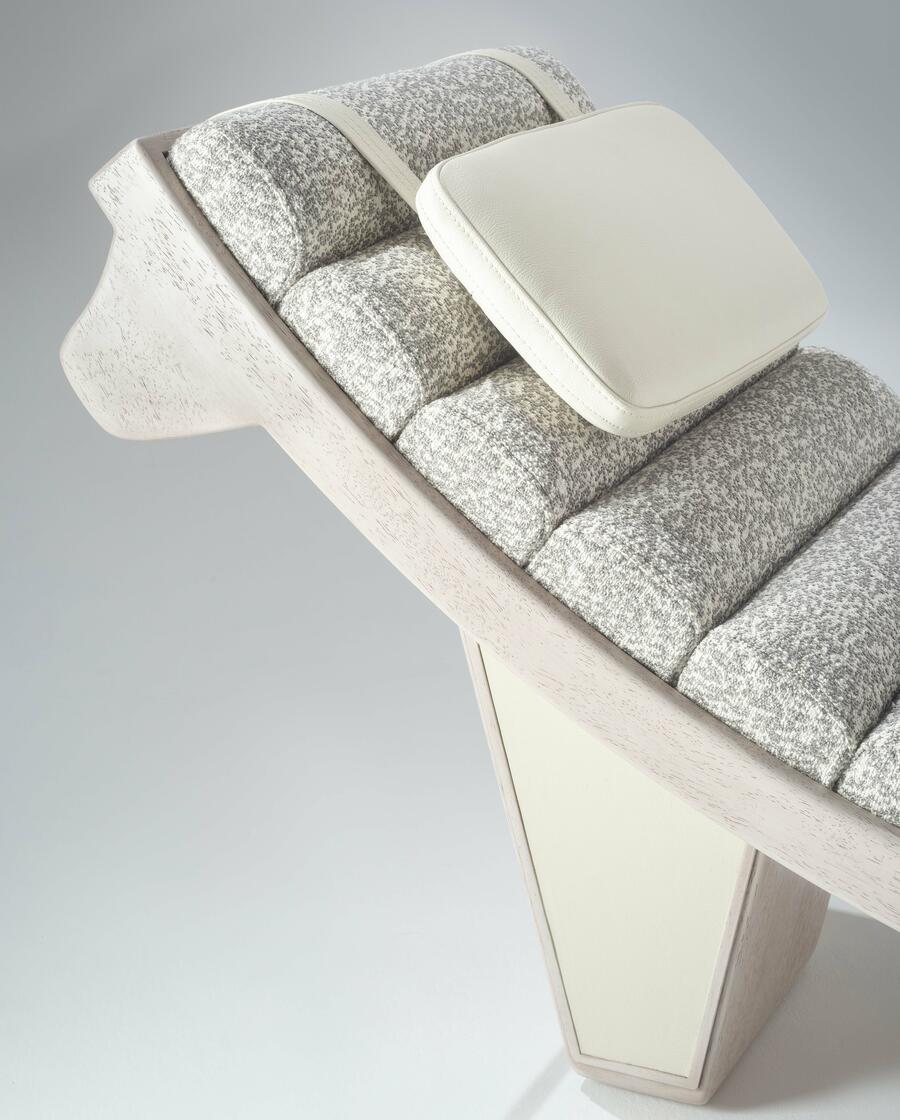












Robotics are everywhere in manufacturing, from automotive parts to home appliances. Upholstery is a rare exception—the category’s artisan element and production challenges don’t lend themselves easily to automation. How could such a customized creative process ever be mechanized?
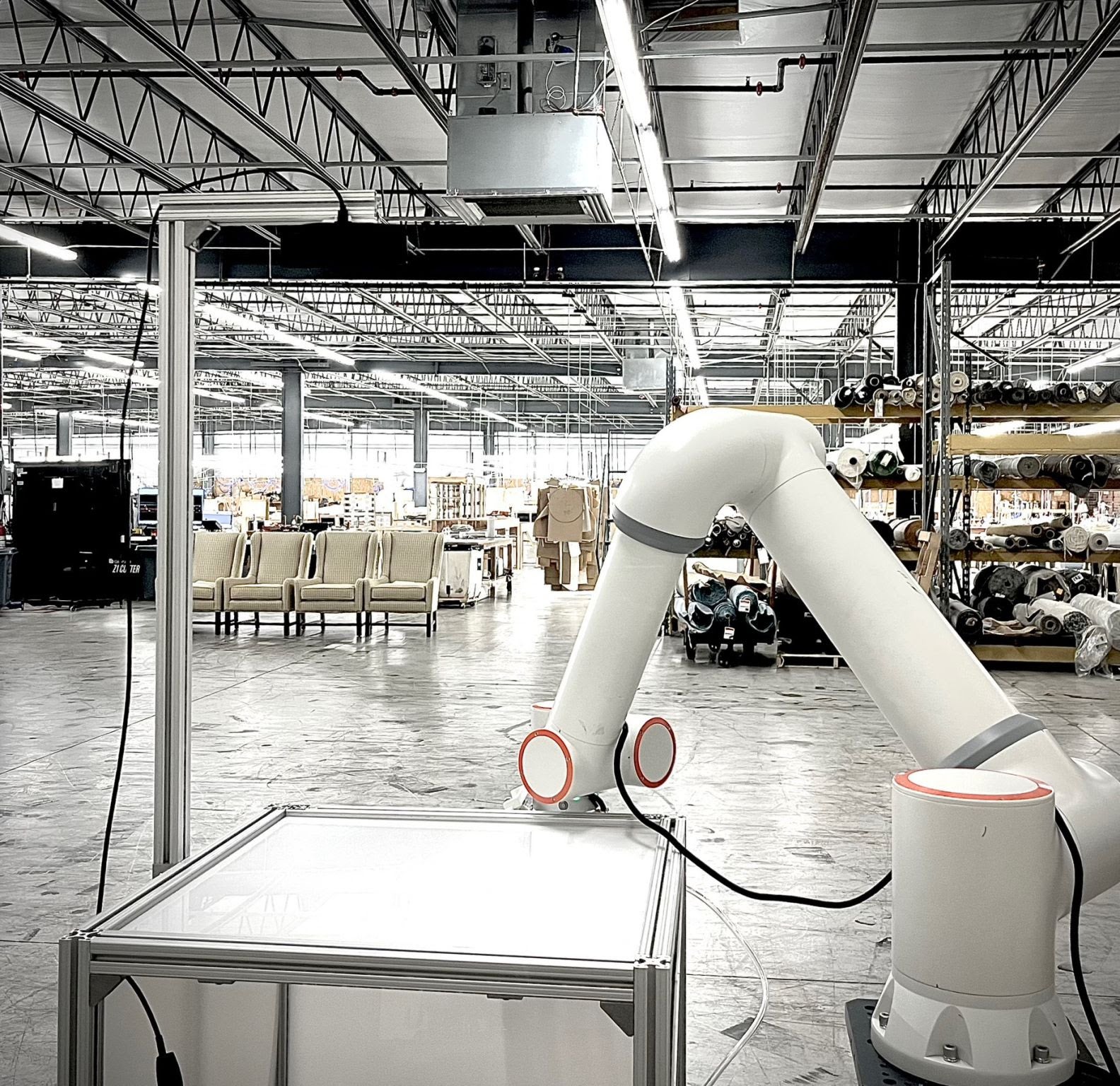
A new startup called Kathedra is looking to answer the question. Leveraging advances in artificial intelligence, co-founders Oliver Davila Chasan and David Faes are developing a robotic tool specifically designed for upholstery manufacturing. Through a pilot program with a High Point furniture manufacturer (the pair declined to name which one) and a partnership with Catawba Valley Community College’s Furniture Academy, they’re already laying the groundwork for grander plans: becoming the industry’s front-runner in robotics.
Faes, the company’s CTO, was introduced to furniture design while attending the School of the Art Institute of Chicago. After graduating, he set out to earn an education in business, and ended up at Columbia University with a focus on AI, machine learning and robotics. During that time, Faes met fellow Columbia student Chasan in a reading group dedicated to the works of economist Adam Smith. The two connected over the idea that robotics were ushering in a second industrial revolution, and struck up a friendship that led to talks of building a business together. In the run-up to the 2024 presidential election, rhetoric about tariffs caused the pair to focus their attention on manufacturers.
“With the latest advances in AI and the reduction in cost of hardware for robotics, it felt like this was the right time to address highly complex craftsman and artisan tasks using automation; whereas before, traditional automation couldn’t deal with those tasks,” says Faes.
The duo reached out to domestic furniture manufacturers, who expressed a desire for new technology—particularly as a remedy for the industry’s skilled labor shortage. Phone calls turned into factory visits across North Carolina, and by September of 2025, the pair had a prototype, which soon landed them a pilot program with a manufacturer and $235,000 to fund the development and integration of the technology. The following month, Kathedra moved into an incubator space within the Catawba Valley Furniture Academy, which has served as its lab and home base since.
For now, Kathedra’s leaders are keeping the specifics of their technology under wraps, describing it only as “a robotic cell that would sit somewhere on the line” and “automate the non-value-add tasks associated with the upholstery process,” according to Chasan. The idea is that the implementation of Kathedra’s robot would produce a workflow in which artisans deal more directly with fabrics, rather than supporting materials. Chasan and Faes say that instead of serving as a labor replacement, the tool aims to improve efficiency and alleviate the workload for artisans.
“Most of the workers are near retiring age, so there’s a possibility of that [specialized upholstery] knowledge leaving the industry at the same time that young people are not coming in,” says Faes. “[With Kathedra] there’s an opportunity to transfer that knowledge, to find a way to pass it on to a new generation by making the work less physically demanding and making onboarding and recruiting more appealing, and allowing the upholsterers to focus on their craft and that aesthetic knowledge that’s really valuable.”
After completing its initial pilot program, next year the company plans to target the roughly 100 manufacturers in the western North Carolina market, and after that, the thousands of domestic upholstery producers across the country. (Many big companies—Ashley, Ethan Allen, RH—have upholstery manufacturing in the U.S.) Overall, they view it as an area rife with potential, with the global market for upholstery pegged by some reports at $180 billion.
Of course, tapping into those opportunities hinges on the ability to crack a highly complex production process—one that has been heavily reliant on the human touch. Furniture company Rowe, for example, has spent the past three years investing millions of dollars in automation, with plans to continue that strategy. However, president Bobby Robinson says those efforts have focused on tasks that demand precision—cutting and moving wood and fabric, for example—rather than entering artisan territory.
“Where there’s precision, I think there’s tremendous opportunity for more and more automation in our industry, but the craftsmanship, where judgment comes into play, that’s the major challenge,” says Robinson. “By the time those raw materials get to the craftsman, it’s completely ambiguous, because everything is always changing. While there are rules when it comes to ‘This needs to be cut to this size and this spec,’ it’s really the craftsman that has to say, ‘Do the rules apply here?’”
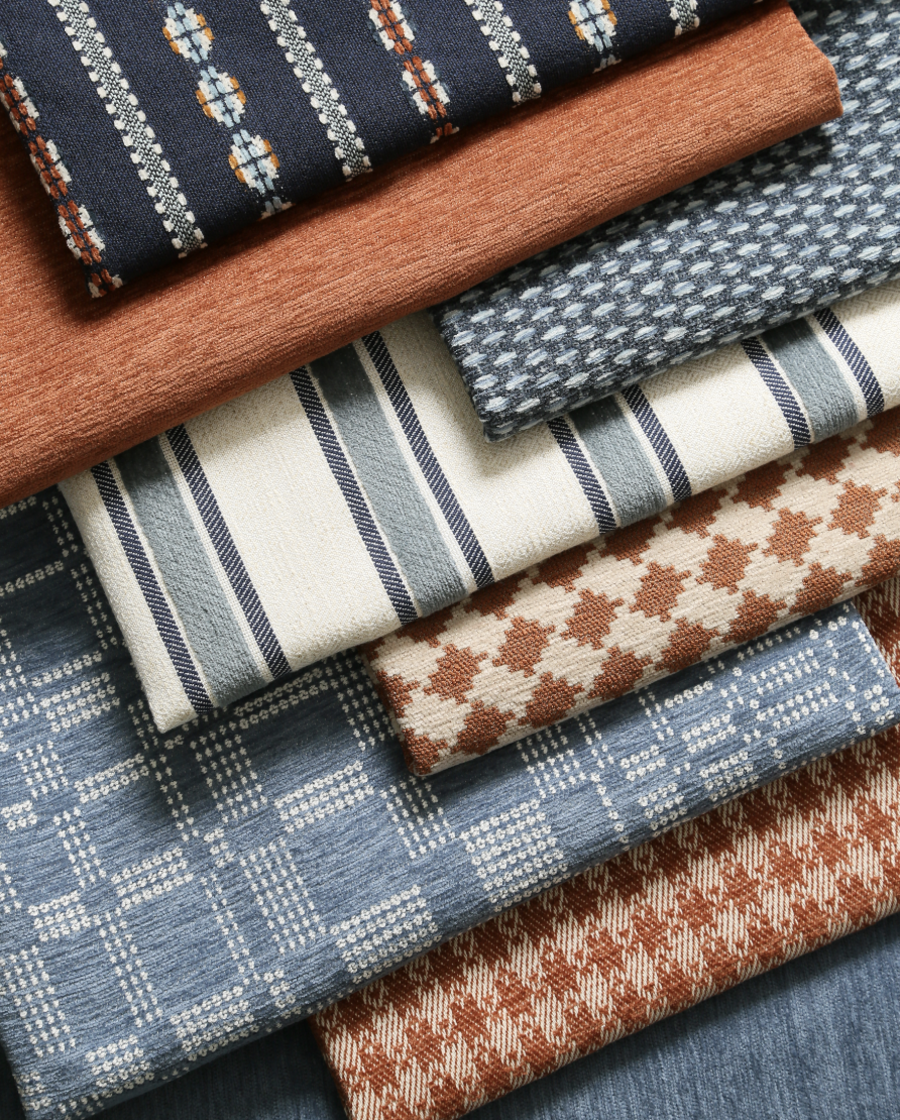
Even when everything goes to plan, he adds, it’s common that at some point in the production process, an item may not feel or appear as intended: A fabric may contract or stretch, or a seam is left in an awkward spot, or the “comfort marriage” between the fill in a chair’s cushions is slightly off, requiring a sit test. Robinson says that the risk of automation is cutting back on the intervention points at which a human worker is able to detect a miscalculation and begin problem-solving. For a company like Rowe, which is home to over 1,100 fabrics and 2,800 SKUs, and turns over 10 percent of its fabric line every six months, it’s hard for a robot to keep up.
“When it comes to automation, [the problem] that I personally run into every day is that not every fabric is the same,” he says. “You just have to embrace that there are no set rules—and machines thrive on rules.”
Faes says Kathedra is aware of these challenges. Still, he adds, the AI revolution over the past few years has led to new capabilities that can begin to handle the upholstery’s wide variety of constantly replenishing designs. “The biggest obstacle has been that traditional automation requires a task that is predictable, repeatable and consistent,” he explains. “With furniture, … when you’re looking at the number of SKUs any solution needs to handle, it’s enormous. Only recently, with advances in AI, machine learning and robotics, has it become possible to do high-mix tasks reliably, and to use techniques to understand how to manage that complexity.”
As the robotics landscape continues to transform, it might not be long before processes once thought impossible to automate—like upholstery—follow suit.