













This month, a first-of-its-kind recycling bill quietly began taking effect in California—and it could have major implications for home brands that do business there.
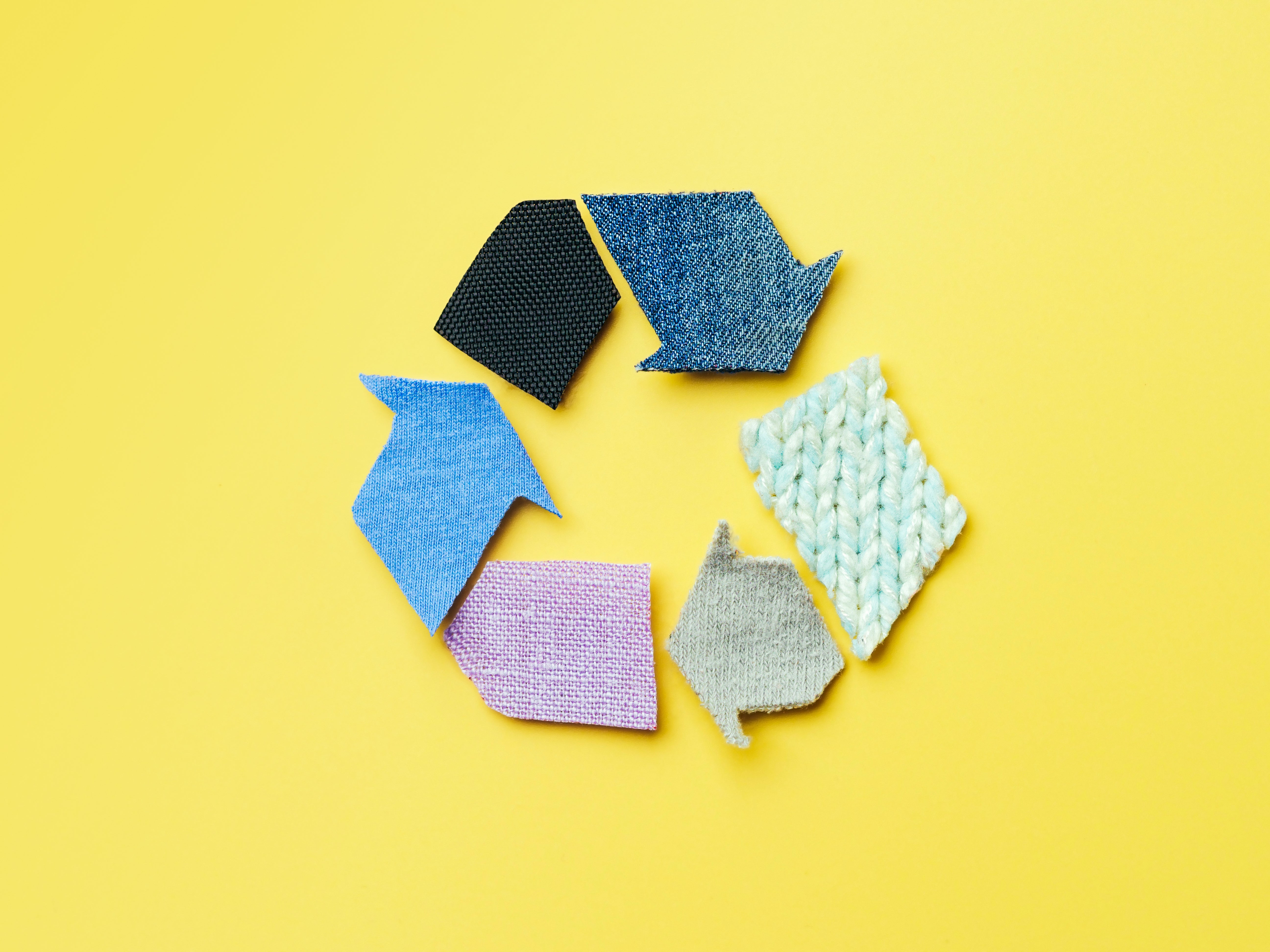
Signed into law by Governor Gavin Newsom in 2024, the Responsible Textile Recovery Act, or SB 707, introduces the textile industry’s first extended producer responsibility program. EPR policies force brands and manufacturers to assume accountability for the entire life cycle of their products, including recycling and reuse. Rather than requiring local governments or taxpayers to shoulder these environmental costs, EPR programs mandate that producers pay a fee before entering the market, and the money is then utilized by a third party—in this case, the nonprofit Landbell USA—to head up everything from registry and compliance to collection, recycling and consumer education.
For proponents of the new legislation, an apparel and textile–specific EPR program was a long time coming. According to Joanne Brasch—assistant director of the California Product Stewardship Council, which co-sponsored the bill—the state had seen success with similar initiatives for carpets, mattresses, batteries and other products. The CPSC saw an opening to introduce the legislation for textiles a few years ago, with Brasch citing a number of factors as creating the perfect conditions for public acceptance of the program, namely the rise of home organizing guru Marie Kondo’s closet clean-out strategies; the pandemic-induced closure of many thrift stores where consumers previously donated textiles; and viral images of clothing waste washing up in Ghana.
“A lot of the education of the problem was unfolding live in front of us,” says Brasch. “We’re like, ‘Let’s not miss this opportunity.’”
California’s focus on removing textile waste from the landfill stream reflects just one aspect of a sustainability crisis that’s unfolding on a global scale. Over the past two decades, clothing consumption has increased by 400 percent globally, accelerated by cycles of fast fashion—a model that’s been increasingly adopted by the home industry. This places a greater emphasis on the need for circular solutions in the textile industry, in which recycling is greatly underutilized: The Environmental Protection Agency reports that less than 15 percent of all textiles were recycled in 2018.
To further complicate matters, textiles are a tricky thing to recycle. As Brasch explains, many textiles don’t fit into curbside bins—and, more than that, they’re not welcome there. Most municipal systems are set up to accommodate paper, glass and plastics; textiles, meanwhile, are considered contaminants in most commercial recycling systems, where they threaten to tangle equipment, absorb liquid and create fire hazards. Plus, the rise of synthetic textile blends present additional challenges—compared to natural fibers like cotton, wool and silk, which degrade naturally, materials like polyester and nylon last far longer in landfills, where they shed harmful chemicals and microplastics into the earth. That’s where the EPR program comes into play. Through the collection of what Brasch describes as an “advance recycling fee” from producers, Landbell will redistribute funds toward initiatives like brand take-back programs and the repair, resale and reuse of textile products.
“The reason my board felt like this product type was best for EPR is because it really doesn’t fit into our traditional recycling systems, and because we have so many established businesses like thrift stores and collectors with existing infrastructure,” says Brasch. “If the cities and counties were to create their own textile recycling program, it would be duplicative. It would be siloed. It would be overexpensive, and those expenses would be passed on to California residents through their garbage fee.”
What exactly the new programs will look like—and how much they will cost—will be determined over the coming months. The bill’s implementation phase just kicked in this year, with the first deadline passing this month: All producers of apparel and textile producers were required to register with Landbell USA by July 1. (Brasch advises companies that missed this deadline to proceed with registration anyway.) Next up is the initial statewide needs assessment, which will take place over the coming months, culminating in a proposal due in March 2027. The program’s full rollout, meanwhile, isn’t expected until July 1, 2030.
Still, many guidelines have already been laid out in the bill. Any business selling apparel or textile products to the California market—even if it doesn’t operate a physical presence in the state—is accountable, and brands that fail to comply face up to $50,000 per day in civil penalties. However, a key exemption applies to secondhand sellers, and those with less than $1 million in annual aggregate global turnover.
When the program is fully implemented, manufacturers will be eligible for cost offsets, dubbed “eco-modulated fees,” depending on their product offerings and manufacturing processes. More durable products, or those made with less-hazardous chemicals, could result in lower fees; the same goes for brands with existing repair and recycling programs.
That’s an encouraging sign for brands like San Francisco–based Coyuchi, which has experimented with several circularity models, including subscription services in which customers could lease bedding—an initiative that later evolved into 2nd Home Renewed, an e-commerce platform for the brand’s recycled textiles and soft goods. According to Margot Lyons, Coyuchi’s director of sustainability and sourcing, the creation of a statewide system that encourages participation from a wide variety of producers could open the door to even more circular possibilities.
“One challenge we have is in managing different products and material types,” says Lyons. “[Though] 99 percent of what we sell is organic cotton, we also sell materials that don’t have easy end-of-life [recycling options] without large volume. To have a statewide system that collects other types of materials, it will present a lot of new challenges for [identifying and sorting] each material type, but it also will [provide solutions by] making sure that there’s infrastructure to manage them.”
Lyons anticipates that the new system will boost business for brands that comply. “There is opportunity for additional revenue streams through some of these models,” she says. “The hope is that in the long run, businesses are able to expand their model and offset the cost of participating in some of this in other ways.”
Brasch recommends that brands attend the August 13 textile regulation workshop (available to both in-person and virtual attendees) hosted by state-sponsored circularity organization CalRecycle as part of the aforementioned needs assessment, which will be followed by additional surveys, webinars and engagement opportunities in the coming months. Beyond that, she stresses that engaging with industry groups to clarify and communicate the home industry’s circularity needs and goals is the best way to navigate and leverage the new regulations.
“[Manufacturers] need to get loud,” says Brasch. “Now is the time when it matters most.”