















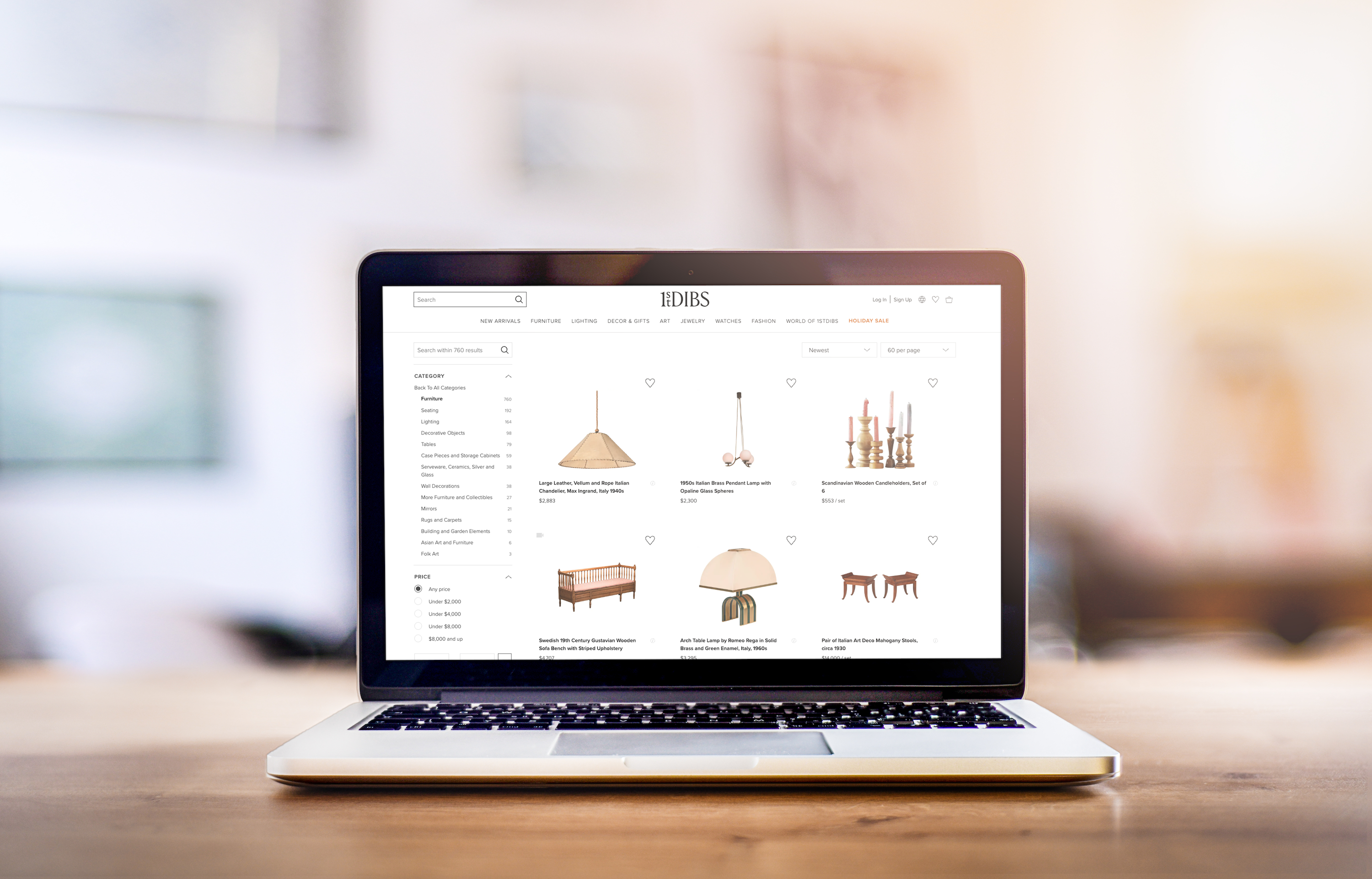

In late October, Justin Nelson, founder of the Oregon-based design studio Fernweh Woodworking, received a strangely worded offer for a leather sling chair he’d listed on 1stDibs: The buyer said he was prepared to pay an amount on the higher end of the “1stDibs Estimate.” Having never heard of the term, Nelson assumed something had been lost in translation.
He saw the price he’d listed the item for—$5,950—and under it, a range labeled as the “1stDibs Estimate,” of $3,056 to $4,584. As he scrolled through his other listings, he saw that a recommended range appeared underneath all of his items, in many cases undercutting his own pricing.
As Nelson would come to discover, the feature was part of a suite of pricing tools the platform began rolling out more than a year ago. Based on internal data from 1stDibs, the tool uses machine learning to generate a price range for a given piece based on similar past listings that have sold on the site.
At first, he requested that the platform remove the feature from his items. After a fruitless back-and-forth, he took to social media to express his frustration, posting an Instagram Reel that was widely circulated within the design community. The comments under his post were filled with fellow 1stDibs sellers who said they were planning to do the same. The concept drew ire particularly from sellers of new product—while pricing on vintage and antique pieces tends to be variable, makers of contemporary pieces believed the prices they’d determined for their pieces would be presented as the final word. Shortly thereafter, Nelson left 1stDibs.
Then, about two weeks later, 1stDibs made a change. In a letter to the platform’s sellers sent out last week, Bradford Shellhammer, the company’s new chief product officer and chief marketing officer, announced that they would remove the pricing estimate feature on new pieces offered directly by the seller or their representatives. For now, the 1stDibs Estimate will remain active on vintage listings, but the letter said, “[1stDibs will] review how we present this data to buyers and sellers and make changes that will still assist buyers without appearing to judge your prices or expertise.”
According to Shellhammer, the tool was a response to real demand on the buyer side, particularly among everyday consumers. “The average consumer [has] a hard time understanding why one chair is $3,000 and why one is $32,000, so the price estimate was conceived to look at past sales of similar items and benchmark where this listing fits in in that world,” he explains.
Data from the platform does point to some early success for the feature. Shellhammer says that items priced within the 1stDibs Estimate had a 45 percent higher sell-through rate, and that “even on listings where things are placed out of guidance, having it there actually contributes to conversion.” Still, a survey the platform rolled out in recent weeks revealed vast dissatisfaction with the estimate tool: Among 500 respondents, 75 percent reported major problems, including concerns around inaccuracy, potential impact to sales and buyer miseducation.
“There are extreme amounts of nuance [from] item to item and seller to seller that I don’t think the tool is taking into consideration,” says Shellhammer. “The things I’m hearing the most are, ‘There’s a very valid reason for why [my listing] doesn’t fit into this construct, and those reasons are [things like] provenance, era, production, scarcity, edition, [signature], functionality, or quality of material.’”
As the platform revises its pricing tools, part of the game plan is to equip potential buyers with more information highlighting what makes a piece special, and how those aspects factor into its value. “We need easier ways to bring these items to life in a way that matches the magnetism of doing it in their showrooms or physical space,” says Shellhammer. “You either understand why it’s priced that way, or not. Without the storytelling, they all look the same to the layman.”
This isn’t the first time the pricing features have landed the platform in hot water. In June 2024, Artnet reported on some early pitfalls, using a pre-Columbian gold shaman pendant offered at $27,000 as an example of how the 1stDibs tool could miss the mark: “‘Based on our pricing data, this item is $26,370 above the recommended price,’ the auto-generated text next to the item said.” In response to backlash, the company removed the feature from items “where the distance between the list price and the recommended price is significant,” and it committed to improving accuracy.
Much like the platform did then, Shellhammer says 1stDibs plans to continue to make changes to its pricing features in the coming months. Part of that process may involve giving potential buyers more of the raw data distilled into the original estimate feature, such as providing information on past sales rather than formulating a number or range without additional context. The exact changes will hinge on seller feedback, which the platform is continuing to collect over the next few weeks.
“The thing was rooted in what was, at the time, a belief that buyers needed this, and that sellers would appreciate the tool,” explains Shellhammer, who says he’s determined to work with users to reach an equitable solution for everyone involved. “The beautiful thing about software is that you can release things, realize if it works, and make changes. … I have a commitment to change this thing based on what buyers and sellers both say about it.”













 Withdraw Consent / Manage Privacy Preferences