










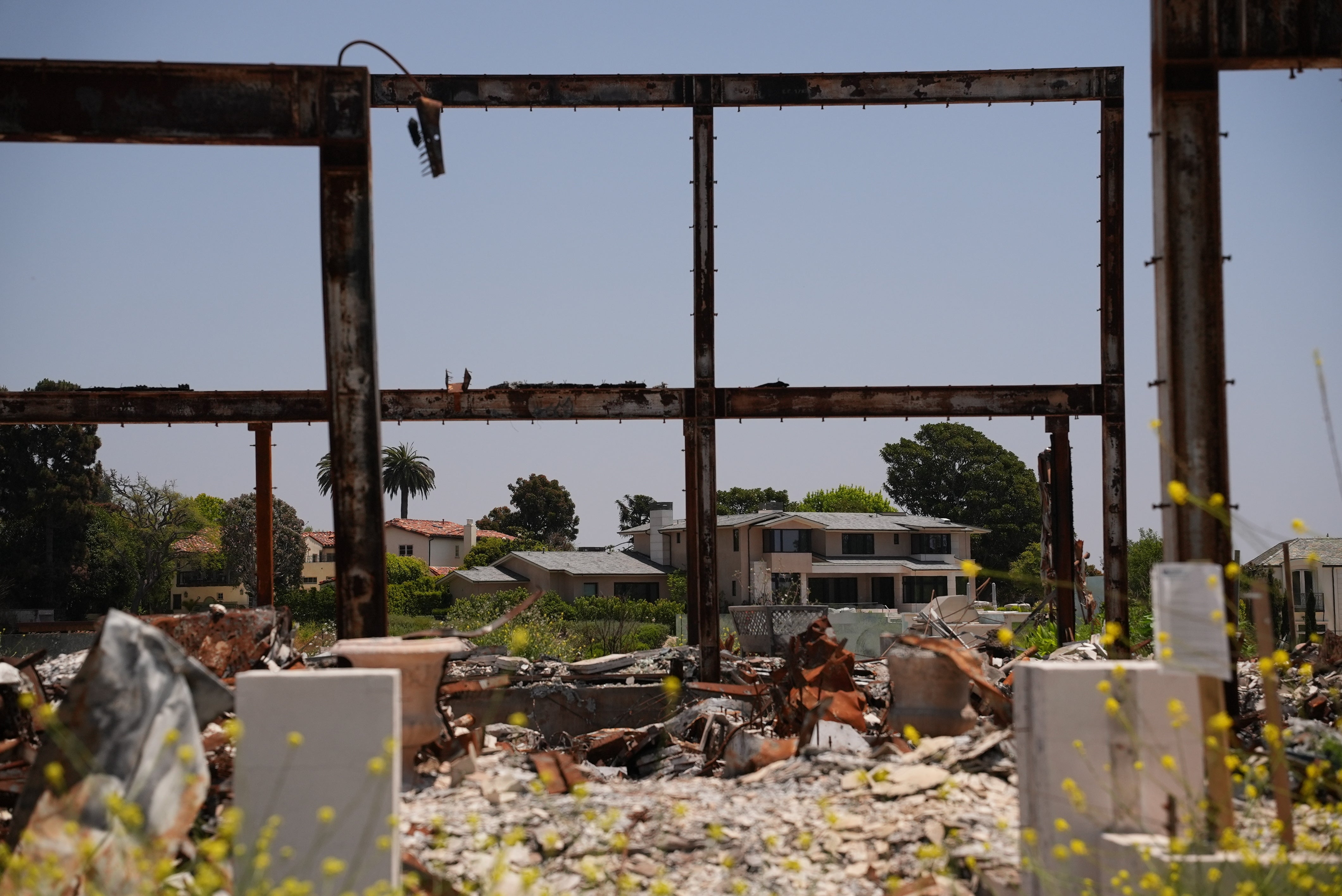

As the second most destructive wildfire in California’s history ravaged Los Angeles’s San Gabriel foothills, Morgan Soloway and Kenneth Rotter scrambled to grab some laundry bags, shoved their laptops into a backpack, and shepherded their dogs into their tiny hatchback, leaving their 1940s postwar ranch home for what they hoped would only be a few days. Hours later, there would be nothing left to come back to.
“People say it’s just stuff,” says Soloway, a systems analyst at NASA’s Jet Propulsion Laboratory. “But a lot of who you are is in all the things that you keep. I felt like I lost a lot of my identity there.”
A year later, the feeling still resonates with thousands of the city’s Altadena residents who, like Soloway and Rotter, lost everything to the Eaton fire and now find themselves in a kind of limbo. The debris has been cleared, the soil remediated, the insurance claims filed, but of the 13,000 homes that perished in the blaze—which also wrecked Pasadena, Malibu and the Pacific Palisades—fewer than a dozen have finished construction. Some estimate that it will be another five to 10 years before the city is restored. Meanwhile, homeowners remain in various states of recovery as they await permit approvals and insurance payouts and work on their own mental and emotional healing.
One of the biggest practical hurdles is that most homeowners were underinsured, making the ability to recoup enough money to fund the entirety of a timely rebuild nearly impossible. “In many cases, people aren’t getting [reimbursed enough] to replace their house at $500 per square foot,” says Los Angeles–based architect William Hefner. “The best possible finish at the moment is maybe $800 to $1,000 a square foot, depending on what you would do at the going market. So the challenge has been to figure out a way to design the houses to be more economical, and then find people who could build at a lower price point than a lot of luxury homebuilders that were building on the west side of L.A.”
Adds Caren Rideau of Kitchen Design Group, who lost her Pacific Palisades showroom to the fire and recently set up shop in Santa Monica: “While progress is moving quickly for some, it’s been a challenging journey for many others.” There’s a tricky calculus that takes place as people navigate the gap between what they’d like to do and what they can afford to do, or what will help their family recover most quickly. While some might prefer to wait to raise funds, others make choices to feel more settled in the short term. But things are generally moving in the right direction. “Despite these challenges, I’m encouraged by how much progress has been made overall—it’s happening faster than I initially expected,” she says.
Indeed, by local accounts, the recovery is in many ways ahead of schedule, and Altadena (and Pasadena, Malibu and the Palisades) is slowly but surely rising from the ashes. The number of completed homes may seem discouraging, but there are nearly 600 rebuilds currently in construction in L.A. County, according to official trackers, with the Palisades lagging behind Altadena in terms of both rebuilds underway and permits filed. “At least according to people we’ve spoken with who are familiar with other California wildfire communities, Altadena is going at light speed,” says Rotter. Part of that is because, as megafires become a fact of life on the West Coast, recovery teams have established initiatives like After the Fire to inform victims of resources and options, as well as a playbook for how to hit the ground running in the wake of these now all-too-familiar tragedies.
For the families who are planning to stay, the next phase of that recovery will rest on the shoulders of architects and designers who are poised to bring these devastated parts of the city back to life. On top of offering free product or discounted consultations, many have hosted informational panel events to help residents navigate permit and building processes, whether that’s making sure submissions meet the proper requirements, educating homeowners on shopping around for a contractor, or deciphering the updated building codes. Organizations are also holding Zoom meetings, like the Pasadena & Foothill chapter of the American Institute of Architects’s upcoming gathering to establish post-fire best practices.
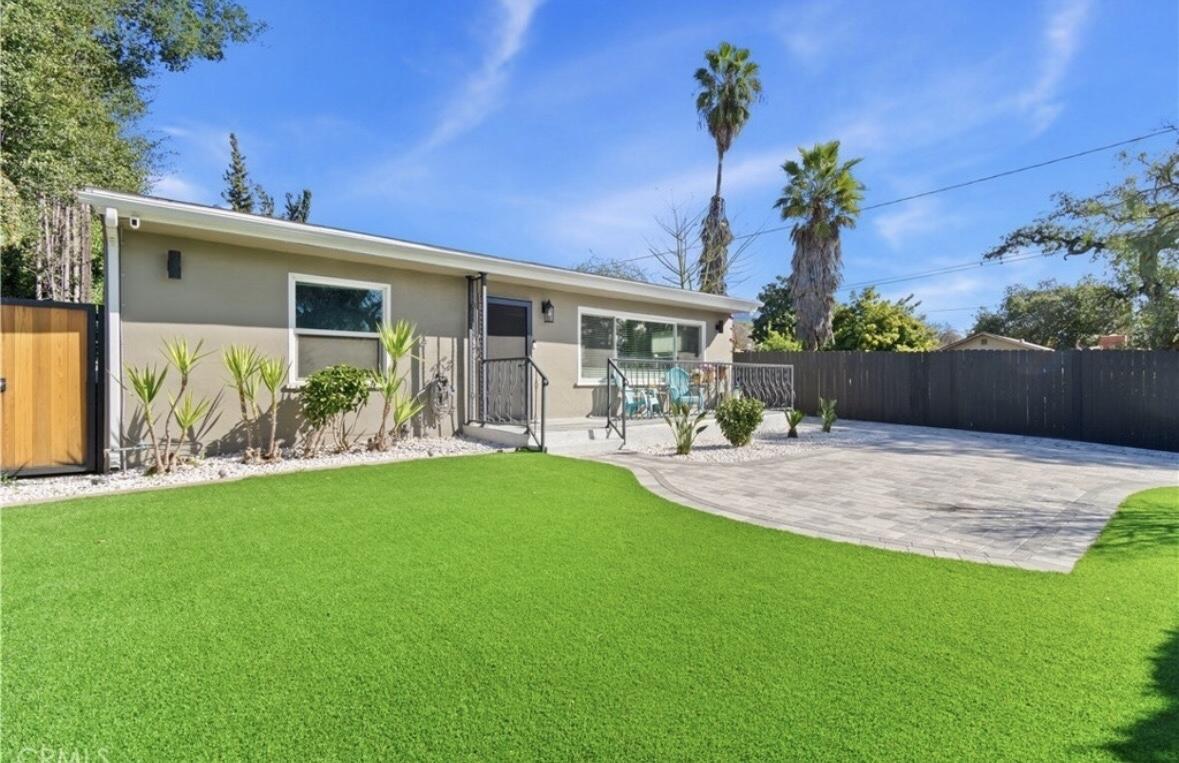
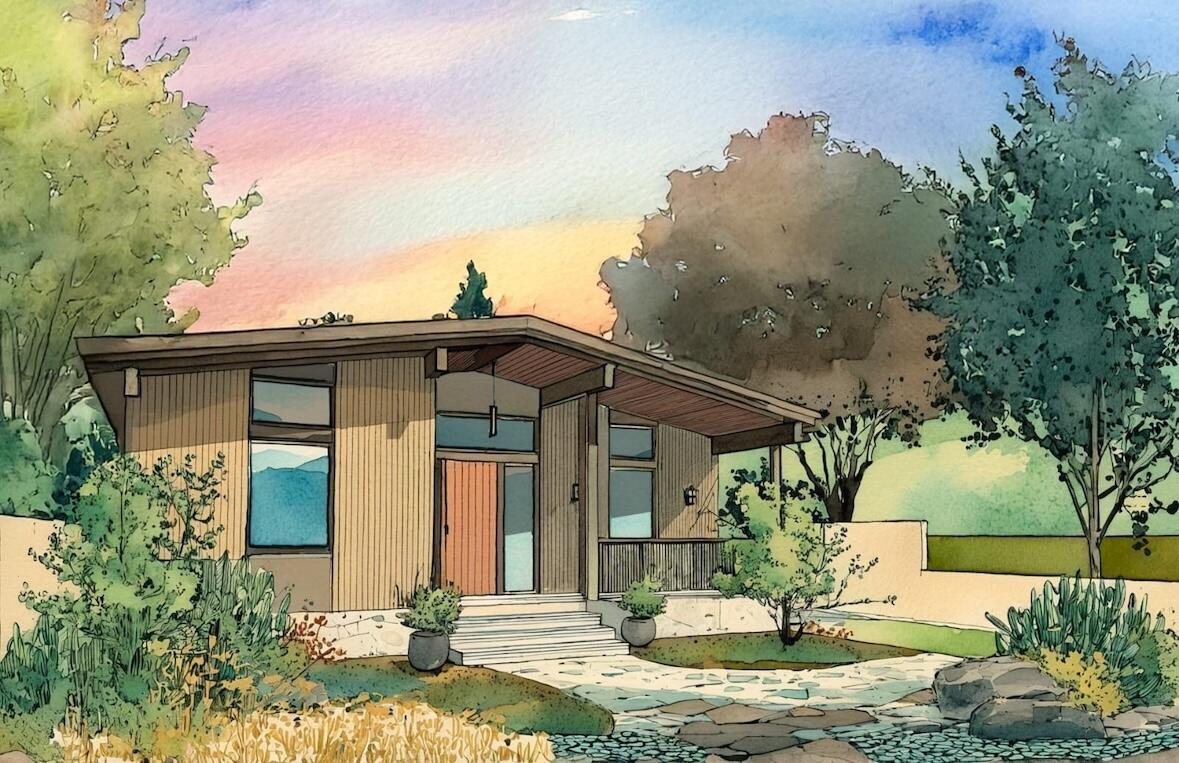
One business that’s taking that sense of community responsibility even further is Altadena Collective, an architecture and real estate firm of collaborating professionals offering rebuilding packages in four pricing tiers that allow homeowners to customize the experience based on their level of need. The brainchild of Los Angeles–area designers Tim Vordtriede, Chris Driscoll and Chris Corbett, the initiative utilizes collective bargaining practices to unite homeowners with contractors and designers, with the goal of meeting people where they are and rebuilding Altadena back authentically, efficiently and economically. But there are inherent challenges to pivoting from business as usual.
“The design community that is engaged in supporting the rebuilding of Altadena and Palisades is seeing some business and getting a bump, but there are plenty of folks who are not engaging because it’s a different way of doing business,” says Driscoll, who had been doing residential renovation work in the area before Altadena Collective became his focus. “Many of these people probably never would have hired an architect or interior designer or contractor in their lives, so we collaborated to think of ways to look at fees, structures and service deliverables that could help people at more reasonable rates. We landed on this idea of creating semi-custom designs for significantly below the 5 to 15 percent that an architect would charge to build that new home.”
There are also the psychological aspects of the work to consider. “Initially, I thought I was going to be designing a bunch of homes,” says Corbett, a former Disney Imagineer who was wrapping up a commercial project in Florida when he pivoted to join the recovery effort. “But if we are to be successful as architects and add relevance to the process, then we have to adapt to a clientele that is much different than a typical client. Working with total-loss survivors for the first time, one of the things I wasn’t prepared for was how necessary education is to help alleviate what people are going through. A lot of people refer to it as ‘fire brain’—it’s the mind recovering from a traumatic event and how that impacts your decision-making and your heightened awareness of risk in the time after the fire. To adjust to clients going through that, we are very didactic but then also find outside resources for them to talk to about the experience they had.”
Soloway and Rotter’s is one of nearly 80 families that are currently working with Altadena Collective to rebuild their homes. While many choose to re-create structures as they existed before the fire—“literally brick by brick, tile by tile, exactly like it was,” says Hefner—others are opting for completely new designs, whether that’s a midcentury modern bungalow or Spanish Revival casita. “We’re not telling folks what to do,” says Driscoll. “We let them guide the process.” What’s true of all of the designs is that they incorporate an additional 200 square feet of real estate approved by the county planning department to help adhere to new building and fire-safety codes, and they opt for fire-repellent materials where cost-effective. (But Driscoll notes that fireproof products can be prohibitively expensive, so many people have had to partially incorporate or forgo them.)
Like other Altadena residents, Soloway and Rotter are slowly establishing a new identity for themselves as the pieces of the housing puzzle begin to come together. They’re expecting their permit to go through soon, and they aim to break ground on their midcentury-style house this spring, adding a rooftop tiki bar over the garage, expanding the entertaining space, and using extra square footage to build out a third bedroom, an improvement on their previous two-bedroom, two-bath layout. “This terrible thing happened, so this feels like a treat to ourselves,” says Soloway of the upgrades. “I didn’t think of our house as our forever home—it wasn’t an architectural gem or anything—but it was ours. And because of everything that’s now going into it, it will become even more ours. It’s absolutely our forever home.”
Additional reporting by Aidan Taylor








 Withdraw Consent / Manage Privacy Preferences