













This week in design, though Roomba maker iRobot filed for bankruptcy in December, fans of the robotic vacuums are more endeared to their devices than ever—with many assigning them nicknames and giving them a presence on social media. Stay in the know with our weekly roundup of headlines, launches, recommended reading and more.
Business News
Last week, President Donald Trump announced plans to ban large institutional investors from purchasing single-family homes, stating that he would be “calling on Congress to codify” the measure, The Wall Street Journal reports. Following the 2008 financial crisis, institutional investors have represented a growing faction of homebuyers. While they own just 2 to 3 percent of the overall housing market, that share grew to more than 20 percent in markets like Houston, Miami, Phoenix and Las Vegas during the pandemic real estate boom. As home affordability has worsened, several states have proposed new restrictions on institutional investors—who often pose a threat to first-time buyers with their all-cash offers—though none have passed yet.
In other housing news from the White House, on social media last week the President also announced that he had directed his “Representatives” to purchase $200 billion in mortgage bonds—paid out from the cash reserves of government-sponsored mortgage enterprises Fannie Mae and Freddie Mac—as part of an effort to improve affordability. In theory, the bulk purchase would drive up the price of mortgage-backed securities, leading to lower yields for investors and, ultimately, lower mortgage rates for borrowers. A similar process took place during the pandemic, when the Federal Reserve purchased roughly $1.3 trillion dollars in mortgage-backed securities over a period of two years. Still, it remains unclear if Trump’s one-time infusion will be enough to stimulate the housing market, which continues to set records for low turnover.
Bob’s Discount Furniture filed for an initial public offering last week, The Wall Street Journal reports. Details around the IPO—including the number of shares the company plans to offer or an estimated price range—remain unclear, but the retailer plans to list shares on the New York Stock Exchange under the ticker BOBS. Despite facing a relatively shaky market for home furnishings in recent years, Bob’s, which has been owned by investment firm Bain Capital since 2014, has fared well: In its September earnings report, the company reported income of $80.7 million on revenue of $1.72 billion, up from $49.3 million on revenue of $1.43 billion a year earlier. The past year also saw an expansion of the brand’s retail portfolio, which grew from 185 locations to 206, with the goal of operating 500 stores by 2035.
Macy’s announced that it will be shuttering 14 stores across the country this year as part of a downsizing plan that will lead to the closure of 150 locations in its retail fleet. As Retail Dive reports, the reductions are part of CEO Tony Spring’s ongoing strategy for reviving the struggling department store chain by closing 25 percent of the company’s lowest-performing retail square footage—which accounted for less than 10 percent of sales when the plans were first announced two years ago. The latest round of closures affects locations in California, Georgia, Maryland, Michigan, Minnesota, New Hampshire, New Jersey, New York, North Carolina, Pennsylvania, Texas and Washington.
Saks Global is expected to file for bankruptcy this week as it nears collapse under the weight of mounting debt, the Financial Times reports. The turmoil comes barely a year after the multibillion-dollar merger of Saks and Neiman Marcus, which the former funded by selling more than $2 billion in bonds. Shortly after the deal was finalized in early 2025, however, it was reported that Saks was dealing with liquidity issues, to the extent that the company struggled to make payments to vendors. Despite receiving a fresh infusion of $600 million in capital in June, the department store chain ran through the new funds in a matter of months—and to make matters worse, in its second quarter Saks recorded its third straight double-digit revenue decrease. Now, several investors are lined up to provide the department store chain with a bankruptcy restructuring loan exceeding $1 billion, though some fear it won’t be enough to save the company from heading straight for liquidation.
A number of e-commerce brands have expressed frustration with Amazon in recent weeks after finding that their products had been listed on the e-commerce marketplace without their permission, ModernRetail reports. The issue relates to a feature called Buy for Me, which allows users to purchase products from third-party websites. Outside listings appear in the platform’s regular search results, but are labeled as “other brands” and come with a “Buy for Me” button. When a purchase is made, third-party websites are then provided with a buyer’s encrypted payment and shipping information, available via “agentic AI capabilities,” according to Amazon. Now, merchants are calling out Amazon publicly for including their products in the Buy for Me feature without their knowledge—as was the case for Brooklyn textile maker Soil to Studio, which discovered earlier this week that its entire catalog had been made available on Amazon. “As a small business, staying independent is a conscious choice—we want to tell our own story, share our work on our own terms, and stay connected directly with our community,” the brand posted on Instagram. “Seeing our work used and represented without our permission feels like a violation of our rights and our privacy.”
The share of older Americans renting out a room in their home is on the rise, The New York Times reports. In 2024, nearly 40 percent of live-in landlords advertising rooms for rent are now in the 45 and older demographic—an increase from about 28 percent in 2019, according to data from roommate matching site SpareRoom. A similar trajectory emerged for the 55 to 64 age group, which saw a nearly 52 percent increase, and for those 65 and older, which more than doubled its share of residents with roommates over the same five-year period. The shift comes as the costs of living and homeownership continue to climb, and as a spokesperson from SpareRoom pointed out: “Just because people have a house that they own, it doesn’t mean they have cash flow as well.”
Launches and Collaborations
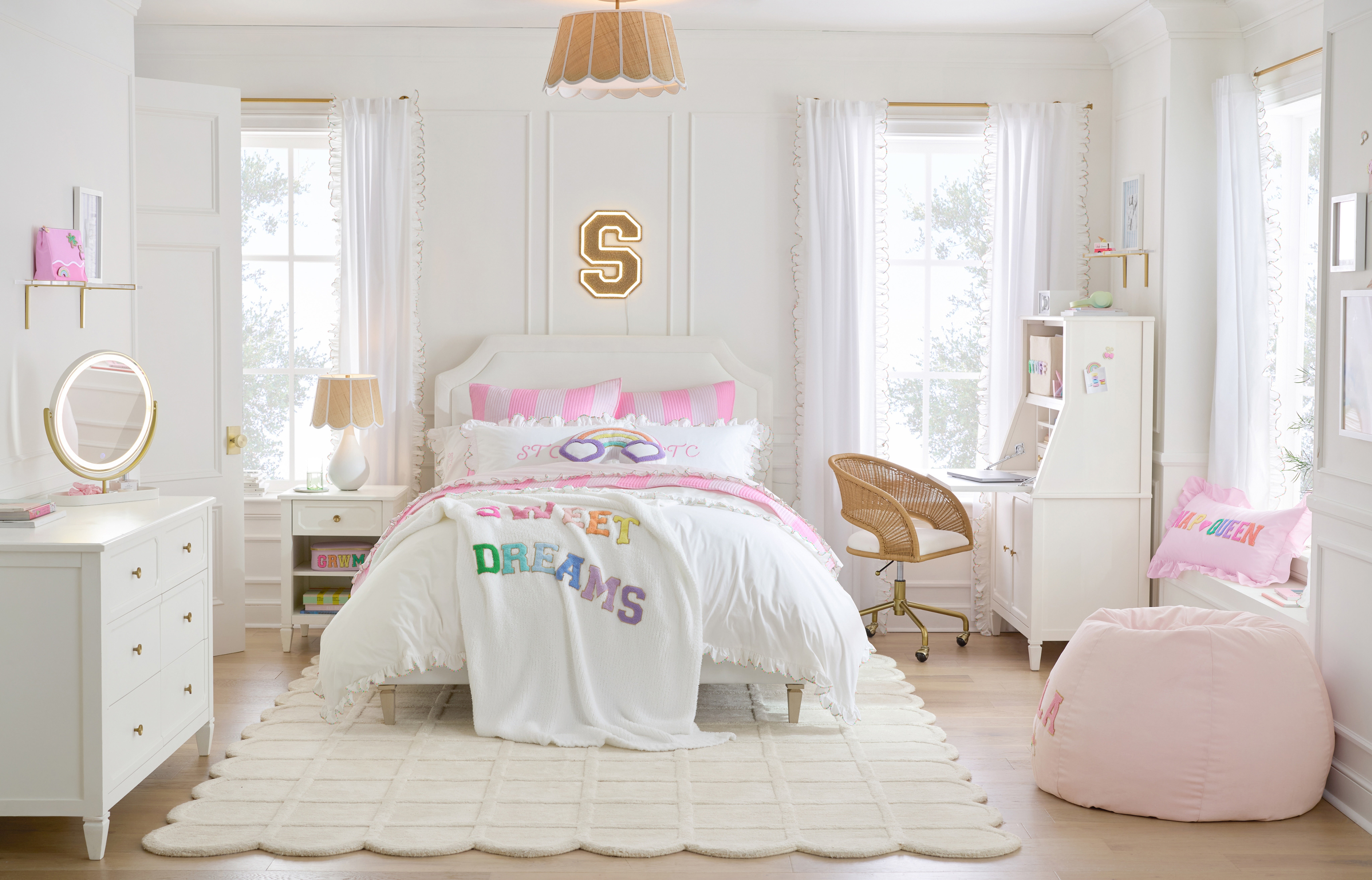
Pottery Barn Kids and Pottery Barn Teen have unveiled their first collaboration with lifestyle brand Stoney Clover Lane. Spanning furniture, bedding, bathroom and travel accessories, the collection holds true to the brand’s vibrant, candy-colored aesthetic while also offering an array of its trademark customizable pieces.
Showhouses
The 9th annual Kips Bay Decorator Show House Palm Beach has announced this year’s lineup, selecting 23 designers and architects to transform two neighboring properties in the county’s Northwood Shores neighborhood. The cohort includes Amy Lee McArdle, Lisa Erdmann, Lori Morris, Steven Walsh and more. The showhouse will be open to the public for one month starting February 25, with proceeds to benefit the Kips Bay and Palm Beach County chapters of the Boys & Girls Clubs of America. For more information, click here.
Recommended Reading
In 2025, Miami came second only to Dubai in having the highest number of branded residences of any city in the world, as the total number of buildings in the category (populated by companies like Cipriani, Dolce & Gabbana, and Mercedes-Benz) rose to 910 in total last year, up from 323 in 2015. For Women’s Wear Daily, Sofia Celeste writes about how the phenomenon is mutually beneficial for property developers and the big names in luxury.
Last year, Google searches for “how to reduce screen time” reached a record high—now, homeowners and designers are introducing spaces that answer that question. For The Wall Street Journal, Nora Knoepflmacher explores how the growing desire to live a low-tech life is translating to rooms that revolve around analog activities—like playing music and board games—and do away with screens and smart home tech completely.
Cue the Applause
Dallas Market Center and creative home furnishings network ART announced the winners of the 36th annual ARTS Awards at a celebration during last week’s Total Home & Gift Market. The awards honor the top showrooms, stores, manufacturers, interior and product designers (the titles respectively going to Eddie Maestri of Maestri Studio and Libby Langdon of Libby Langdon Interiors), and sales representatives across the design industry. This year, the late John Feizy, founder of Feizy Rugs, was honored with the Academy of Achievement award; the HEARTS award was presented to Heart on Main Street, a nonprofit that supports independent retailers; and the Legendary Leadership award went to the late Bill Winsor, Dallas Market Center’s chairman emeritus and The Mart's former CEO. For the full list of winners, click here.








 Withdraw Consent / Manage Privacy Preferences