














Natascha Maksimovic wants to bring people closer to nature. Using centuries-old techniques, the Margate, England–based artist, also known as Nat Maks, paints expansive marbled landscapes that immerse the viewer in mesmerizing organic motifs. “In a time when digital tools and AI are reshaping our lives, I feel it’s more important than ever to hold on to processes that are tactile, elemental and rooted in the environment,” she tells Business of Home.

A lifelong proponent of color and pattern, she fell in love with design while working in the film industry. After studying graphic design at the Camberwell College of Arts in London, Maksimovic spent the next six years working as an assistant and then a development executive for legendary English filmmaker Ridley Scott, and learned firsthand how to create compelling visuals. “[That experience] taught me the power of storytelling through imagery, and instilled in me a deep respect for craft, precision and creative expression,” she says.
Despite the daily demands of her career, Maksimovic began experimenting with marble art—specifically, the ancient Japanese practice of suminagashi—in her downtime. The technique, which dates back to the 12th century, loosely translates to “floating ink.” It involves dropping paint into water and guiding it gently with breath or touch before laying a sheet of paper on top to absorb the pattern. “I first discovered it through research into traditional craft processes, and it immediately captivated me,” she says. “I was drawn to its fluidity and unpredictability: the way ink floats on water and transforms into something that feels both cosmic and intimate.”
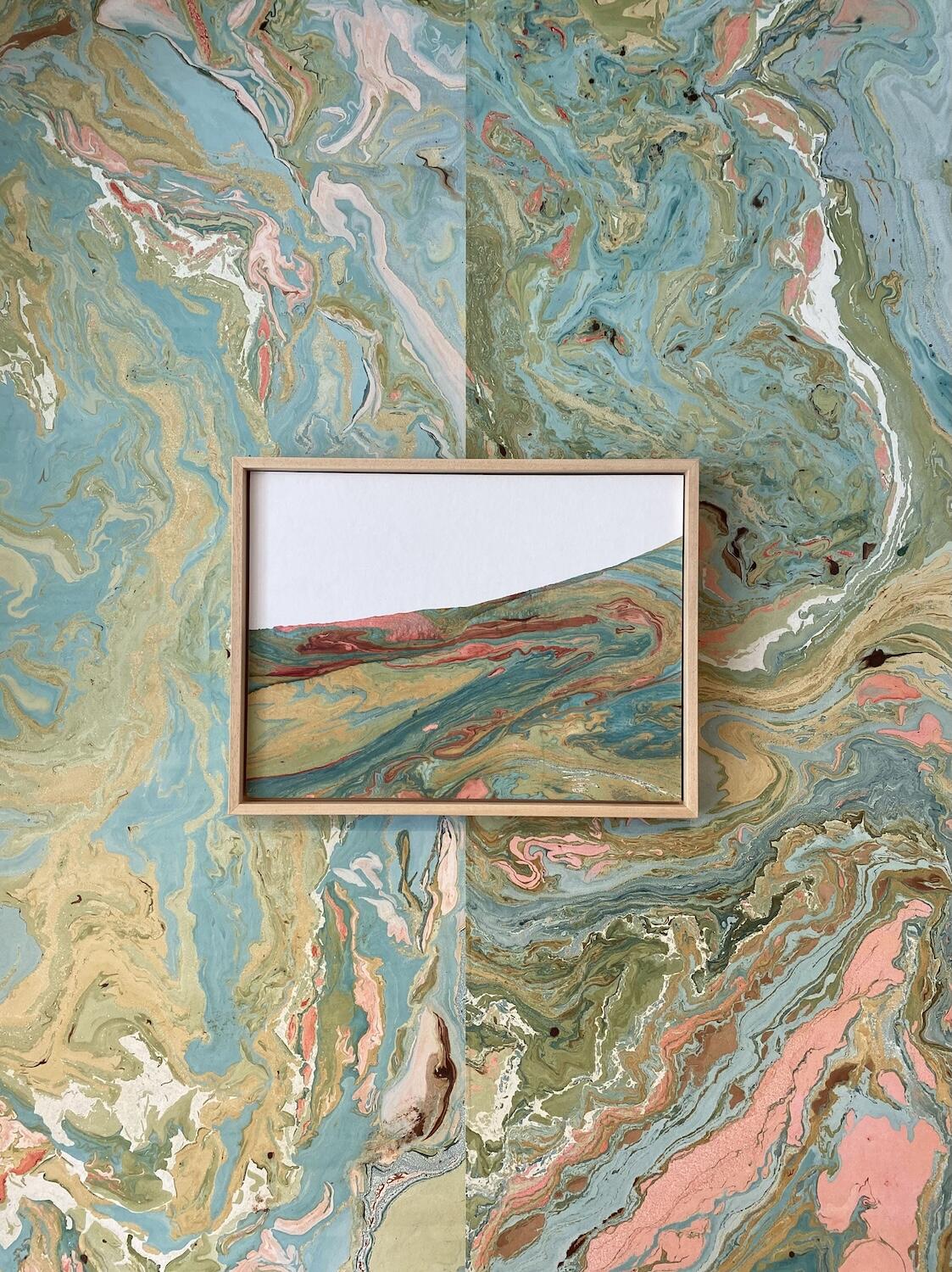
Eventually she left the movie business behind and began developing an independent marbling studio. In 2017, she released her very first wallpaper collection, Sumi, featuring an assortment of hand-marbled panels in sea-colored shades such as gray and blue. “It was a way of translating water’s movements directly onto the walls of a home,” says Maksimovic.
For her wildly popular Stone Anthology series, she drew inspiration from natural marble—and the way each cut reveals a unique formation. She approached every wallcovering pattern as its own design, spending hours slowly hand-marbling the piece. “There’s something meditative and elemental about working with water as both canvas and collaborator,” she says. “Unlike other marbling methods, suminagashi is minimal: just ink, water and time. That simplicity allows for an incredible depth of expression.”
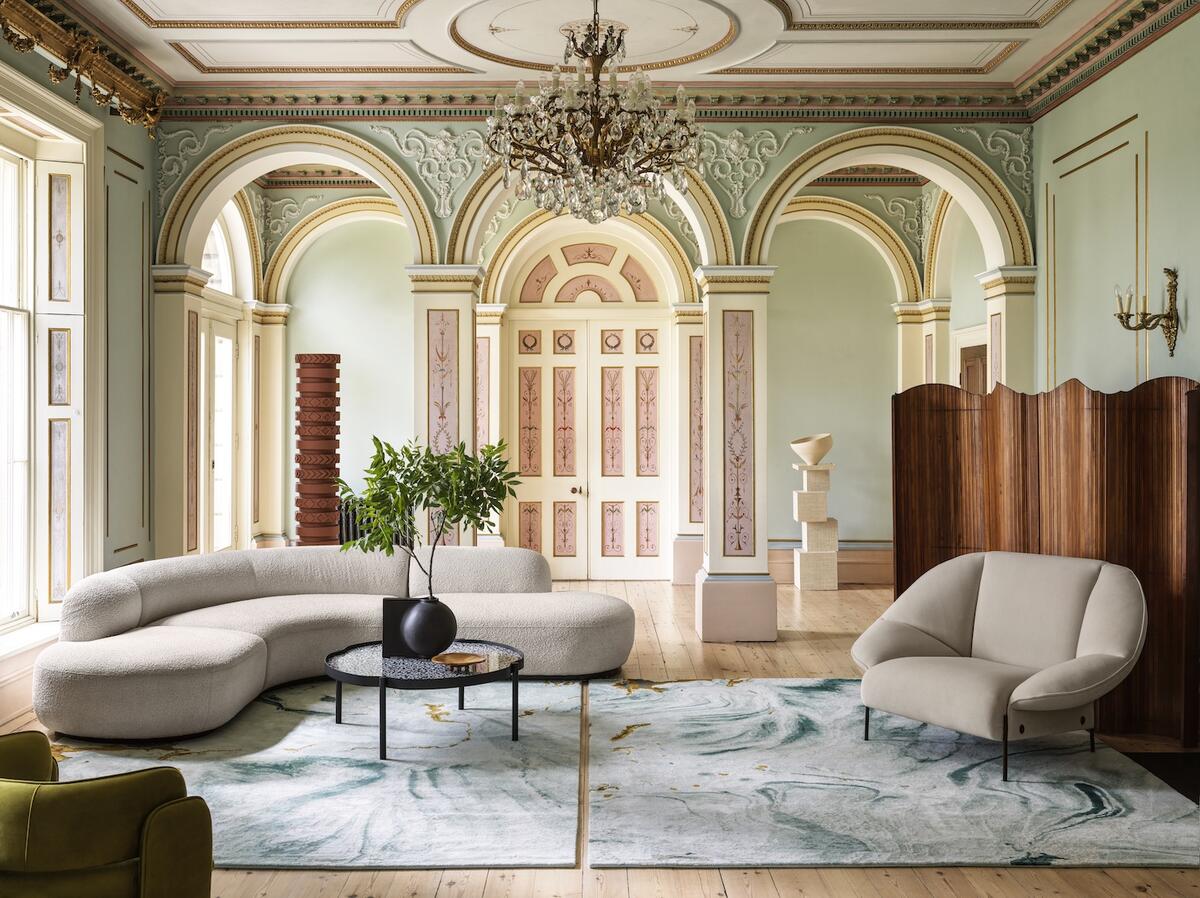
Unsurprisingly, Maksimovic has caught the attention of big-name brands, collaborating exclusively with the likes of Molton Brown, Knots Rugs, Maison Cacao, and most recently, Sebastian Cox. “Each collaboration is about translating the essence of marbling into a new medium, whether that’s rugs, wooden tables or packaging,” she says. “I also regularly work with interior designers to create custom pieces, whether it be bespoke wallpaper panels for a specific space, a hand-painted mural, or framed landscape works.”
Her latest body of work, Memory Landscapes, which captures her marble compositions as a series of one-off paintings, earned her a prestigious Queen Elizabeth Scholarship Trust (QEST) award. She’s using the funds to research and develop her own line of plant-based inks, crafted from hand-foraged flowers and minerals. “I hope to launch my marbled landscape pieces that are born from these botanical inks in 2026,” says Maksimovic. “This feels like the next chapter in my practice—making not only the work, but also the materials themselves, from the land around me.”





 Withdraw Consent / Manage Privacy Preferences