














American homeowners have had a turbulent relationship with wallpaper. First, they embraced it: For the better part of the 20th century, it was a staple in homes across the country. Then, sometime around the 1990s, it was rejected in favor of minimalist decor schemes. When maximalist styles came roaring back in the early 2010s, the arrival of easy-to-remove peel-and-stick options seemed to provide even more options for pattern lovers.
Now, Pierre Jean Delaye thinks it’s time for the next chapter. This fall, he launched Veer Decor to shine a light on non-woven wallcoverings—a type of wallpaper backed by a natural- and synthetic-fiber blend similar to coffee filters and teabags. For proponents like Delaye, it occupies a sweet spot between the classic-but-finicky nature of traditional paper and the easy-but-error-prone qualities of peel-and-stick.
“With Veer, we feel we have a little mission to educate consumers: peel-and-stick is great, but there is actually a product that’s just as easy, if not easier, to install,” he says.
Non-woven wallpaper is not new. Delaye’s thesis is that it has never taken off in the U.S. because it was introduced in the 1990s, precisely when wallpaper was in exile here. By contrast the product was embraced—and is still widely used—in the European market.
“When non-woven appeared as a game changer, it was as if a tree fell in the forest and no one was here to listen. Wallpaper was so in the dumps in the U.S. that it didn’t make a dent,” says Delaye. “The rest of the world is on non-woven; it represents a huge chunk of the marketplace simply because of the superior properties of that product. But in the U.S. it remains the unsung hero of the wallpaper category.”
According to Delaye, the product’s value lies in its fiber structure, which is tear-resistant. Unlike peel-and-stick choices, non-woven wallcoverings don’t immediately adhere to a surface; instead, glue is applied to the wall, making it easier to prevent air bubbles, adjust pattern alignment, and minimize damage to paint or drywall during the application process. When it’s time for the wallcovering to come down, it can be removed in full strips, and doesn’t require the ripping or scraping necessary with traditional paper.
Delaye isn’t advocating that consumers do away with peel-and-stick completely. In fact, he helped bring about its rise. Before founding Veer, Delaye spent 26 years working for York Wallcoverings, where he oversaw the launch of RoomMates, the company’s peel-and-stick division. As the product grew in popularity in the U.S., he says, the market soon became flooded with cheaper, low-quality alternatives, including formulas for cabinet liners that were marketed as peel-and-stick wallpaper. If homeowners choose the right product—for the right project—he says the option still has merit.
“Peel-and-stick serves its purpose for very specific occasions. It’s great for non-committal decorating, or for renters,” he says. “But if you’re looking for something that's a little more permanent, that has a better finish, that has a better hand, nothing beats non-woven.”
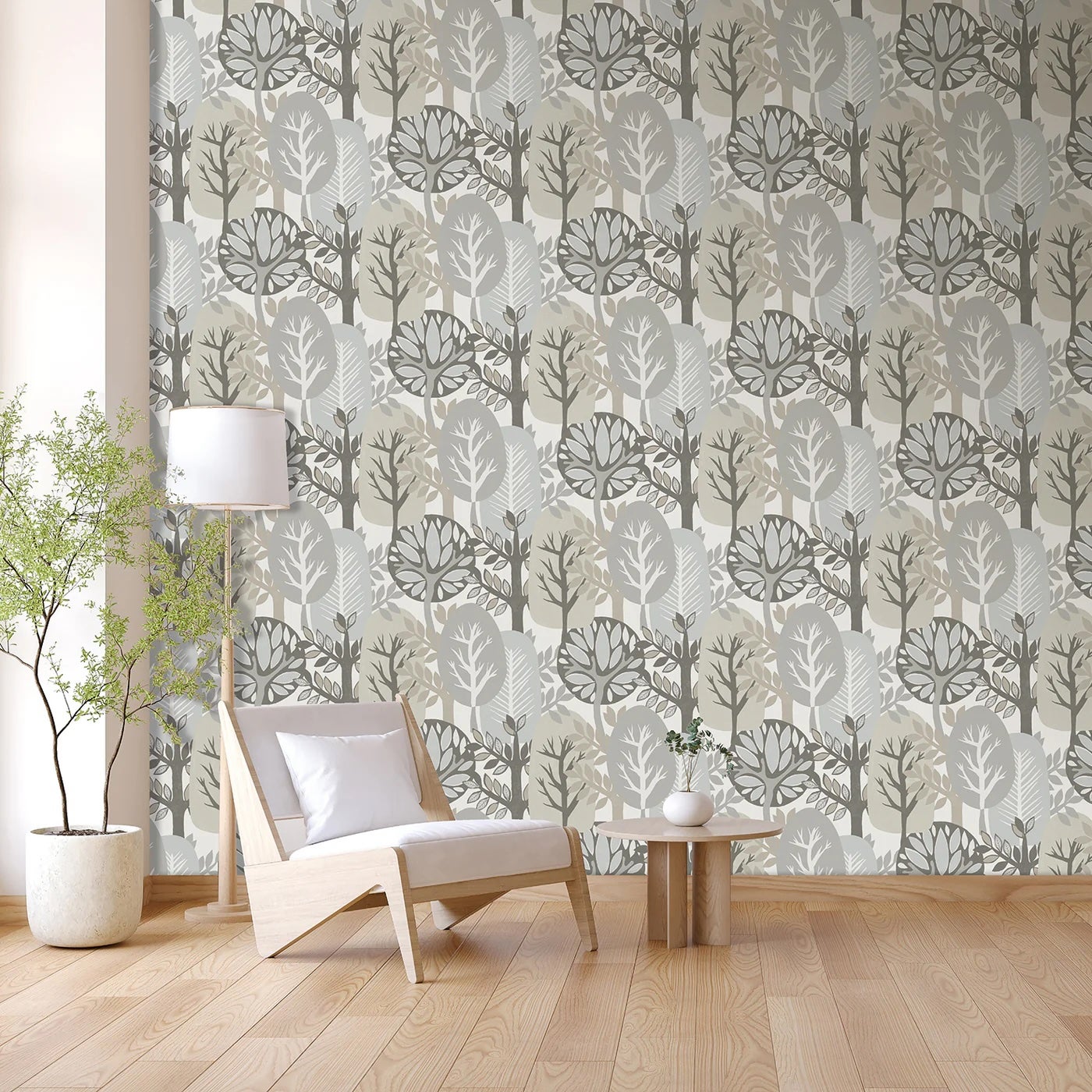
While non-woven papers make up the bulk of Veer’s roster, the company will offer peel-and-stick options among the more than 1000 SKUs currently in its catalog. Along with a variety of original creations made in collaboration with independent studios, Veer is also introducing a number of wallcovering lines produced in European mills to the U.S. market for the first time. The result is an array of styles—from deep-embossed vinyls to eco-friendly, PVC-free papers—and playful patterns like the Bigfoot Toile, populated by woodsy motifs interspersed with illustrations of the folk tale legend.
Veer Decor’s products can currently be found on sites like Decorator's Best, Wallpaper Boulevard, Home Depot and Lowe’s, and Delaye says the brand’s assortment is expected to double in the coming year. Above all, he hopes his efforts bring the category’s “unsung hero” the recognition it deserves. “What we’re trying to do with Veer is to tell people, ‘Hey, you need to rediscover real wallpaper,” he says.




 Withdraw Consent / Manage Privacy Preferences