













If anyone knows the importance of home, it’s Milot Zeqiri. When he was just 17, his family fled the war in Kosovo, eventually arriving in New Zealand. After university, he pursued a career in the home industry, landing roles in graphic design, sales and marketing for building materials brands. Zeqiri bought his first home at the age of 22, then followed it up with five more investment properties that he purchased with his wife, Brittany Gribben, who also worked in sales for architectural products.
That’s when the trouble began. Like many homeowners, they had approached an architect to help renovate one property but were stunned by the cost. Thinking they could work their industry connections, the couple took the DIY route with disastrous consequences. “What was going to take us 12 months to complete took us two years,” says Zeqiri. “The project came to a halt because of choosing the wrong builders, choosing the wrong contractors, choosing the wrong products. It ended up costing us twice as much as what the architect had proposed. That’s when I realized that there was a gap in the market. If someone like me, who came up in the industry, thought I could pull a project like this together, can you imagine other homeowners who are going through the experience?”
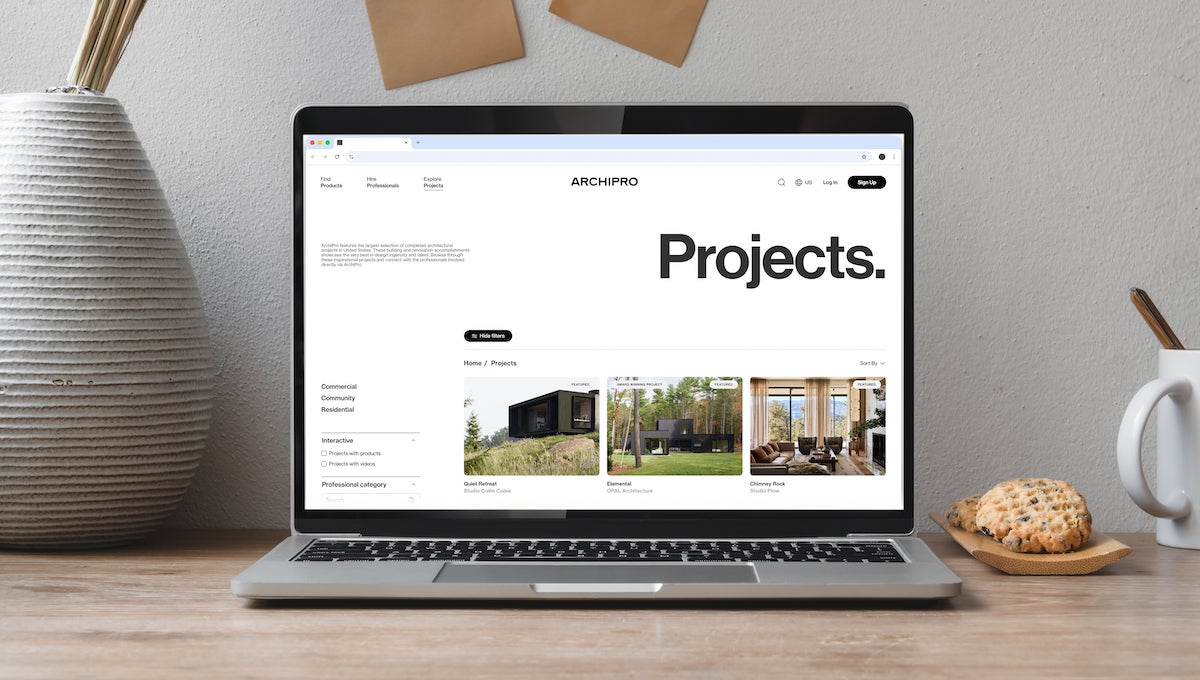
The couple downsized and sold the remaining properties, then funneled the money into launching ArchiPro, a New Zealand–based platform that allows the country’s homeowners to browse architects and interior designers, shop their trusted products and brand partners, and dive deep into the stories of each project—all in one place.
“I wanted to create a platform that brings the industry together,” he says. “I started to appreciate that there are a lot of cowboys in the industry, and I wanted to create an environment where homeowners felt safe about connecting with the right people—but most importantly, I wanted to put the architect and the designer at the forefront of every building project.”
Nearly 12 years later, the designer-led platform now has more than 3,000 members—architects, designers and product vendors who pay a yearly membership fee to showcase their work on the site. (ArchiPro declined to disclose membership pricing to Business of Home, but confirmed that firms and brands can join through an application and review process, or by invitation.) The company moved into the Australian market, and currently boasts more than 400,000 consumer subscribers and 500,000 active monthly users. Now, it is eyeing more far-flung expansion: On June 1, it soft-launched ArchiPro America to serve the U.S. market.
“When you think about what’s happening at a global level, you’ve got Uber that’s democratized transport,” says Zeqiri. “I can catch an Uber in Auckland; I can use the same app to catch an Uber in Sydney, London, New York. Airbnb has done the same thing. But when it comes to people’s biggest investment, which is building a home, there isn’t a single global platform [where you can] go to connect with architects and brands. My vision has always been to be a global platform, but we’ve been waiting for the right timing. We’re driven by doing things right, being thoughtful about how we come into the different markets and not following the trains of other big startups. We want to do a really good job of promoting architecture at a global level.”
ArchiPro is not the first to apply a directory model to the industry in an effort to drive value for homeowners and design professionals alike. Zeqiri’s goal is to take a comprehensive approach, highlighting products, projects and professionals (the “pro” in ArchiPro) on one platform. Tooling around the site feels a bit like pleasantly falling into a social media wormhole: Scrolling down the story of one home, you might click through to a product featured there, then on that page find more projects by other designers who use the same product.
An element that Zeqiri hopes will set ArchiPro apart is the behind-the-scenes technical features that allow brands, architects and designers to quantify that engagement. “You have this platform that’s highly curated and design-led on the surface, but has enterprise-grade analytics and performance visibility tools,” says Kathryn Kerns, general manager of the U.S. team. “I think the industry increasingly is expecting more than just visibility. Brands and professionals want to see measurable engagement and understand how homeowners and the wider design community are interacting with their products, projects and content.”
Members can manage their profiles directly using the company’s tools and data metrics, or they can choose the concierge service the company offers. “We’ve been obsessing over the details and perfecting our product for 10 years,” says Zeqiri. “We’ve had to invest a lot in that data capability, which gives all of our partners extreme transparency when it comes to their profile performance. We measure over 250 different data points that we report back to our clients to try to connect the dots to see how well their profile performance is relative to the category, relative to other companies that are listed within the platform, relative to their investment; and so it breaks down all these complex things into insights that are easy to consume.”
Those same features will be available to designers in the U.S. market, which launched with more than 138 member professionals in June, including Studio DB, Bobby Berk and Becky Shea. For the next phase, which is scheduled to roll out this fall, the company will introduce products that have been endorsed by its members. A media component will also follow: Magazine veteran Brittany Chevalier McIntyre recently joined the team as editorial director. “The industry thrives on stories, so we want to give them that,” says Zeqiri. Adds McIntyre, “We’re so misaligned with what we think a home will cost and what it actually costs. There’s such a gray area that nobody really talks about when you’re going into designing or building your own home. We are trying to educate homeowners.”
With the new venture, Zeqiri is clear that the company isn’t chasing scale. “We’re not looking to become an overnight success in the U.S. market, but we are looking to make sure that we make an impact in a way that is meaningful, in the way that people connect with us, at a cultural level, and not just opening offices left, right and center. My mission is to keep my team small and understand the industry well. We understand that the American market has slightly different nuances to other markets. We can’t be everything to everybody. We’re trying to identify, ‘Who are we, what sort of personality do we have as a platform, and how do we want to show it to the world?’”








 Withdraw Consent / Manage Privacy Preferences