




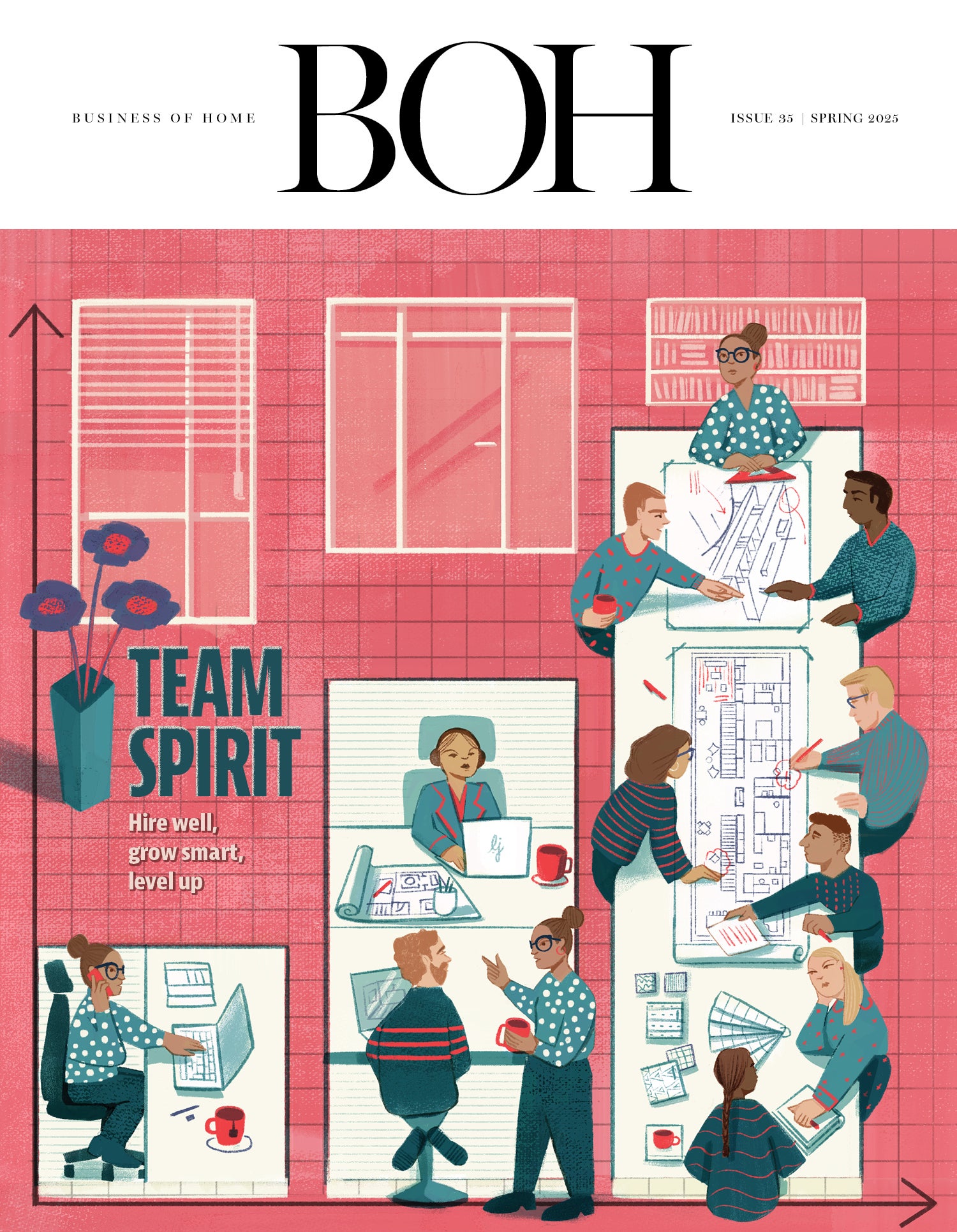









From consultations and sourcing trips to installs and more, the day of an interior designer can be hectic. This week, we asked eight industry pros—Jessica Bradley, Brieanna Cunningham, Ali Henrie, Leah Hook, DuVäl Reynolds, Emma Sherlock, Ryan Street and Andrew Suvalsky—how they organize their schedules to make the most of every minute.

3 Is the Magic Number
“I have three main time management strategies. First, I organize my emails by priority, [using] different folders to categorize by content and urgency. Second, I block Monday mornings for team meetings. By starting the week with a global conversation about everything that needs to be conquered by Friday, I am able to thoughtfully plan. Third, I outsource control of my calendar. This removes my emotional connection and gives an objective member of my team the ability to tweak and shift for productivity without the bias of my creative proclivities.” —Leah Hook, Gray Oak Studio, Lynnfield, Massachusetts

Visualize It
“One thing that really helps me with time management is time-blocking. I like to put everything on my calendar and color-code different types of activities so I can quickly see how my time is being used. It helps me allocate my time more intentionally—just by looking at my calendar I can get a good sense of my capacity and whether I might need to adjust things. I also try to remember that my calendar is flexible. If something needs to move, I move it. That mindset helps me avoid feeling stuck or overwhelmed if the day doesn’t go exactly as planned. Another tip that works well for me is blocking time for everything—not just meetings or work tasks, but also things like lunch, dinner, haircuts, doctor’s appointments and other personal commitments. There’s a lot of peace of mind that comes from knowing that time is already set aside and nothing else is expected of you.” —DuVäl Reynolds, DuVäl Design, Fairfax, Virginia

Tech Toolbox
“Time management and efficiency are my superpowers—or at least I strive for them to be! I’m always looking for ways to improve my team’s productivity and streamline how we run our firm. Over time, we’ve homed in on a handful of tools that help keep our processes organized and efficient. Google Drive serves as our central hub, housing all project files so the entire team can easily access and collaborate on them. We use Asana as our project management tool to track all interior selections. Goodnotes is our shared tool for on-site note-taking. Canva is our go-to platform for creating project presentations and mood boards that help bring our concepts to life for clients. For tracking our design hours, we rely on Harvest to ensure our time is accurately logged across projects. Most recently, we’ve begun incorporating AI into our workflow. It’s helping us enhance visual presentations and speed up tasks like spreadsheets and budgeting—giving our team more time to focus on creativity and design.” —Jessica Bradley, Jessica Bradley Interiors, Atlanta

Set Realistic Goals
“Eight years into running my firm I’m still not a pro at this, but I’ve learned that time management is essential to success. One of the biggest things that helps is setting realistic deadlines for yourself. When you give yourself enough time to complete tasks, they feel much more manageable and less like constant fires you’re trying to put out. Another tip is to time-block. I try to dedicate specific, uninterrupted windows for things like reviewing design boards or responding to emails. Knowing I already have time set aside for those tasks helps me avoid the feeling that I’m always behind. Finally, decide on your top priorities for the day and the week, and keep them reasonable. I aim for three top priorities each day. When I complete those three things, the day feels productive, and anything else I accomplish feels like a bonus.” —Ali Henrie, Ali Henrie Design, Provo, Utah

Ready Position
“In residential construction, time management happens well before construction begins. It would be easy to assume the build runs smoother if the design was thought out meticulously enough before a shovel hits the ground; however, this is certainly easier said than done. It takes deliberate planning to ensure time is not wasted. We encourage clients to make as many selections as possible upfront. We also heavily rely on clear communication. There are always surprises in custom home construction, so our lens is not to avoid them, but rather how to navigate them efficiently and professionally, without sacrificing the integrity of the design.” —Brieanna Cunningham, C&C Partners, Redondo Beach, California

Team Effort
“Hire great people, empower them and delegate. Architecture is inherently collaborative, and a strong team allows you to focus your energy where it has the greatest impact. Beyond that, success comes down to discipline around priorities and clear communication. When expectations are aligned early, projects move forward with far greater momentum.” —Ryan Street, Ryan Street Architects, Austin

Dedicated Time
“Every project—and I’m likely working on several simultaneously—is a world unto itself. To manage my time, I spend very little time writing to-do lists. Instead, I block out sizable chunks of time each day to move each project forward, treating it as a regular check-in, often with my staff, where we cover both the broad strokes and the current details. Once that’s been digested, I can set a pace for managing and nurturing each project within the confines of working hours. Nothing is left to simmer too long. It’s about gently keeping the ball in the air at a manageable rhythm.” —Andrew Suvalsky, Andrew Suvalsky Designs, New York
Ahead of the Curve
“With all projects, I am always trying to get ahead of the game and make sure decisions are being made and procurement achieved earlier than necessary. You never want a building team on-site without the information they need, product delivered or decisions not yet made. In our studio, I prioritize tasks and work out what is important for me to focus on and what I can delegate. I also sometimes use Anya Hindmarch’s trick of working for a few hours on Sunday afternoon—there is something unbelievably satisfying about starting the week and knowing you are ahead of the curve.” —Emma Sherlock, Emma Sherlock Ltd., Hampshire, England