











Dear Sean,
For many years, I have operated as a two-person firm, with me leading design and my business partner overseeing finances and operations. Last year, we added a third, supporting designer, but it wasn’t a good fit, partly because I hadn’t clearly defined the workflow or responsibilities. In a small firm, we all wear multiple hats, but that’s difficult to articulate in a job description. How do I determine what this role truly needs to be?
Help With Help
Dear Help With Help,
Due respect, you are asking the wrong question. You are trying to define what the seat on the bus looks like when you ought to be deciding who best deserves to be on the bus in the first place. I presume that fluid competency in the right software and basic design foundations tops your list of requirements. If this is all you need from your supporting designer, you should continue to outsource, as I am sure you do now. However, you should hire to create responsibility and authority for the areas you seek to leverage. Let’s take sourcing as an example.
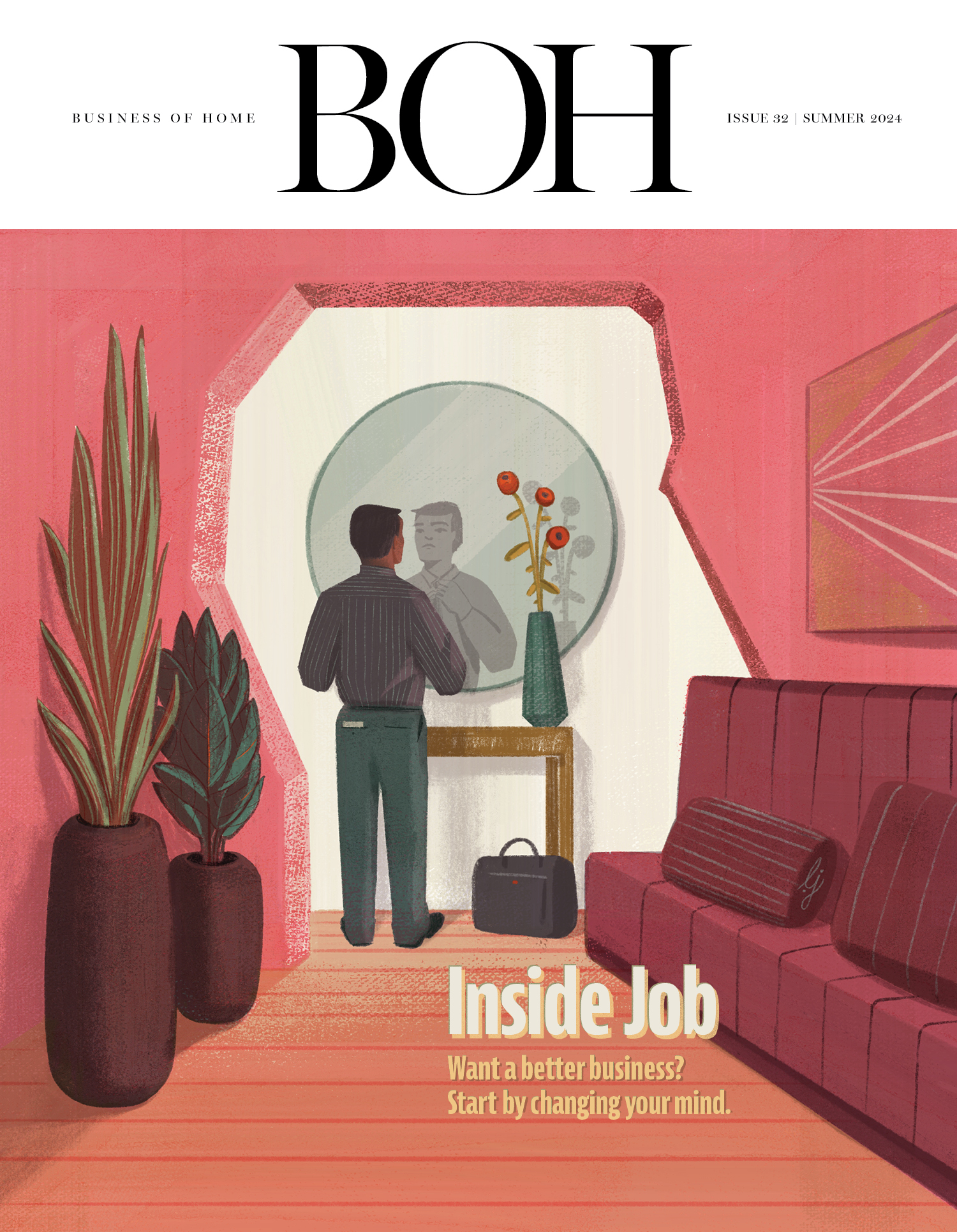
Say an antique mirror is part of your design for a living room. You wish to have your supporting designer solve for design, fit, price, size, delivery date and quality. Once you provide the relevant information, what happens next? Do they come up with three choices and you choose? Or do they offer you their choice with two alternatives? And can they purchase the mirror without your say-so? If not, how long do they have to wait until you say yes or no? What happens if you do not respond?
In a typical “factory” culture, the employee has to source as many mirrors as they can in the shortest time frame, and then wait for you to decide—a “no” culture, since nothing happens until you say yes. This employee would have all of the responsibility for finding the mirror but no authority to actually buy it (or include it in the final budget). Or they would have the authority to buy the mirror you choose, but no responsibility to make the choice themselves.
If you change your culture to a “yes” culture, you give your employee both authority and responsibility. They will offer their choice with two alternatives, with consideration as to why they made the choice they did. You will have a very short period of time to respond. No response means yes to the purchase or final budget.
You will then become much less of a typical boss where all things run through you, and far more like your employee’s client. The goal is to communicate information in a way that generates acceptance and a desire to continue; exactly what you have to do with your actual clients every minute of every day in your work for them.
Back to the antique mirror. If you have provided what is needed to source the right antique mirror, it is up to them to find the one you will say yes to. Their chance of success will be much greater, simply because they have the responsibility and authority to find the mirror in the first place.
I know this all might sound simplistic or academic, but the future of traditional factory, do-it-this-way culture is rapidly coming to an end. Designers need to honor the power of everyone’s authentic voice if they hope to build a firm ready for the emotional intelligence and sophistication that will be required as the industry changes. So ask yourself if you are ready to have a yes culture based on responsibility and authority for all involved (even if it is to get coffee). If you do, awesome—keep working on embedding the idea ever deeper into how your firm operates. If not, yesterday would be a great time to start.
____________
Sean Low is the go-to business coach for interior designers. His clients have included Nate Berkus, Sawyer Berson, Vicente Wolf, Barry Dixon, Kevin Isbell and McGrath II. Low earned his law degree from the University of Pennsylvania, and as founder-president of The Business of Being Creative, he has long consulted for design businesses. In his Business Advice column for BOH, he answers designers’ most pressing questions. Have a dilemma? Send us an email—and don’t worry, we can keep your details anonymous.













 Withdraw Consent / Manage Privacy Preferences