






Topher Gent bridges the gap between technology, education and artistry. Born and raised in Rhode Island, the multihyphenate studied furniture design at the Rhode Island School of Design, where he dabbled in both wood and metal. “I was most interested in a wide exploration of materials, but always with a very craft-focused approach,” he tells Business of Home.
He started his own custom furniture company, launching his first collection at the Architectural Digest Show in 2017 while experimenting with ceramics on the side—an art form he fell hard for. He moved to Norway in 2020 and earned a Master of Design from the University of Bergen, where he continued to deepen his knowledge of ceramics. “The European approach to artistic research is not something that I had been exposed to here, so thinking about materials and process and craft, in particular, as a design research method—became really interesting to me,” says Gent. “My thesis was all about materiality with a focus on the digital aspect of making that was [moving to] the forefront. I was looking at 3D printing and emerging AI. This was before we had ChatGPT or Dall-E or anything. So I was looking at [the landscape in the] early days, like, ‘Is this a design tool?’”
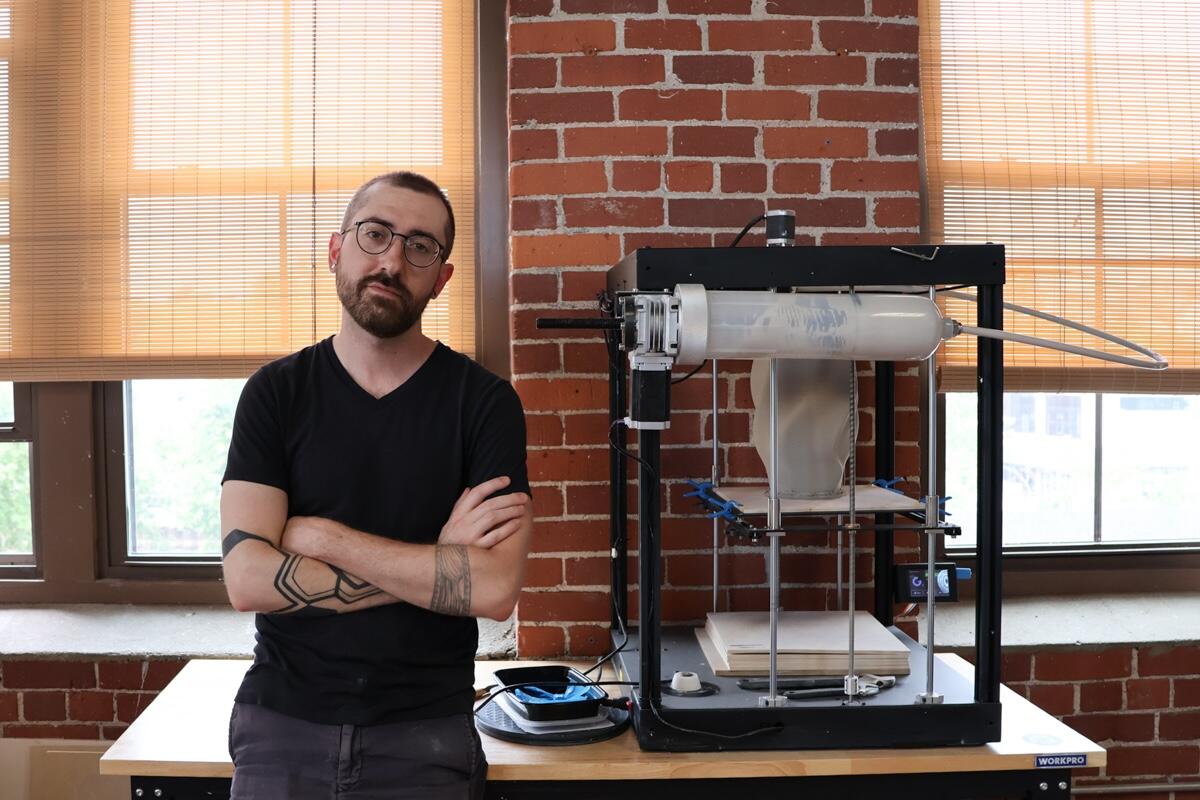
After grad school, he moved back to the States and took assistant professor jobs at Swarthmore College and Drexel University before landing back at RISD, where he currently teaches in its foundation studies program. “The [program] combines my interest in making as a mode of thinking and exploration,” says Gent. “My practice embraces that same thing, looking at each of the things that I make as a material experiment—something that you can learn from more than being a finished object.”
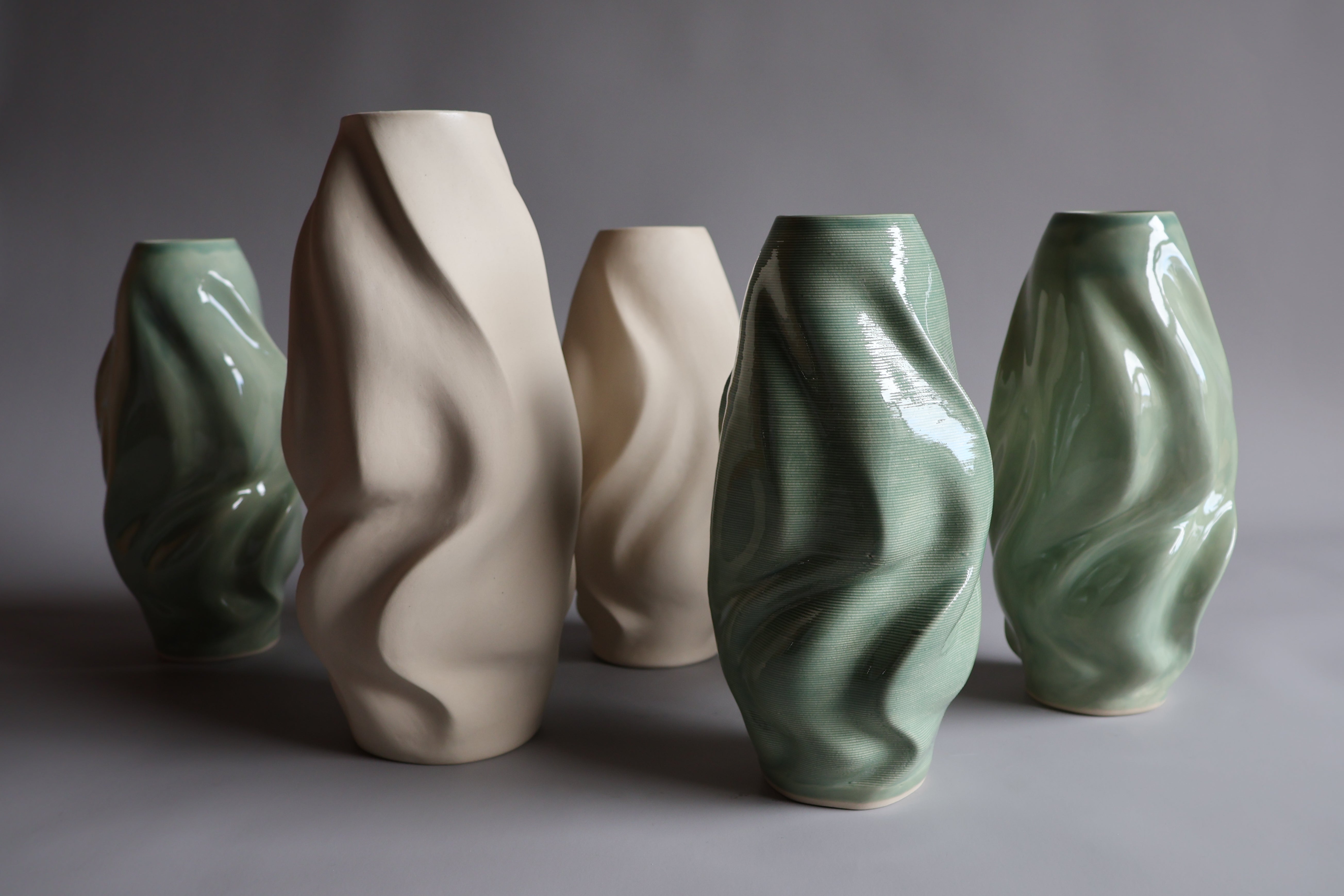
For some pieces, he lets the material guide him by throwing on the wheel or hand-building. For his 3D printed ceramics—a big focus in his studio right now—he starts designing in CAD using the 3D modeling software Rhino. “[In the] Freeform series, what I ended up doing is iterating constantly [with] dozens of versions of these vessels that are made with lofted cross sections, which is the same method used to design the hull of a boat. You have cross sections that create curves, so I do the same thing in CAD, and it’s very intuitive,” says Gent. “It’s like, OK, this works, this doesn’t.”
While 3D-printing ceramics makes part of the process easier, it’s not foolproof. The sinuous Freeform vessels, for example, emerged from several months of trial and error. “There’s a sense that these digital fabrication processes are a ‘set it and forget it’ kind of thing: You press play, and it just comes out, and it works,” he explains. “But actually, there’s a lot of material intelligence involved, an intuition of how the material works, what the consistency of the material can be, and what the limitations of the technology are, as well as the material. It’s not linear.”
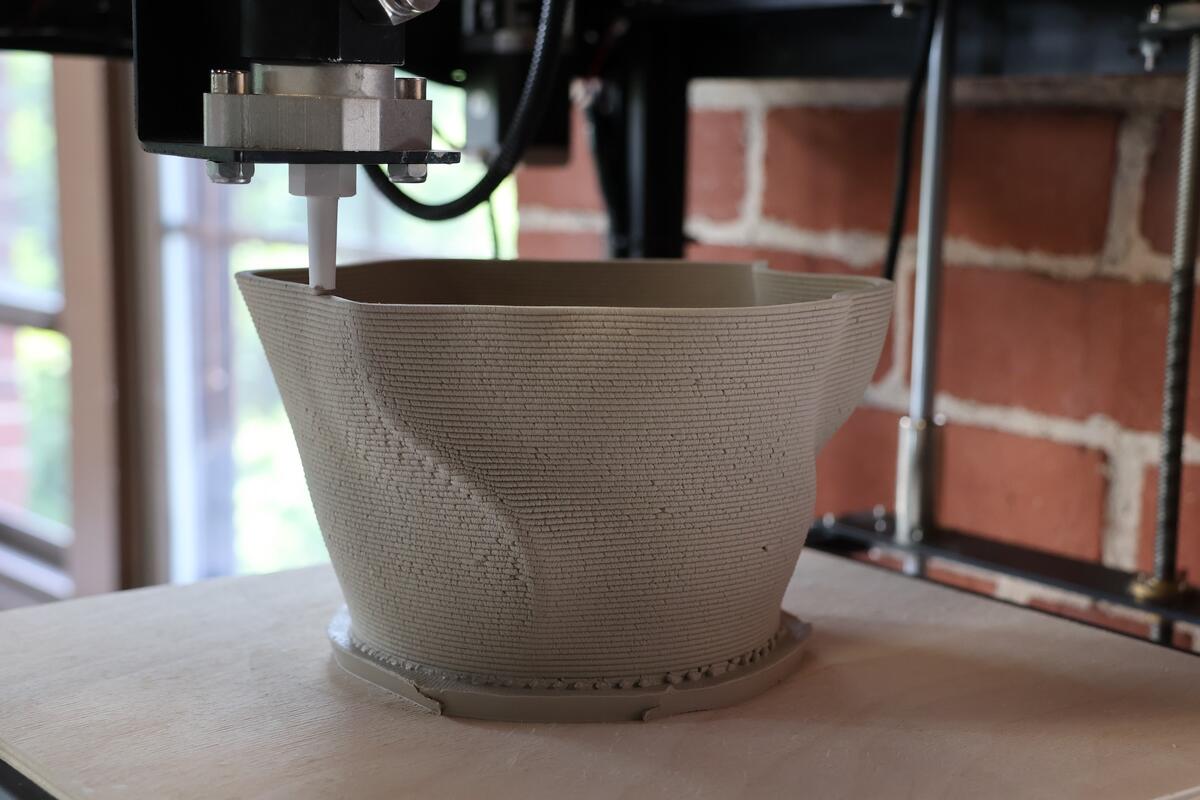
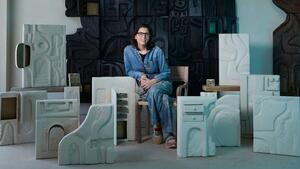
Gent is currently revisiting his furniture background with new designs, as well as working on a lighting collection. He also received a grant from the Rhode Island State Council on the Arts for developing modular ceramic systems—a new research project that has him pushing the boundaries once more. “I see that as [having the] potential to be both object-focused, whether that’s furniture or lighting, but also to expand into a larger, architectural scale,” he says. “You can imagine almost like bricks, basically, that have this way of stacking or nesting or intersecting, and I’m excited about it because there’s a lot of new things for me to learn with that.”
That approach is exactly what drives Gent and his practice. “Challenging myself with new ideas and [experiences] that force me to learn new stuff is really important,” he says. “I think that’s a form of success.”


 Withdraw Consent / Manage Privacy Preferences