







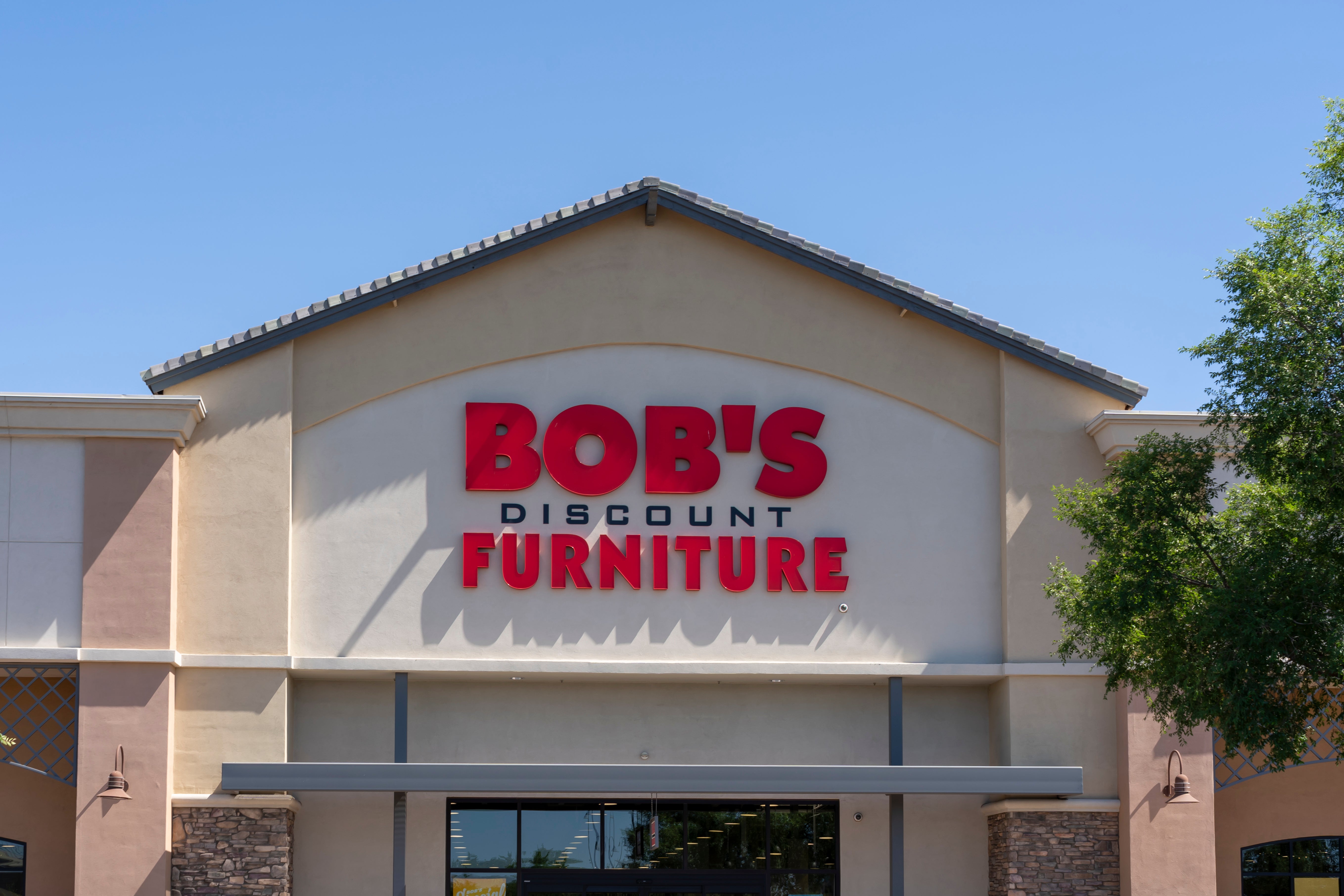

Bob’s Discount Furniture has filed an IPO to take the company public. This is not a shock—in fact, we predicted it here at Business of Home last May. But what it says about the state of the furniture business could be.
Bain Capital has owned the furniture retailer since buying a majority interest in 2014 from founder Bob Kaufman. (Yes, there really was a Bob at Bob’s; he lives on as the cartoon character spokesperson in some of its advertising.) Last week, Bain announced that it would be taking Bob’s public later this year, with plans to use some of the proceeds to pay down debt—no doubt Bain will take its cut along the way—and other funds to expand the chain, potentially doubling it to 500 locations within the next 10 years. For private equity firms like Bain, an 11-year hold is somewhat unusual, so the industry has been expecting the IPO for some time.
What’s unexpected is the timing. The furniture business has been having an absolutely miserable time since Covid subsided, and it doesn’t seem as if normal buying patterns have set back in yet. Combine that with the disruption of the tariffs—particularly challenging for import-focused retailers like Bob’s—and you have a lackluster environment to make your case on Wall Street. If that wasn’t enough, the entire IPO market has been weak for some time—it’s been a minute since a big home company went public.
Does Bain see something the rest of the industry doesn’t? Is the housing market about to explode in a veritable feeding frenzy of activity? And what about tariffs? Does Bain believe the worst is over and that prices will stay this side of reasonable for most shoppers, particularly the down-market consumers who tend to frequent stores like Bob’s?
In paperwork filed with the IPO, Bob’s stated: “Housing market fundamentals support a near-term recovery, with housing turnover at or near historic lows, creating pent-up demand. Additionally, the persistent gap between housing costs, rent inflation and wage growth is creating a more value-conscious consumer that aligns with our positioning. We believe that the recovery in the housing market will further boost demand for home furnishings, presenting a compelling opportunity for incremental growth in our business.”
This all makes sense—and many in the industry are hoping it’s true. In Bob’s case, though, it needs to be tempered with the possibility that Bain was ready to pull the plug years ago and has simply come to the end of the line, favorable market conditions or no. The P in PE doesn’t stand for “patience,” after all.
Whatever the reason, the IPO is probably good news for the home business. A public Bob’s will need to grow, and that means more stores, more volume and more promotional activity. Plus, it could open up the financial floodgates for other companies in the sector to go public themselves—perhaps Serena & Lily, or even a spin-off of the furniture retail group from Berkshire Hathaway now that it’s under its post–Warren Buffett leadership. Stranger things have happened.
In the meantime, there were some other informational nuggets contained within the IPO. For starters, Bob’s annual volume hit the $2 billion mark within the trailing year, with net income of $119 million. That’s a pretty tiny drop to the bottom line as these things go, but it might be a pleasant surprise for some who didn’t expect to see any profit at all. Virtually all of Bob’s sales—86 percent—come from its stores, with the remainder coming from e-commerce. For competitors like Ashley and Rooms To Go, both privately owned, it’s unlikely those numbers are markedly different.
Another revelation was tied to Bob’s average order size, which was $1,400, with upholstered furniture accounting for the largest share, followed by case goods. In comparison, Wayfair, which sells a much higher percentage of smaller ticket items like bed and bath, housewares, and home decor, had an average ticket of $317 in its most recent quarter.
And lastly, virtually all of the company’s furniture production has been moved out of China, with Vietnam (at 63 percent of its product cost volume as of the past October) its largest source. Curiously, 27 percent of its product cost volume is from domestic resources, which likely means upholstered products.
For those who like to press their nose against the window, Bob’s going public will now provide an update on the promotional side of the furniture business every 90 days, something that has not been available since the demise of the late, once-great Levitz Furniture retail chain decades ago. And the whimsical fans among us are dying to ask: What happens to cartoon Bob in the company’s ad campaign? Sadly, the IPO doesn’t say.
____________
Warren Shoulberg is the former editor in chief for several leading B2B publications. He has been a guest lecturer at the Columbia University Graduate School of Business; received honors from the International Furnishings and Design Association and the Fashion Institute of Technology; and been cited by The Wall Street Journal, The New York Times, The Washington Post, CNN and other media as a leading industry expert. His Retail Watch columns offer deep industry insights on major markets and product categories.





 Withdraw Consent / Manage Privacy Preferences