












In a rare moment of bipartisanship, the House on Tuesday voted almost unanimously to pass the biggest piece of housing legislation in over 30 years, one day after the Senate did the same. Passing 358–32, the 21st Century Road to Housing Act seemed like an easy win for both parties ahead of November’s midterm elections. But President Donald Trump stopped the bill dead in its tracks Wednesday morning, abruptly canceling the signing ceremony and vowing not to ratify the legislation unless Congress passes a strict voter ID bill called the Save America Act.
“Today’s Housing News Conference and Signing is hereby cancelled until such time as we pass the desperately needed SAVE AMERICA ACT, which I consider to be a National Emergency,” he wrote on social media.
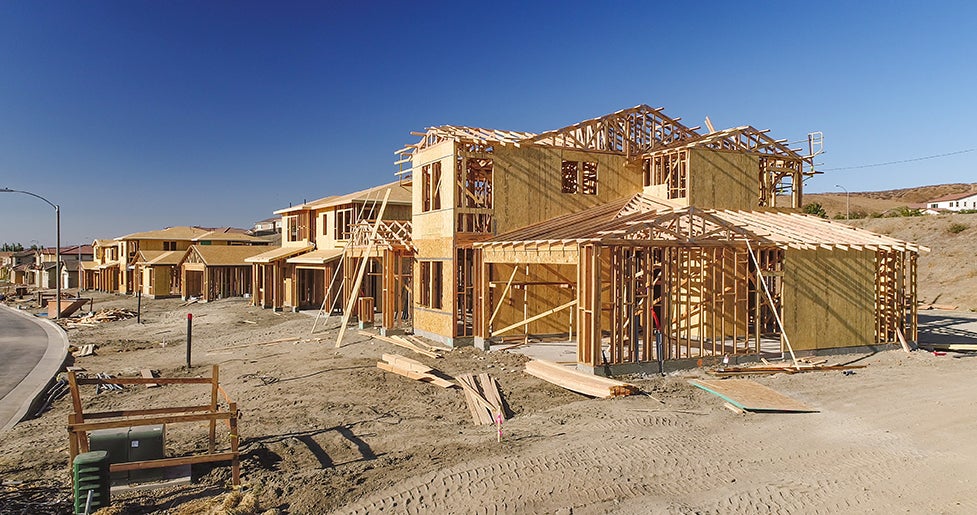
Through an array of more than 45 provisions, the bill aims to increase housing supply by simplifying the build process and lowering the affordability threshold of existing homes. Regulations would be loosened, allowing builders to skip an environmental review in certain situations; some rules around prefabricated homes would be phased out. The legislation would also allocate more federal funding to communities with a higher volume of new housing construction, and ease the process of attaining small mortgages in rural communities by loosening regulations on community banks underwriting loans under $100,000.
The act comes after months of debate in Congress, where it went through multiple iterations before landing in its final form last week. It was spurred by a housing crisis that is no longer confined to major cities like New York and San Francisco. Thanks to the Covid-induced real estate market boom, home prices have risen to historic highs across the country, creating a crisis stark enough to move a deeply divided Congress to come together. A recent report from Realtor.com estimates that the U.S. is short more than 4 million homes. As a result, the number of homeowners under the age of 44 has declined steadily over the last decade.
The bill would also place a new limit on institutional investors via a ban that prevents corporate entities from building a monopoly of single-family homes—a provision stipulating that if one of those groups already owns 350 houses, it won’t be able to buy more. That measure proved to be one of the more controversial parts of the bill, with some opponents arguing that investors often buy less desirable properties and renovate them. Supporters argued that while private equity ownership reportedly only makes up 3 percent of the single-family rental market nationally, the time to act is now. Sen. Elizabeth Warren explained on NPR that these companies have disproportionately impacted specific markets, like Atlanta. “If you don’t live in a neighborhood where private equity has already moved in, believe me, you’re on their list,” said Warren.
While the ability of legislation to directly impact housing costs is limited (the senate can’t set mortgage rates, for example), the bill marks the first time since 1990 that the federal government has acted on housing affordability.
The president’s current refusal to sign the bill doesn’t mean that all hope is lost for the legislation. A bill that has passed both chambers of Congress and has been presented to the president automatically becomes law if it is not signed or vetoed within 10 days (excluding Sundays), as long as lawmakers are in session. House Speaker Mike Johnson seemed optimistic that the housing act would be signed within that time frame, telling reporters: “[Trump] has a window of time before he has to sign a bill, and he’s going to use a little bit more of that window of time.”













 Withdraw Consent / Manage Privacy Preferences