









Following the celebrated launch of its kitchen and bath hub at Fall High Point Market, the National Kitchen & Bath Association is not resting on its laurels. In anticipation of KBIS 2026—just around the corner, from February 17 to February 19 in Orlando, Florida—the trade organization has released reports on the state of arguably the two most important rooms in a residential project. Meticulously detailed yet easy to digest, they document overall themes, emerging styles, fresh palettes, innovative modifications, technological advancements, generational preferences and more, breaking down the data across every conceivable product type. Business of Home scoured the hundreds of pages and identified 10 notable trends, then tapped a pair of high-profile industry pros for their thoughts about them. Entrepreneur, TV personality and style authority Thom Filicia redefines the kitchen, while HGTV host, brand collaborator and design expert Michel Smith Boyd delves deep into the bathroom’s changing role as a self-care retreat. Read the top-line hot takes from these two NKBA Design Council members here—and get granular at the association’s 2026 “Kitchen Trends” and “Bath Trends” reports.
Thom Filicia on 5 Kitchen Trends
THE HEART OF THE HOME KEEPS GETTING BIGGER …
Breakfast is just the beginning of what this ever-expanding wonder room serves up. Work-from-home Zooms, science-fair projects, cozy cups of tea, Friday night cocktails, meal prep—obviously—and dinner: It’s all happening here. Open layouts erase boundaries between the kitchen and living areas, offering clear sight lines to wide-screen TVs and backyards. Dining rooms may have disappeared altogether, their purpose absorbed by this multifunctional marvel.
“Generally speaking, whether it’s a two-bedroom or a six-bedroom home, the kitchen proper is now equal in size to the living room,” says Filicia. The space may be proportionate within the house as a whole, but because the kitchen’s role has taken on greater prominence, its location—and layout—has changed. No longer relegated to a cramped corner or narrow galley, it occupies the central position.
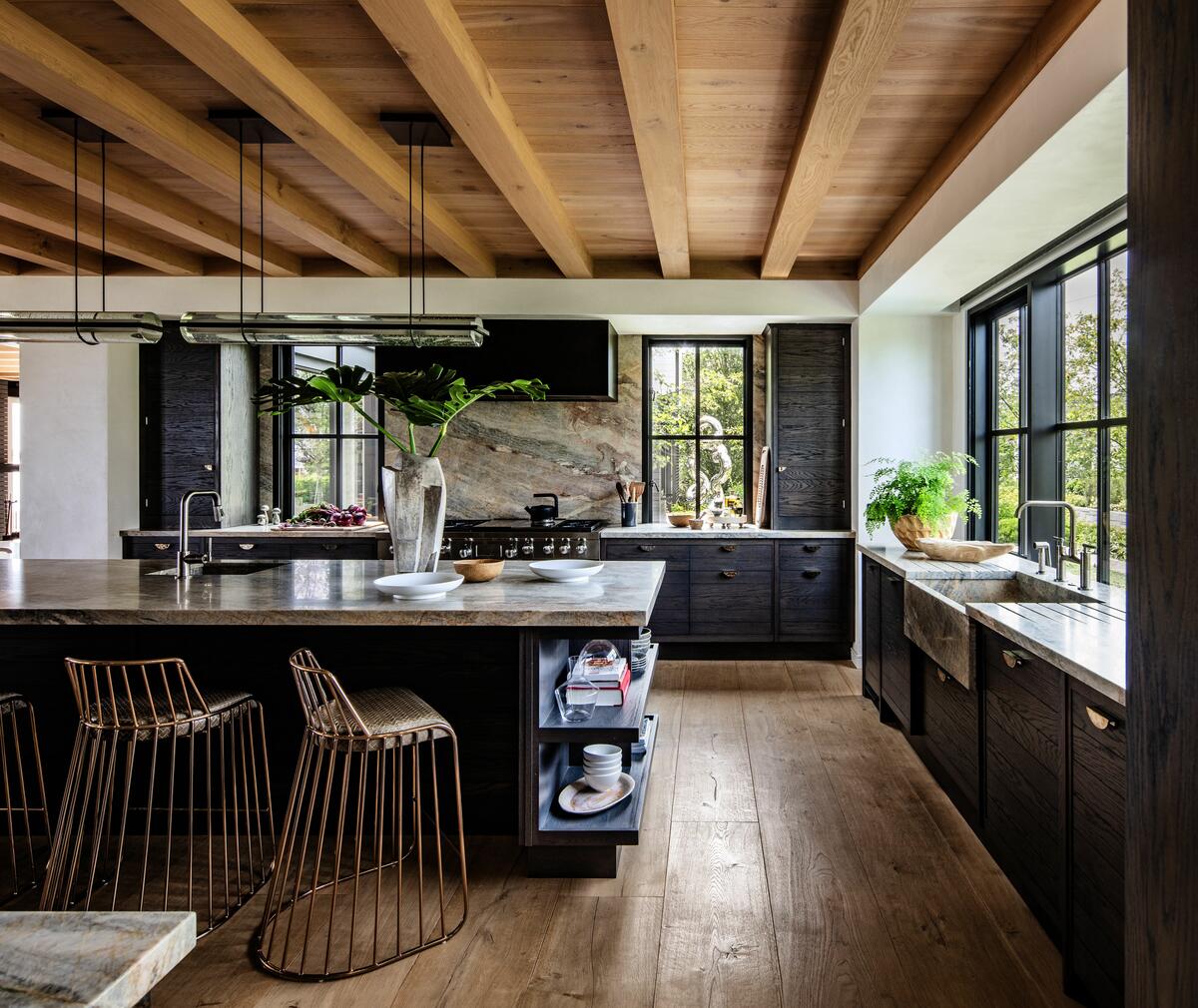
“For a long time, kitchens small or large followed the same basic blueprint, built around this outdated triangle of refrigerator, sink, stove,” he continues. That’s still the holy trinity for home cooks, of course, but now they’re sharing the space with the whole family. “It’s where everybody lands,” says the designer. Why shuffle off to a lonely bedroom to read a book, for example, when you can wrap yourself in a throw and snuggle into a comfy banquette with phone, tablet or laptop in hand—and cookie jar within reach? As Filicia points out: “With technology, tasks once designated to specific rooms are now mobile, so people bring their devices to the kitchen.”
… AND SMARTER
Tech isn’t only being carried into the kitchen in the form of portable devices; it’s revolutionizing every aspect of the experience—from countertops with built-in charging stations to programmable layers of lighting. “Maybe more than any other room in the house, the kitchen is about efficiency,” says Filicia. Residential clients are clamoring for commercial-grade appliances and demarcating different refrigeration zones. “There used to be just a refrigerator and a freezer, side by side. Today, you have drawers mixed with a 30-inch column, mixed with under-counter, each chilling a separate category—kid foods, everyday meals, special-occasion ingredients, red and white wine—in a different place.” The designer has also noticed a movement toward smaller refrigerators in sets of three. “It can be less expensive than a single really big one,” he explains.
Dishwashers—Wi-Fi enabled, and capable of handling both delicate glassware and heavy-duty pots and pans—are doubling up too: “It’s amazing it took so long to understand the value, because one machine has dirty dishes going in, the other has clean dishes coming out,” says Filicia. Stoves incorporate functions like steaming and air-frying, catering to healthy cooking habits. Floors are heated. “Homeowners want to enjoy being barefoot in the room,” he says. Such a personal connection extends to interfaces: While control panels are increasingly streamlined and intuitive, NKBA’s research finds that residents remain reluctant to adopt voice control or AI as a means of operating appliances. At least at present, people still prefer to push buttons.
ISLANDS SET THE TONE—AND THE ZONES
In any other context, an island is a symbol of stoic solitude. In the kitchen, it’s everything but. As the place to slice, dice and peel, its broad surface is indispensable. As a storage container, it can tuck away cumbersome cookware and specialized appliances that aren’t used daily. But perhaps the island’s greatest contribution is as a socialization spot. If everyone at a party always ends up in the kitchen, then everyone in the kitchen migrates to the island.
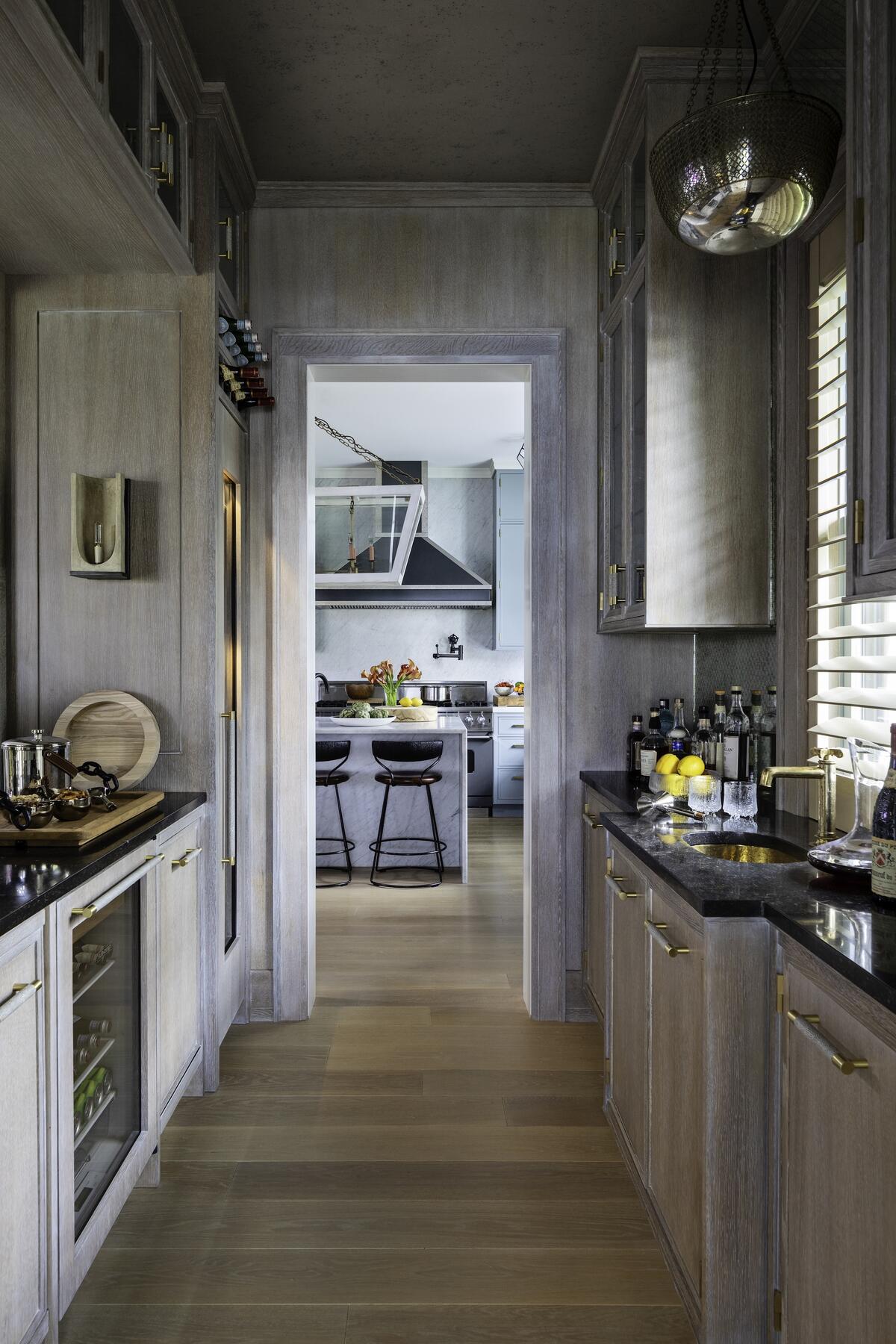
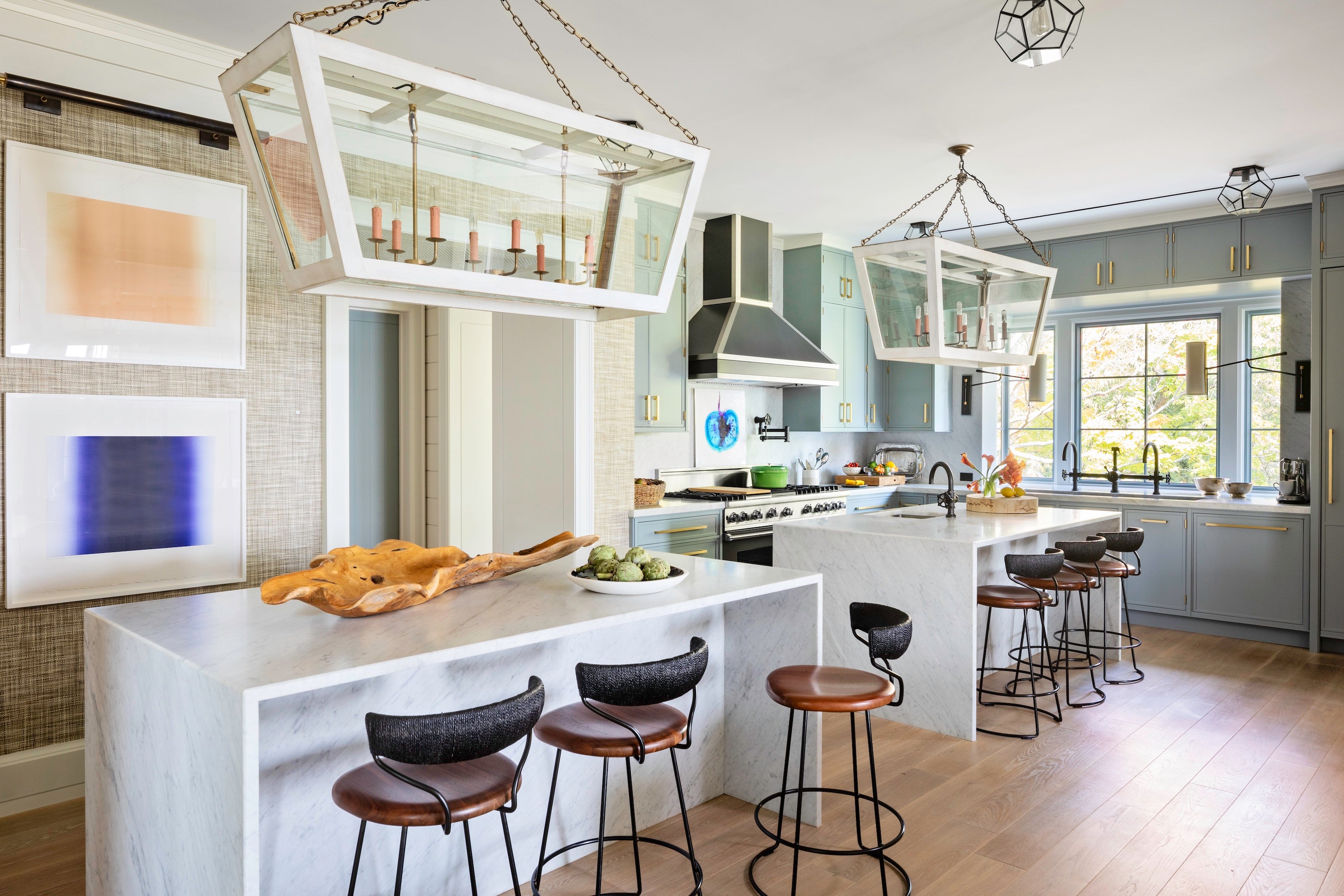
“When you stand at an island, there’s the opportunity for someone to stand across from you,” says Filicia. “And that’s a conversation. That encourages community.” The island is so central to the contemporary kitchen experience that—as with refrigerator and dishwasher trends—the designer has seen an uptick in doubles. “The first is for the people doing the food preparation; the second is for sitting and snacking, enjoying each other’s company, and everything else,” he says. The change is a correction to a brief blip in single islands “so big that if you got stuck on one side, you really had to think twice about making the trip around it!” Two islands work well for families—or anyone who likes to entertain—because they help create zones. “It’s about tailoring the kitchen to the way people live,” notes the designer. Other increasingly popular stations include an espresso bar, a cocktail cart, and a cubby where pets are bathed and fed. Add on a mudroom and laundry, and you’ve got what Filicia has come to call “the kitchen suite.”
In houses both old and new-build, second kitchens are also becoming more common. A breakfast nook in a renovation of a circa-1930s home might be converted into a walk-in butler’s pantry or scullery. “So the main kitchen—where the host can sip a glass of wine and stir the sauce on the stovetop while chatting with guests—opens onto the living or dining room, but the real prep is done behind the scenes, minimizing mess and shielding guests from the mayhem of mashing potatoes,” says Filicia.
THERE’S NO SUCH THING AS TOO MUCH STORAGE
Double islands, triple fridges, walk-in pantries: Storage may not be as sexy as a bespoke mosaic backsplash or copper-clad sink, but kitchens need places to put everything: flatware, glassware, table linens, dishes, dry goods, recycling—the list goes on. An increase in floor-to-ceiling cabinets helps corral it all—even dishwashers and refrigerators.
“Kitchens can look so much more elegant now and still be highly functional, because everything can be hidden behind flush walls of cabinetry,” says Filicia. Alternatively, appliances exist in so many finishes now—though, as documented in NKBA’s report, stainless steel is still popular—that even when exposed in an open plan, they’re more sculpture than eyesore.
AESTHETICS ARE PERSONAL AND AUTHENTIC
Nearly gone is the stark, standard-issue white farmhouse kitchen, which has given way to decor that’s warmer and more welcoming, infused by a palette of earthy beiges and greens. Crafted from natural stone materials like quartzite and marble, countertops range from creamy ivories veined with gold to rich russet reds and dramatic blacks. Cabinetry, too, runs the gamut of colors, with finishes from subdued matte to high-shine gloss. Hardware as minimalistic as sleek bar handles and as ornate as engraved knobs embellishes the facades.
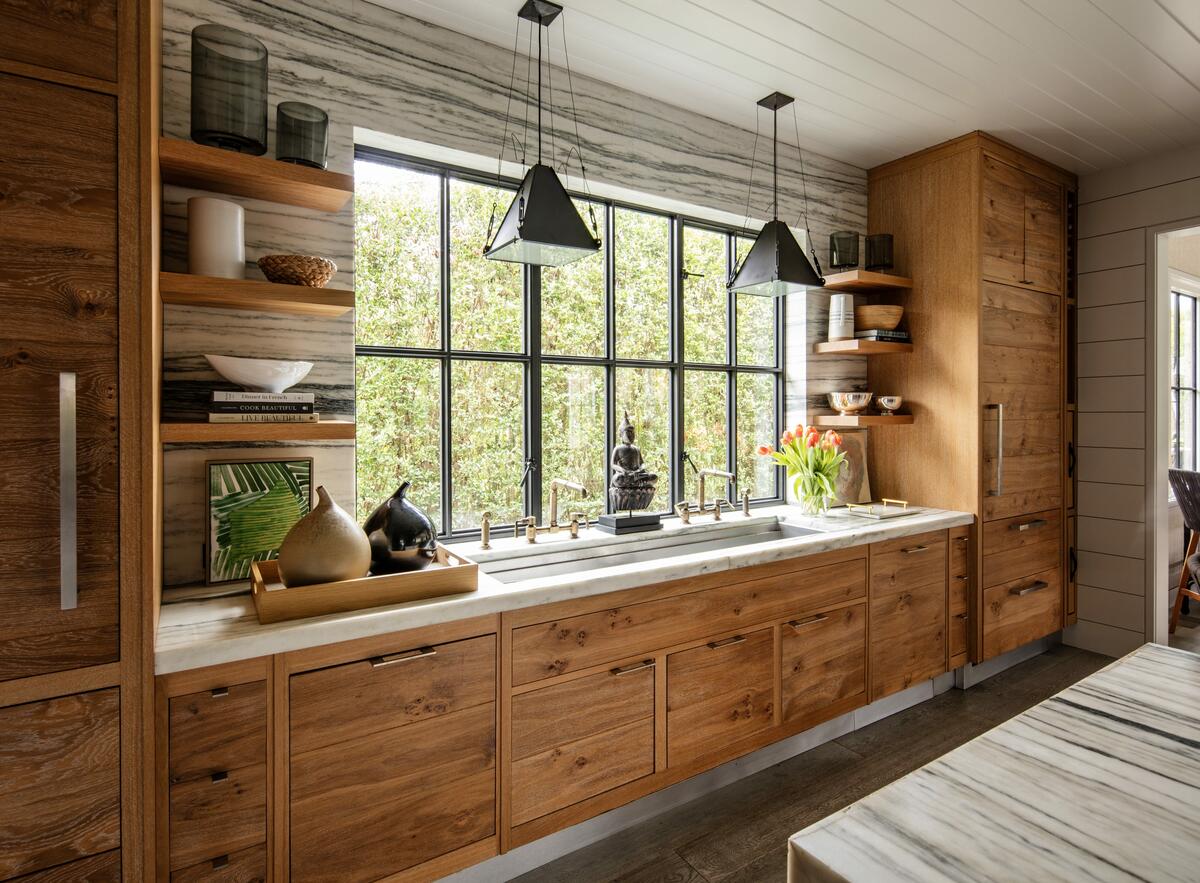
As the hub, the kitchen sets the aesthetic for the rest of the home. Holistic adaptations include larger windows to let in maximum sunshine; complementary lighting systems that can replicate those rays on rainy days; and glass doors that open onto a patio for indoor-outdoor entertaining. A beach-house kitchen might embrace wide-planked light oak flooring, linen upholstery and grasscloth walls for a relaxed look. In a renovated barn, the approach could be more distressed, reclaimed and rustic. “But if you have a formal 1920s Georgian, its classic aesthetic might extend from the kitchen through the butler’s pantry, laundry room, even up to the bathroom with black-and-white marble floors,” says Filicia. “Ultimately, kitchens in 2026 are about personalization and understanding the sense of place, creating a vibe that’s authentic to the architecture of the house and the styles of the people who live in it.”
Michel Smith Boyd on 5 Bathroom Trends
IT’S NOT JUST A BATHROOM; IT’S AN EASY-TO-CLEAN SANCTUARY
If the kitchen is the social hub of the home, the bathroom is its secluded escape, increasingly designed to meet individual needs and routines. No longer just an amenity for the ultrarich, extensively equipped home spas have gone from aspiration to expectation.
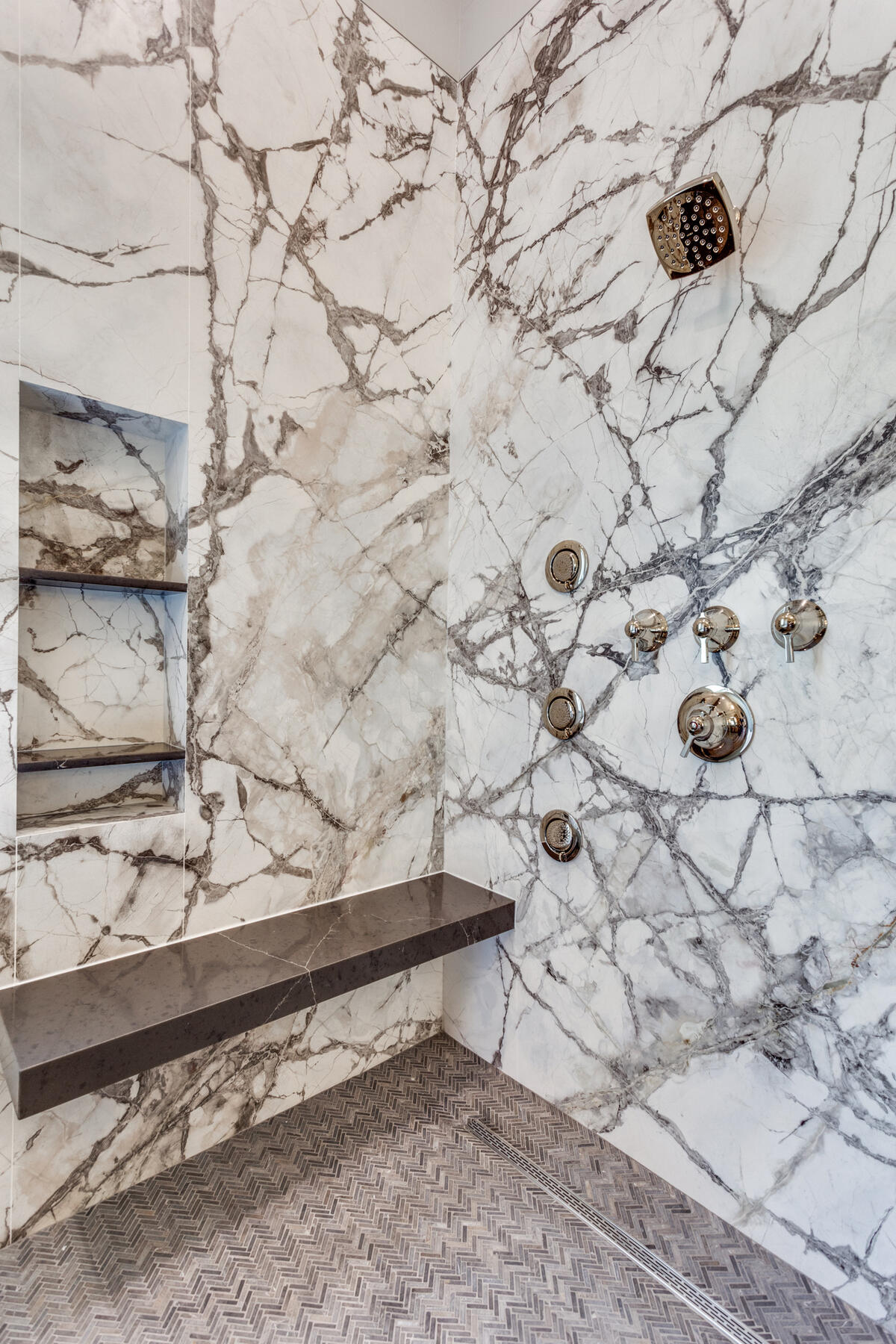
“The biggest luxury of all is having a place for everything,” says Boyd. Custom vanities with configurable modules stash makeup, medication, toilet paper, towels, cleaning supplies and hair tools. It’s something the designer takes into account in the earliest stages of a project, before building begins. “In a super streamlined bathroom where storage is integrated and concealed, you get more of that Zen experience, because instead of clutter, your eyes rest on clean surfaces.” Not only visually calming, expanses like marble slabs, quartzite counters and large-format floor tiles are simply easier to maintain than a thousand tiny penny rounds. As stated in NKBA’s report: “Grout is out.”
SELF-CARE DRIVES THE STYLING
Beyond providing a private retreat for basic hygiene and grooming, modern bathrooms prioritize well-being by contributing to stress reduction and physical recovery. Whitewashed coastal and Mediterranean styles have peaked, according to NKBA’s data, supplanted by shades of sage, olive and robin’s-egg blue, accentuated by organic elements. Where better to cultivate some healing greenery than in the steam from a hot shower? “With just a couple of plants, we can experience the same endorphins indoors as we would if we were out on a hike,” says Boyd. Teak and other natural woods also breathe easily with any fluctuations in temperature, while living finishes like unlacquered brass tell a personal story through their changing patinas. Both components underscore a connection with nature.
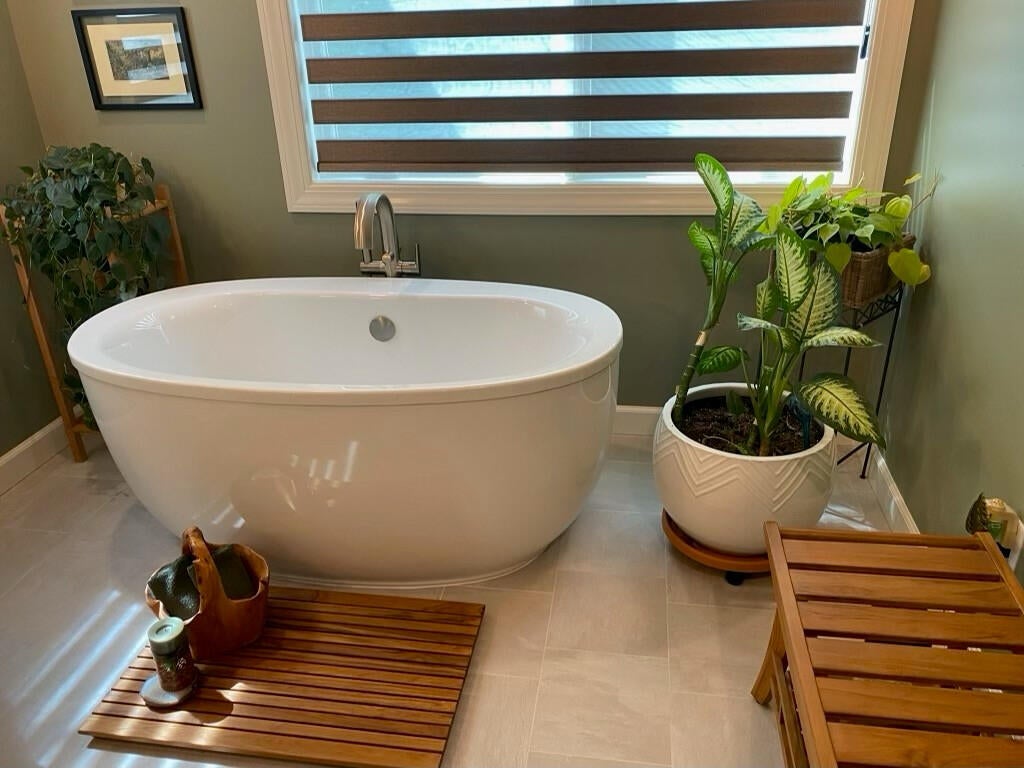
“One of the happier by-products of the pandemic is that we got deeper into the neuroscience of how environment impacts health,” Boyd continues. “It makes design so much more powerful—less frivolous and more grounded.” Not that frivolity and ornamentation don’t have their place. The designer favors grasscloth wallcoverings and leather countertops for their tactility, and he injects green wherever he can. “Just a pop in the tile or even the accessories make the bathroom come alive,” he says. He also finds that “sunset palettes,” whether watercolor pinks or ombre oranges, produce a feeling of calm.
BYE-BYE, BATH? IT’S ALL ABOUT THE SHOWER …
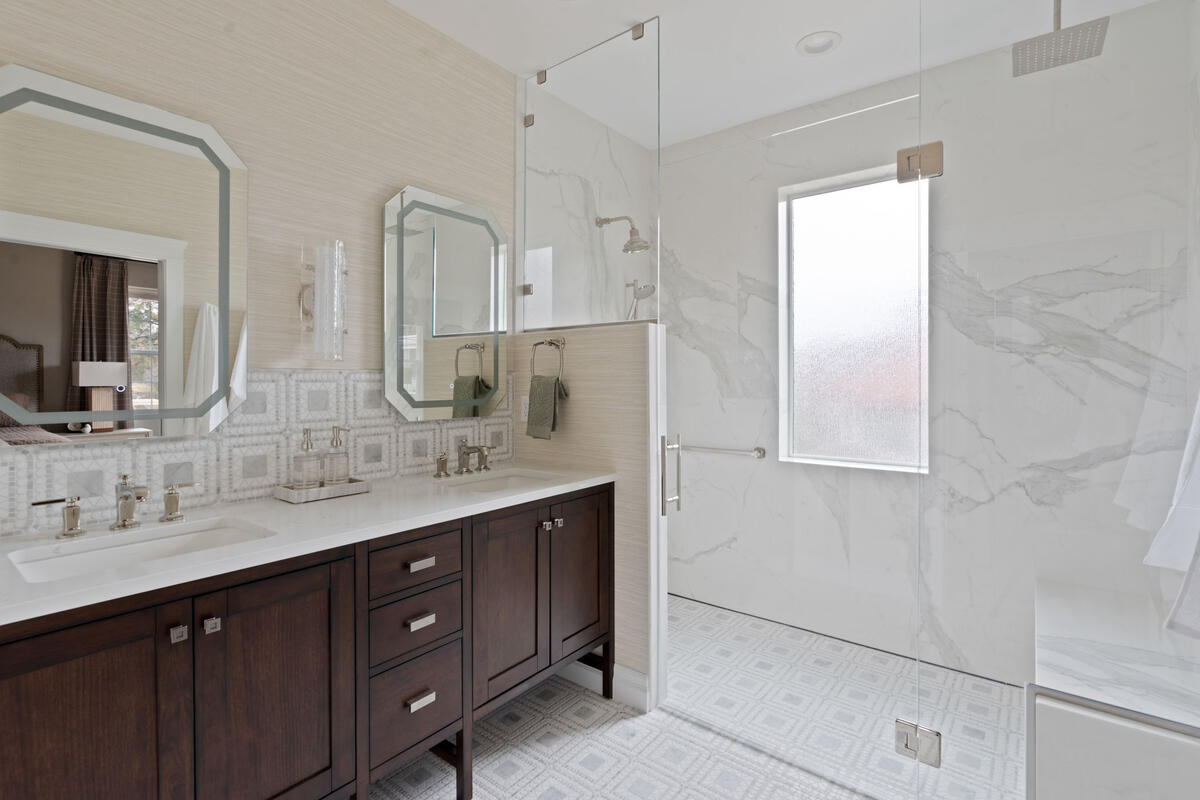
As the bathroom’s footprint also gets bigger, so does the percentage of real estate allotted to the increasingly all-purpose shower—displacing the tub as the focal point. “Massive showers are a massive trend, even in primary suites,” says Boyd. With energy-conserving plumbing and thermostatic fixtures to ensure consistent water pressure and temperature, plus linear drains to minimize pooling, today’s shower stalls offer a menu of sustainable salon- and spa-worthy experiences: steam, sauna and aromatherapy among them. “At KBIS last year, I saw a showerhead that detangles your hair!” the designer recalls. Such advancements add to the home-spa atmosphere, though a cavernous shower cabin can risk being a tad drafty. As Boyd explains: “Sometimes clients don’t realize how cold it can be if you’re not standing directly under the water.” A second showerhead, wall jets, and heated floors and towel racks help warm things up.
… BUT HIGH-END HOMES SHOULD STILL HAVE A SOAKING TUB
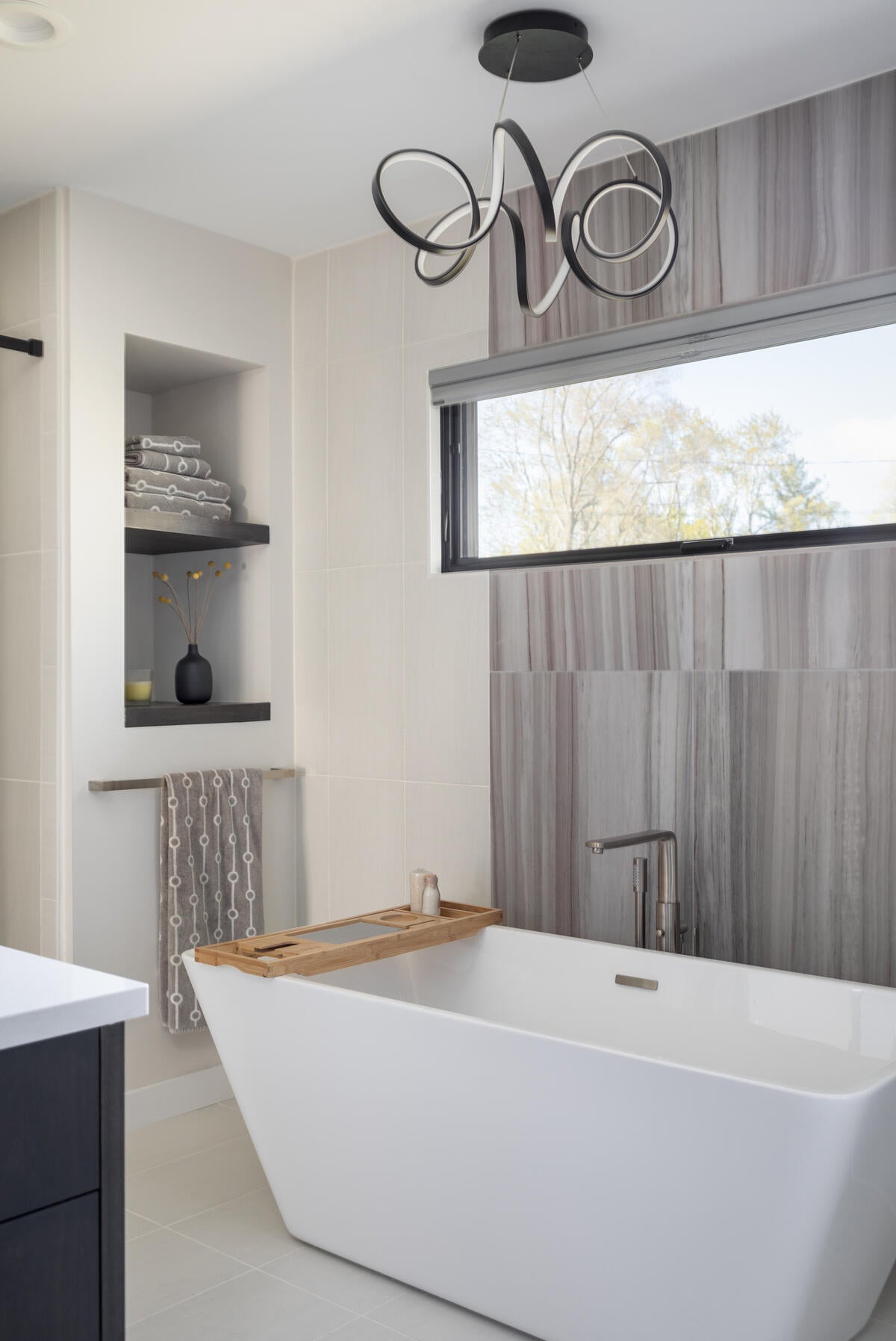
Boyd’s customers may be shower-obsessed, but the designer does his best to advocate for the good old-fashioned bathtub—whether it’s a claw-footed antique or a brutalist basin. “Just from a resale standpoint, it’s useful to have a certain number of tubs in the house—to cater to families with kids, for example,” he explains. But in the spirit of self-care, he also believes in the healing power of an immersive bubble bath or an Epsom salts soak. Picture the scene: scented candles, the Sunday Times, a glass of wine. “The ritual of drawing and taking a bath is more romantic than a shower will ever be,” he says.
Other luxe bathroom touches include smart bidets and ambient lighting that can be customized via app, though NKBA confirms that—as in kitchens—people still prefer hands-on interaction to voice-controlled automation. “There’s a real trend for bespoke shower benches,” Boyd notes, describing a “floating slab” iteration he recently saw as “stunning” evidence of the sophistication of new bathroom niches.
ANTICIPATE MULTIGENERATIONAL LIVING AND AGING IN PLACE
The bathroom’s larger size isn’t only about innovation and indulgence: As several generations inhabit the same home and seniors age in place, there’s a practical aspect to a space that can accommodate a couple, a parent and child, or a caregiver and patient. No matter how chic a shower bench may be, it offers support to the mobility-challenged. Grab bars and door handles can be both functional and decorative, while matte finishes on fixtures better hide daily wear and tear. Textured floor tile—in contrast to the polished-slab trend—provides traction that helps prevent falls. “Zero clearance” (curbless) showers aren’t just au courant; they make entry safer for a spectrum of ages and physical abilities.
“I did some renovations for my father recently, researching what would make the most sense at his home in Louisiana,” says Boyd. New construction offers designers a blank slate, but renovation can mean retrofitting, a more compromised approach to upgrading bathrooms that NKBA has found to be in decline. In theory, modifying an existing tub with a side door should make it more convenient, but in fact, the designer notes, it ends up introducing other hazards. “For example, you cannot exit that tub until the water has completely drained,” he explains. Ultimately, he lowered the curb and increased the square footage of the shower to allow for a 60-inch turnaround—enough to fully rotate a wheelchair. “We lost some space for the vanity in order to help my father stay as independent as possible,” he says.
For Boyd, such adjustments speak to the bigger picture of changes in bathrooms and kitchens. “I think the overarching trend is to bring what had been public activities—like sauna or aromatherapy—into the private realm,” he says. Doing so is not just about nesting. It offers the dual benefits of reducing the amount of money spent on such services while also, he adds, “investing in the sanctuary of your home.”
To explore the association’s reports on 2026 trends in kitchen and bathroom design, visit NKBA Research. To enjoy all the advantages the organization has to offer designers and businesses, become an NKBA member.
This story is a paid promotion and was created in partnership with NKBA.
Homepage image: Designer Thom Filicia outfitted this kitchen with two waterfall islands: one for food prep, the other for snacking, chatting, homework and everything else | Courtesy of Amy Lamb

 Withdraw Consent / Manage Privacy Preferences