








On the Ask Us Anything podcast, editor in chief Kaitlin Petersen taps former Trade Tales guests to answer real, confidential designer questions, offering a safe space to discuss business frustrations, conundrums and fears. (Have a question of your own to ask? Send an email to start the conversation.)
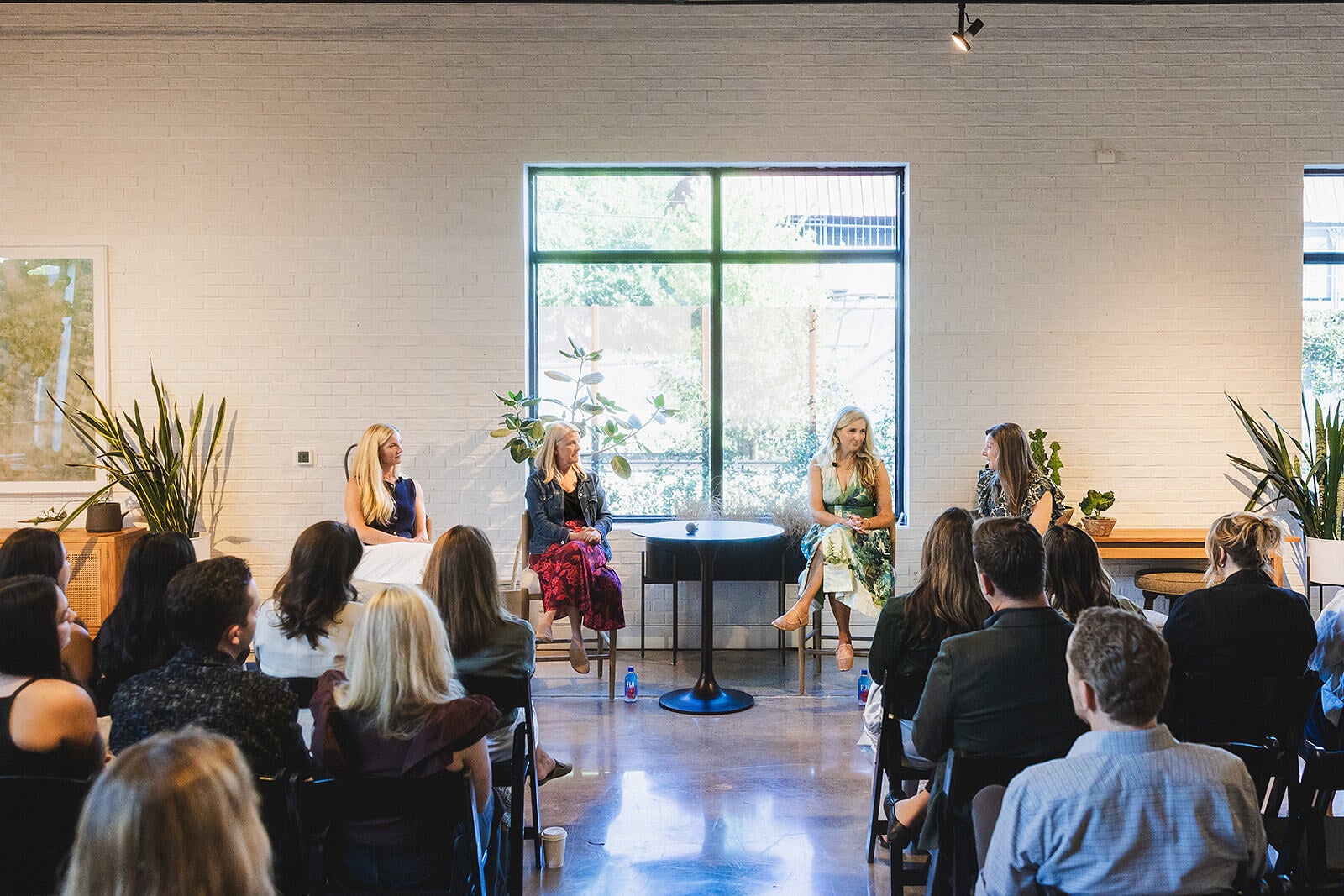
During a special event at the Four Hands showroom in Austin on October 15, designers Heather Fujikawa of House Sprucing and Jean Stoffer and Grace Start of Stoffer Home joined host Kaitlin Petersen for a live episode of Ask Us Anything, responding to three anonymous designer questions—plus audience queries—and sharing advice in real time.
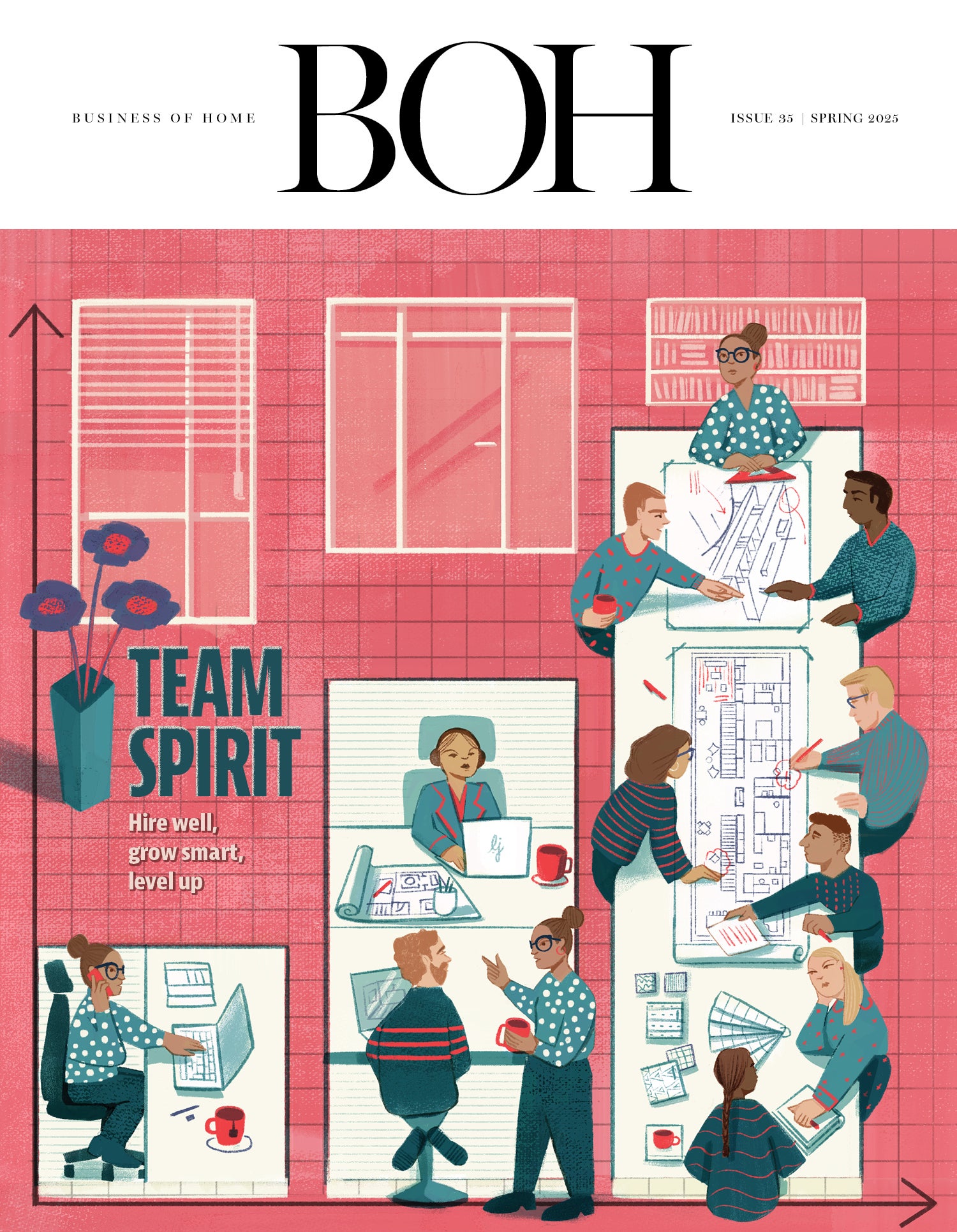
First up, the panelists took a question from a designer experiencing post-pandemic recruiting challenges, particularly when it comes to finding new hires who will act as team players. Fujikawa kicked off the advice by explaining what she looks for in a new employee: someone who shares the firm’s principles of kindness, grace and abundance—traits that senior members of her firm model, in order for employees to mirror back.
Next, the group heard a question from a designer who is looking for guidance when it comes to discussing prices with clients—especially during the era of tariffs, when costs can change quickly. Stoffer recommended designers set the tone for money conversations, especially since price fluctuation can quickly lead to frustration for all parties: “It’s an analytical statement, not an emotional statement. If we bring emotion into it, they’re going to receive emotion. If we bring analysis and reporting, it at least has an opportunity to stay at that level.”
The final question centered on how to scale a design business with a focus on expanding to serve out-of-state clients. Start’s biggest advice was to proceed with caution. Something as simple as a site visit, she explained, becomes a multiday task when projects involve travel. To that end, she suggests making consistent communication—even when a designer can’t be there in person—a top priority, achieved through weekly Zoom calls with on-site contractors and assigning an internal project manager to make sure no correspondence with clients falls through the cracks.
Crucial insight: One of the pitfalls of working on remote projects is that clients are closer in proximity to the project than designers can be—which means if problems arise, they could be the first to field an issue. To prevent those situations, Start suggests developing a solid relationship with the contractor. “If there’s an issue on-site, you can meet together about it before the client even has to worry about it, and come up with a great solution,” says Start.
Key quote: “We have found success [in saying to candidates,] ‘This is what we believe in. Do you? Can you sign up for something like this and be a participant in this?’ That’s our final sign-off,” says Fujikawa. “Then, it’s that gut feeling at the end: ‘Is this the right hire? Do we feel good about what they’re saying?’ Then we move forward, and then we try to empower them with that as they move into that role, and make sure we’re all being examples of those things that we ask them to do.”
This episode was sponsored by Four Hands and Crypton. If you like what you hear, subscribe on Apple Podcasts or Spotify.